
“Through ‘Big Data’, You Can Really Get To Know Your Audience In-Depth”

In this week’s iSportConnect Meet The Team piece Abid Qidwai, our CRM Executive and Data Researcher, looks at the rising use of data within sports, both from the side of players and teams, as well as the business of the industry.

On a day-by-day basis as we learn more about it, data is becoming more and more useful for you to collect in order to support organisational decision-making and strategy.

It is through data collection that a business or management has the quality information they need to make informed decisions from further analysis, study, and research. Without data collection, companies would stumble around in the dark using outdated methods to make their decisions.

So how are sports analytics rising in scope?

Sports Analytics, the use of data related to sports such as players’ statistics, weather conditions, information from expert scouts etc. to build predictive models around it to make informed decisions.

And then there is the other section of sports analytics which focuses on understanding and maintaining the fan-base of big teams.

With advances in data collection and management technologies, sports analytics has broadened its scope remarkably. The market is expected to reach almost $5 billion by 2024, and most major professional sports teams have analytics experts on staff to interpret every aspect affecting player performance. If you do not have a group of analysts working within the team you will likely be falling behind. Imbibing data and statistics into sports has become an important part of the game plan.

Here are some examples of data analytics in a Sports Team/Individual Performance

  • The NFL tracks individual player performance by placing small sensors in each player’s shoulder pads, which track their game performances throughout the season.
  • Wimbledon has similarly been tracking individual tennis player performances for years. The player reports – consisting of text as well as video footage – helps tennis players identify their strengths and weaknesses, and can be used as a coaching aid after the match.
  • Few sports use data analytics like Formula 1. The modern F1 car is an intelligent and connected data system, monitored by hundreds of sensors that measure lap times, G-force, tyre and brake temperatures, air flow, engine performance, and driver biometrics are just few data collection points to be named. F1 racers have a well-trained crew trackside, as well as a host of engineers, mechanics, and analysts offsite, making decisions based on the incoming data. Events such as pitstops can impact a driver winning or losing a race. In Formula 1, perhaps more than anywhere else, big data drives big decisions.
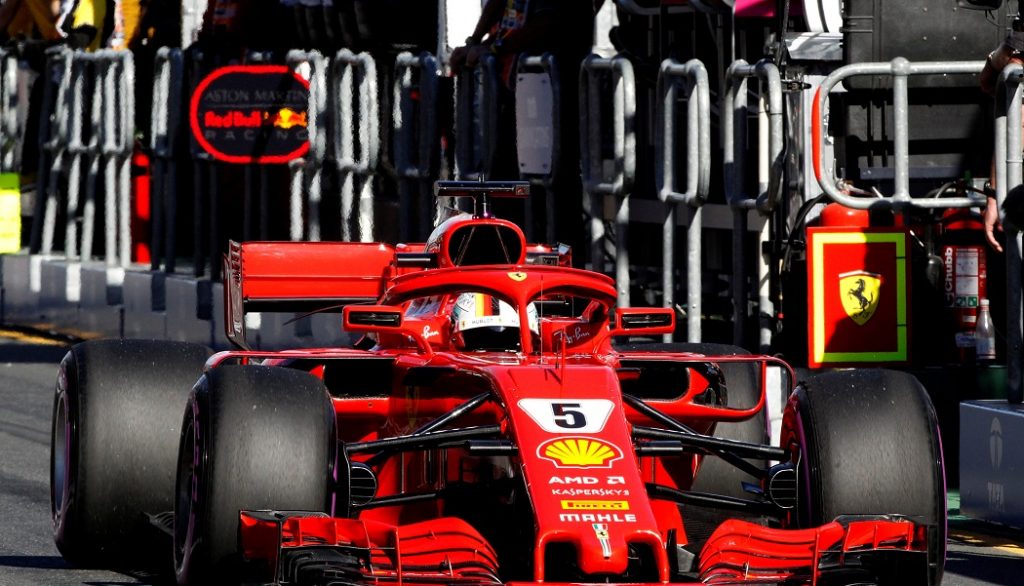
In Formula 1, perhaps more than anywhere else, big data drives big decisions.

Sport Analytics in Business

Moreover, the use of analytics contributes to the success of the field and the ticket counter too (to track the actual and potential customer base).

Through “Big Data”, you can really get to know your audience in-depth, even when it comes to potentially endless and deeply varied audiences, such as those typical of the Sports industry.  

When it comes to understanding sports fans, and what they want, the sports industry aggressively uses data analytics to do so. Sports organisations gain insight into what fans are watching, and what time they are watching it, thanks to digital engagement data and data patterns from online sports viewing, app logins, and online video views.

One of our clients “Singula Decisions”  uses similar technology, which they like to call as Subscriber Intelligence. Singula Decisions uses their award winning Subscriber Intelligence Platform to manage subscription growth through what they call Brilliant Decisions and Intelligent Actions. 

https://www.isportconnect.com/partnership/singula-decisions/

Just some of the many uses of Data Analytics

  • Data analytics can be applied to social media streams to understand fan sentiment, and to positively engage those fans via social channels.
  • Data from customer engagement can even be used within the stadium to understand fan movements through electronic tickets and fingerprint or retinal scans.
  • By analysing this data, organisations can predict everything from ticket pricing to adequate staffing on game day.
  • Sports organisations use software providers to analyse data that can potentially help them sell more hotdogs and beer, ensure cleaner bathrooms in stadiums, and improve congestion in the parking lot – all in a bid to improve the overall experience of local sports fans and drive better revenue.

Conclusion

Just as the volume of data increases, so will the methods and insights to key decision-makers on how to best manage their teams or individual talent, it also gives organisations a more personalised way of reaching to the hearts and minds of their fans. Considering how deeply and effectively data is being mined in the world of sports, the potential applications could be game-changing and innumerable.
Confusion Reigns As IOC Forced To Deny Rumours Japanese Government Wants To Cancel Tokyo Games

Last night it was reported by The Times that the Japanese government had privately concluded that the Tokyo Olympic Games this summer would have to be cancelled due to the coronavirus, throwing 2021’s largest sporting event into uncertainty once again.

This report came only hours after IOC President Thomas Bach had told Kyodo News there was ‘No reason whatsoever’ to believe the Games wouldn’t be going ahead as planned.

The IOC have since issued a statement today denying this report, saying it is ‘Categorically untrue’. However, doubts are still persisting and will surely be putting a huge stress on the sponsors, broadcasters and, of course, athletes who are stepping up their preparations.

Michael Pirrie analyses the latest reports and doubts about the future of the Tokyo Games and the worsening impact of the pandemic on world sport. 

The new year has brought a series of familiar but unresolved pandemic challenges that threaten the Covid international sports calendar and its showpieces, including the Tokyo Olympic Games.

The challenges started in the recent countdown to the Australian Open tennis Grand Slam, the first major sporting event of the year, which narrowly escaped the emerging pandemic 12 months ago.

A year on, and the tennis showpiece is struggling with the virus it had previously evaded, heralding another ominous year ahead for international sport.

Dozens of elite tennis players have been placed under strict medical observation in luxury quarantine hotels in the host city of Melbourne, following fears players may have been exposed to the deadly virus while sharing chartered flights with Covid positive passengers travelling from different global hubs en route to the Melbourne event.

“Much of the pandemic-induced uncertainty stems comes from how the Games can be staged with safety and certainty, especially with delayed vaccination programs, roll outs and limited supplies.”

The Tokyo Olympics has been struggling with a much wider Covid outbreak crisis as it enters the vital final months of Games preparations in what will be a pivotal year for the IOC and the Olympic Movement’s flagship event.

Just a few weeks into the new year and the nations that will host the next two editions of the Games are also in the vice-like grip of the pandemic as Covid spreads in Japan and China. This is creating deep uncertainty over prospects and options for the Games. 

The much wider but equally urgent task for the IOC and its stakeholders is to determine where the Olympics fit in the rapidly changing circumstances of global society brought on by the pandemic.

In addition to the global economic meltdown wrought by Covid, escalating poverty; mounting social, political and climate unrest; declining living standards; and rising national debt and security fears also shroud the future of the Olympic Games in uncertainty.

Much of the pandemic-induced uncertainty stems comes from how the Games can be staged with safety and certainty, especially with delayed vaccination programs, roll outs and limited supplies. All have been fuelling doubts over the Tokyo Games.

But the Tokyo Olympics is not the only major event grappling with the pandemic but it is the world’s sporting showpiece.

Several events planned for 2021 have already been rescheduled or cancelled to avoid chaos, confusion and possible outbreaks of infection, disease and death. These include the curtain raiser for the Formula 1 season, the Australian Grand Prix, and the Glastonbury Music Festival, the world’s biggest music event.

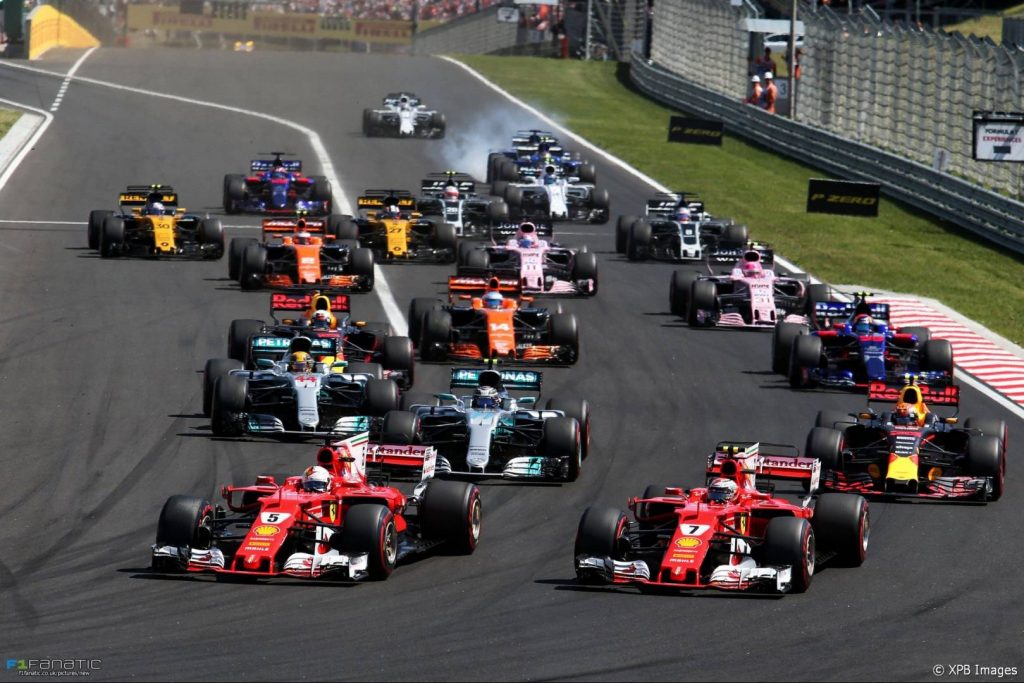
The start of the Formula 1 season has already been delayed due to Covid measures.

Meanwhile, with London in deep despair and suffering daily new records in Covid deaths, the EURO 2020-21 football finals scheduled for Wembley – the second biggest sporting event of the year behind the Tokyo Olympics – may be relocated to Russia despite concerns about the real severity of the pandemic and efficacy of its vaccines.

The Tokyo Olympics dwarfs all these events in scale and complexity many times over. Fresh doubts about the Tokyo Games started to emerge in the new year when a  state of Covid emergency was declared in the Olympic host city and other prefectures.

These doubts have included a lack of information about anti-Covid measures while Olympic officials worked painstakingly to adjust Games-time operations for venues, support services and facilities in line with latest data on the pandemic.

Tokyo organisers have struggled to find a circuit breaker to change the Games narrative. The sudden emergence of a new and highly infectious strain raised fears the virus could ‘float through walls’ and jolted confidence further.

While Japan’s former Abe Government invested much pride and financial support in the Tokyo Games as a project of national and international importance and prestige, plunging popularity polls have also raised doubts about the Games.

This has led to media reports indicating internal government support for the Games may be waning, despite continued public statements of assurance from new Prime Minister Suga that the Games will go ahead.

“Together with its Japanese Partners and friends, the IOC is fully concentrated on and committed to the successful delivery of the Olympic and Paralympic Games Tokyo 2020 this year.” – Part of today’s IOC statement.

Responding firmly to the latest media reports questioning the viability of the Games, IOC President Thomas Bach said: “We have at this moment, no reason whatsoever to believe that the Olympic Games in Tokyo will not open on the July 23 in the Olympic Stadium in Tokyo.”

With hundreds of Covid victims dying every hour in some of the worst hit countries, the future of the Games will depend on the state of the global pandemic and whether Japan can curb the current outbreaks before the Games.

Growing concerns within the international community about proceeding with the Games in the worsening pandemic must also be addressed and resolved as soon as possible.

Especially amongst athlete groups, whose mounting fears about the safety of the Games at the start of the pandemic helped to bring forward the decision to postpone the Tokyo Games in late March.

Influential United States Olympic swimming legend Michael Phelps is one of a number of former Olympic gold medallists who have expressed deep concern about the Games, along with British Olympic rowing icon, Sir Matthew Pinsent.

The rising death tolls have placed the international community and Olympic nations on high alert.

Sir Keith Mills, one of the UK’s and world’s most respected and successful international sports marketing and event planning figures doubts the Tokyo Games can go ahead in the current circumstances.

“Personally, sitting here, looking at the pandemic around the world, in South America, North America, Africa and Europe, it looks unlikely,” according to Mills, who played a seminal role in helping to bring the Olympic Games to London in 2012, along with his close friend, Seb Coe.

Much could be riding on the success of planning for the Australian Open tennis next month, the first major sports event of the year and a microcosm of issues confronting international sport in 2021 and beyond.

Tennis organisers have promised the strictest biosecurity and safest sporting event since the onset of pandemic. World sport’s governing bodies and international federations and host cities hope the Grand Slam could provide new biosecurity model that other elite events could follow.

“The AO preparations have so far however demonstrated how easily the virus can exploit any gaps in biosecurity surrounding international travel, the cornerstone of world sport.”

The AO preparations have so far however demonstrated how easily the virus can exploit any gaps in biosecurity surrounding international travel, the cornerstone of world sport.

This is not good news for the world’s biggest sporting events such as the Summer and Winter Olympic Games and FIFA Football World and Continental cups, which depend on highly complex international travel operations and arrangements.

While international travel and major events have facilitated the global spread of the virus, debate over the safety of such events has intensified in recent weeks as the pandemic continues to stalk the world and its showpiece fixtures.

New research pointing to the risks of inflight transmission of the virus has also placed the future of major events including Tokyo up in the air.

Michael Pirrie is an international communications and commentator on world sport and major events. He was Executive Adviser to London 2012 Olympic Games Committee chair, Seb Coe, and worked with Sir Keith Mills on the UK’s successful bid for the London Olympic and Paralympic Games.  

Digital Transformation Of The FIA World Rally Championship


The FIA World Rally Championship (WRC) is an FIA rallying series with 12 four days events. Each rally is split into 15–25 special stages with huge distances of 300-350 kms covered every rally weekend. While it is highly popular in Europe, the Americas and Australia, Asia and Africa are the next big target markets.

The sport has seen some compelling season long battles and the new era of Rally cars has helped the sport grow in stature to becoming a truly global sport – it is clear the sport is in the midst of an unforgettable period in its history and the partnership with Tata Communications is helping complete the digital transformation of this exciting sport.

How Covid-19 Has Impacted Our Wider Fitness Habits

Over the past year, as the coronavirus pandemic has spread across the planet, many people have been forced to adapt their ways of life from traditions that had long stood, whether that be working from home or lifestyles changes, such as the restriction on physical activity and closures of gyms.

To take a closer look at the second of these effects, MATTA are releasing their latest survey, dedicated to how the fitness habits of the general public have been altered. Matt Hunt, co-Founder of MATTA, tells us more in his insights piece for iSportConnect.

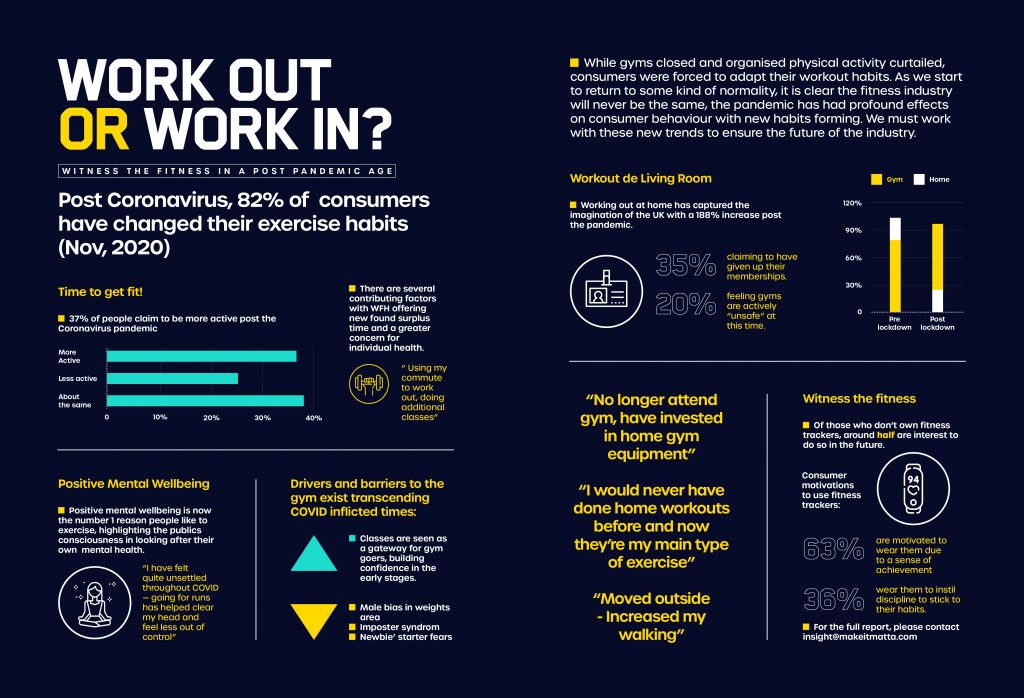
As we navigate one of the trickiest phases throughout this global pandemic to-date – and combine the “final chapter” of the pandemic with the annual January blues. It would be  hard to not look back on 2020, the year that flipped our lives – our economy – and our fitness habits – forever. The fitness industry was forced adapted to life in lockdown and, with that it mind, it is only right we start to assess how it has transformed and the shifts in consumer behaviour. And that is why I believe it is timely to be releasing the MATTA survey, Work our or Work In: Witness the Fitness in a Post-Pandemic Age.  

The sentence “I have felt quite unsettled throughout COVID — going for runs has helped clear my head and feel less out of control” is a sentence that could resonate with so many of us it seems, that is if we are to read and digest the MATTA survey. This sentence was just one response from our revealing survey on consumer behaviours concerning fitness as we emerge from Covid-19, and one that could explain how so many of us feel following  the strangest, most testing of years.  

“The survey shows the pandemic has been a catalyst in the public’s recognition of exercise to mental health: the number one reason people gave for exercising was to ensure positive mental wellbeing.”

It is beyond question that many industries have been affected by Covid, but few in my view have been as affected as the $6 billion fitness sector, which is fast appearing to be a different version of itself from that of 12 months ago; and what makes this so interesting, is this is a sector that directly affects public in its everyday life. This belief that the fitness industry has been transformed is backed up by the headline out take of this survey: 82% of  people admitted to having changed their exercise habits as a result of Covid-19 and 37% claim to be more active.  

Interestingly, what the survey shows is that the pandemic has been a catalyst in the public’s recognition of exercise to mental health: the number one reason people gave for exercising was to not to lose weight, get fitter, but to ensure positive mental wellbeing, whether it be increasing their confidence, improving their sleep, putting them in a better mood or  reducing their anxiety. This is in stark contrast to recent history; take, for example, a 2010 study, when muscle building and losing weight were the respondents’ main drivers for exercise.  

Of course, one of the most direct impacts of a transformed fitness industry will be the gyms. As the survey proves, Covid-19 changes everything for the gym industry. And so, it is recommend that as we emerge from the pandemic, gyms should display not only greater flexibility in their services and package offering, but should pivot to more mental wellbeing focussed messaging when speaking to their consumers.

The survey demonstrates that, unsurprisingly, consumers have safety concerns about returning to gyms, social distancing, sanitisation and ventilation are all key safety enablers. However more needs to be done to restore consumer confidence and prove to doubtful consumers gyms are fit for purpose once again, especially now that new fitness habits have formed.  

One of the highlights of this enlightening survey – and one of the greatest threats to gyms themselves – is that people are now bringing the gym to their homes. People are investing in home gym equipment more, as evidenced by the fact that brands such as Peloton have grown by 350% during the pandemic. Home gym equipment sales overall soared by a huge 5813% between the date the UK went into its first lockdown on 23 March and July – interestingly, trainers were the most purchased item of all. Then, there’s other signs of this consumer exercise shift, with brands such as Apple launching their new watch-powered  fitness experience, Apple Fitness Plus, bringing world class workouts by the top trainers to people in their homes.  

37% – The amount of people who claim to be fitter after the coronavirus pandemic.

Despite these challenges, however, our survey makes it clear there is a way out for gyms that display the right flexibility, agility and become more consumer-focussed. The name of the game for exercise companies will be a new, hybrid physical-virtual business model, the type which companies such as Barry’s and Virgin Active have already adopted. In doing so, they have proven to be ready to rise to the challenge. In 2021, and in the years to follow, gyms will need to offer more flexible memberships to cater to an increasingly demanding, and all-powerful, consumer. As our survey shows, tailored membership packages that offer consumers a number of visits per month will be one of the ways to go; and, even as restrictions are eased, gyms will need to provide the right blend of physical-virtual offerings in a more safety-conscious post-pandemic world.  

MATTA was set up five years ago precisely because we believed that sport, fitness and wellbeing matter, which, when combined, unequivocally promote happier and healthier lives. With the onset of Covid-19 this past year, it is clear that this sentiment, this healthy trio, is gaining traction amongst a mainstream audience, who, in large numbers, are realising the importance of overall wellbeing in their lives. The direction of travel surely  presents massive opportunities for those that can capitalise on the seismic shift in consumer behaviour that we’re now witnessing – much of which will inevitably be here to stay,  as people across the UK and worldwide start to reap the healthy benefits of their own new  normal. If you would like to receive a complimentary copy of the Work Out or Work In report, then  please email: insight@makeitmatta.com

Digital-Native Media: The Rapid Ascent

The past decade has seen an influx of digital-native media companies which have thrived completely online. These are companies that have scaled up without the legacy infrastructure that their traditional counterparts have long relied on (and now have to wean themselves off).

Rangers Sign Fortrade As Official Online Trading Partner

RANGERS have signed Fortrade as their new Official Online Trading Partner. The UK-based Fintech company will embark on an initial 18-month  partnership. 

The Fortrade brand will be visible to a global television audience on the LED boards for this  weekend’s Old Firm match at Ibrox as part of a wide-ranging partnership that includes  visibility at Ibrox and across Rangers digital platforms. 

Fortrade Ltd was established in 2013 and has grown rapidly to become a leading provider of  online trading solutions for individual and institutional clients in various international markets.  Based in Chelsea, London, they are innovators specialising in developing trading platforms  that are both technologically advanced and user-friendly. 

Commercial and Marketing Director, James Bisgrove commented: “We’re excited to  welcome Fortrade as the newest member of the Rangers Commercial Partner family and are  delighted to have them on board for the remainder of the 2020/21 season, as well as our  historic 150th Anniversary season in 2021/22. 

“Rangers’ support spans the entire globe which will provide worldwide exposure for Fortrade,  who will benefit from a wide range of activations both at our iconic Ibrox Stadium and across  the club’s enhanced digital platforms. 

“Fortrade is on a clear pathway to becoming the world’s leading provider of online trading  and Rangers look forward to supporting Fortrade in reaching this goal through our innovative  new partnership.” 

Chris Warburton, Chief Executive Officer of Fortrade, said: “We are honoured to be  partnering with such an esteemed football club as Rangers FC, which has established a  strong pedigree over its 148 year history. Rangers FC is a natural fit for us as Europe is our  largest customer base, and we share with them a passion for striving for success whilst  having an ethos of transparency and respect for our customers, fans, partners and  employees.

“In addition, this partnership with one of the most successful clubs in Europe that  plays in one of the most popular leagues in the world will help us in furthering our strategy of  increasing our brand recognition and expanding our customer base globally.” 

Olympian Callum Skinner: “Russia has not been banned. This is merely a Russian Olympic kit rebrand – what message does that send to future athletes?”

Contrary to an athlete’s outcome-driven nature, sports politicians are rewarded for being ineffectual. They are paralyzed by sycophantic attempts to appease everyone and solve nothing.

Nowhere is this better illustrated in the long-running Russian Doping scandal. The cost of continued inaction has been stark. “Sporting Refugees” has entered our vocabulary as Russian whistleblowers sought refuge in the US, London 2012 continues on its trajectory towards the dirtiest games in history, athletes’ welfare jeopardised, and the values of sport, are being questioned as a result of ineffectual, impotent global anti-doping watchdog that failed to tackle the Russian doping scandal when the world stood watching.

Suppose we disregard our default character regardless whether you are an outcome-driven athlete or a laissez-faire sports politician, there should be a primary human value to act in the face of such egregious wrongdoing. At what point do sports politicians stand up for the majority and stand firm against a Russian state intent on desecrating sport?

The answer, it would seem, is not today. The best that the WADA-IOC duopoly, and their new friends in CAS, could muster is a Russian rebrand. In our short form society, you’d be forgiven for thinking that Russia is banned from the next two Olympic games: it’s what was widely misrepresented in headlines.

The reality is at best nuanced and at worst an example of miss-reporting. Make no mistake: Russia is not banned from international sport. They’ll be at Tokyo 2020 and other major sporting events en masse rebranded the Russian as ‘Neutral Athletes from Russia’. For WADA to claim that it has “banned Russia” is disingenuous, it is playing the public for fools and further alienating its number one stakeholder: the clean athlete.

When we finally tune into Tokyo 2020 next summer, you’ll still see a full-strength Russian Team in Russian colours with ” Russia” emboldened on their kit. It seems to the authorities a ban merely constitutes not displaying the flag or singing the national anthem. As one commentator put it, it’s akin to Lance Armstrong “the brand” being banned from the Tour de France but Lance Armstrong “the person” is still allowed to compete.

The parallels between cycling in the 80s and 90s and the Russian doping scandal are stark. “those who do not learn history are doomed to repeat it”. In cycling two ultimately preventable steps were forced upon the sport due to its inaction. European governments legislated to make doping a criminal offence and an exodus of sponsorship funds took place before sports politicians finally acted. History is repeating its self and the question is how low do we sink before we act? The Rodchenkov Act was only last week written into law in the USA.

A regretfully necessary piece of legislation where, just as France had to address cycling’s troubles, a national government has stepped in where sporting authorities have failed. It’s now a federal offence to engage in a doping conspiracy with a single US dollar or asset constituting a jurisdiction. Step one is complete; step two an exodus of sponsorship is on the horizon.

The commercial damage of these scandals is growing. Candidate cities to host the Olympic games are dwindling, embroiled by scandals the games have become dependent on autocratic countries to host events. The sad irony is that the Olympic movement can’t see the wood for the trees. In failing to act time and time again, the IOC can only appeal to autocratic nations, appealing to such nations means diluting your values further and further into the gutter. We’re caught in a cycle, where, like cycling, the final outcome could be rock bottom with a long journey to redemption. Sports politicians and their aversion to the action of any kind are imperiling our future.

What does the future hold for WADA and the anti-doping system as a result of yesterday’s unpopular decision? The Russian doping scandal has incompetently bumbled along since 2010, and it’s set a worrying precedent in its wake, I believe we have further to fall. Understanding the character of sports politicians validates my prediction, in the words of former WADA president Craig Reedie referring to Russia, “it might have been easier for us to cut our teeth on a less significant [country]”. This under-reported quote may have been the most significant statement a WADA official has ever made. The mask slipped, and it’s telling. Not only can a country with the financial, sporting and political might of Russia continue unchecked, other similar countries are welcome to join the bandwagon without fear of retribution. Yesterday’s decision was clear, there are no consequences for your actions.

Where does this leave the athletes? Disenfranchised yet again, they look to authorities to ensure their safety, reflect their values and validate their results. However, we see a glimmer of optimism from the athletes, they have learnt from Cycling’s past where the politicians have not. There used to be a culture of Omerta (code of silence) among cyclists. Now athletes worldwide are taking the opposite approach, they are speaking up and demanding better; podium protests, campaigns for reform all tentative actions of revolt that are happening now and are athlete lead. This time the athletes have learnt from history and they are refusing to see their sport end in the gutter.

Callum Skinner is a British former track cyclist. He won the silver medal in the individual sprint at the 2016 Summer Olympics, and was a member of the British team that won gold in the team sprint.

Premier League Extends $500m BeIN MENA Rights Deal

The Premier League and beIN MEDIA GROUP have announced a major new rights deal that will see beIN SPORTS as the Premier League’s official broadcast partner in the Middle East and North Africa (MENA) until 2025.

The deal is for the 2022-2025 rights cycle and means beIN SPORTS can broadcast all 380 matches live in each season across all 24 countries in the region. beIN SPORTS has been the Premier League’s broadcast partner since 2013.

Premier League Chief Executive Richard Masters said: “We are pleased to agree a significant deal with beIN SPORTS, who are a longstanding and valued partner. They have an outstanding track record of delivering top-quality Premier League content across all its platforms.

“Our clubs have millions of passionate fans across the Middle East and North Africa and beIN has played an important part in promoting the Premier League and helping engage those fans with our clubs and players.

“Dedicated coverage of every match in the Premier League, as well as comprehensive support programming and digital content, has helped to further grow interest in our clubs and we look forward to continuing our fantastic partnership with beIN.”

Chairman of beIN MEDIA GROUP, Nasser Al-Khelaifi, said: “We are delighted to renew our long-established and trusted partnership with the Premier League through to 2025.

“This deal demonstrates that rights-holders who do the most to protect their intellectual property also do the most to protect the value of their media rights.

“beIN is proud to be the Premier League’s official partner across all 24 countries in the Middle East & North Africa, and we look forward to inspiring and exciting the millions of Premier League fans in the region both in the lead-up to the 2022 FIFA World Cup and for many years beyond.”

Premier League action will be broadcast live and exclusively by beIN SPORTS in both Arabic and English language via their dedicated portfolio of 19 sports channels, together with special programming presented by some of the biggest names in world football.

Extreme E Partners Global Luxury Brand Moncler

Extreme E, the new electric off-road racing series, has announced it is partnering with Moncler.

The renowned global luxury brand will provide a dedicated uniform for Extreme E’s on-site team, protecting them from the elements during the remote races. The co-branded uniforms include some of the brand’s most iconic outerwear as well as sweatshirts, t-shirts, soft-accessories and shoes for a mix of terrains.

Extreme E and Moncler both share a common purpose when it comes to sustainability. The Italian luxury brand recently launched its new sustainability plan – Moncler Born to Protect – that renews the company’s commitment towards sustainable development and further integrates social and environmental responsibility into its business model, focusing on five strategic drivers: climate action, circular economy, fair sourcing, enhancing diversity, and giving back to local communities.

This ties in perfectly with Extreme E’s environmental aims to raise awareness on the climate emergency and inspire action, all while delivering motorsport in the most sustainable way possible, from hydrogen fuel cells for car charging, to no spectators on-site, to reduce the championships carbon footprint.

Alejandro Agag, Founder and CEO, Extreme E, said: “It’s great news that Moncler will be kitting out the Extreme E team on location. Not only are we heading to places like the Arctic in Greenland, where our team will need to be protected from the elements by the best quality gear, but it’s also crucial that we work with brands that share our same environmental ethos. Moncler is certainly the best partner to support us on both these levels.

“Moncler’s latest sustainability commitment covers many aspects of Extreme E’s focus. From reducing emissions and utilising clean energy, to supporting local communities, to embracing diversity –these are all things Extreme E stands for too.”

Founded in 1952, Moncler was born to protect from the cold. The Moncler Born to Protect Sustainability Plan extends this founding purpose of protection to people and to our planet, tackling some of the most pressing challenges facing the world. Like Extreme E, Moncler aims to be carbon neutral in 2021 and use 100% renewable energy by 2023.

Not only that, Moncler will soon have a Diversity and Inclusion Council to boost cultural change, something Extreme E is also championing with its stipulation that each team must field a male and female driver in a bid to drive equality in motorsport.

Giving back is also a key part of Moncler’s sustainability strategy by supporting local communities and ensuring all its employees are volunteering by 2022.

Moncler’s support to local communities is a crucial aspect of Extreme E’s plan too. As well as shining a spotlight on the environmental emergency, the series also seeks to leave a long-lasting positive impact through its Legacy Programmes.

Extreme E’s Legacy Programmes include national climate education for schools in Greenland with UNICEF, supporting agroforestry in the Amazon with The Nature Conservency, and planting a million mangroves in Senegal with the Oceanium NGO, with more projects to be confirmed.

The inaugural Extreme E season starts in March 2021 in AlUla, Saudi Arabia, before moving to Lac Rose, Senegal in May, Kangerlussuaq, Greenland in August, and the Amazon, Brazil in October, before the season finale in Patagonia, Argentina, in December.

LaLiga Agrees Fan Engagement Deal With GreenPark Sports

GreenPark Sports, the fan-focused publisher and developer of mobile games and social experiences, has announced a global partnership with world-renowned Spanish soccer league LaLiga.

GreenPark and LaLiga will work closely together in the multiyear deal to engage next-generation soccer fans in GreenPark’s virtual metaverse for sports and esports fans.

With the commitment to captivate local fan communities and networks, the partnership allows fans to select any of the league’s 20 teams as they flex their team spirit using their in-game avatar. As a GreenPark “superfan,” players will also be able to digitally outfit their avatar with authentic and custom LaLiga team gear, while participating in obstacle course runs, dance battles and various other minigames including some that leverage real-time scoring and statistics. In-game currency can also be exchanged for exclusive rewards and digital fan-gear.


“As one of the leading sports brands in the world, we continuously explore all the unique avenues to connect and engage with our fans globally. This partnership will let us get closer to the gaming community worldwide and offer them the possibility to follow the best soccer in the world, LaLiga” said Oscar Mayo, Head of Marketing and International Development at LaLiga. “We are confident that our partnership with GreenPark Sports will help us reach the next generation of fans by offering an exciting virtual arena for them to be a part of.”


Launching in early 2021, GreenPark Sports creates immersive social platforms for the new generation of sports and esports fans. The free-to-play mobile app will offer in-game experiences, allowing fans to battle it out through a variety of challenges and become the undisputed “Best Fans” of their league. Players can earn rewards virtually as well as exclusive tangible rewards.

“LaLiga represents some of the largest brands in all of sport, and the fueling passion from their fans is unparalleled,” said Tony Grillo, Vice President of Business Operations at GreenPark. “We look forward to co-creating special experiences for their fans and seeing them bring their energy into GreenPark!”