Veloce Esports has announced a partnership with Danish audio-visual brand, Bang & Olufsen, who will supply the London-based company with a range of premium audio devices for its new gaming HQ in Fulham and headsets for its talented pool of drivers.
The speakers from Bang & Olufsen now create the soundscape to Veloce’s new HQ which include the unique modular Beosound Shape wall speaker, which takes centre stage in the entry to the building. Other featured products include Beosound 1 and Beoplay M5 portable speakers, a Beovision Eclipse television, two Beosound Stage soundbars and the iconic Beoplay A9 speaker, to name just a few.
The collaboration marks Bang & Olufsen’s first venture into the gaming industry – Beoplay Portal, which was launched by the Danish audio company in March 2021, and is the first gaming headset and product in what is a new category for the brand.
Rupert Svendsen-Cook, CEO, Veloce Esports commented: “We’re really excited to welcome Bang & Olufsen to the Veloce family. There are a lot of synergies between us and the products are a great fit for our brand. We’re looking forward to promoting the new range across our vast media network and putting Bang & Olufsen in front of a highly engaged as well as fresh audience.
“We’ve embraced the last 12 months to maximum effect with major growth across all of the company’s key verticals, including hitting record viewership, securing major new business and expanding our full time workforce to 36 staff as we’ve moved into our new Fulham HQ. The partnership with Bang & Olufsen only serves to solidify our credibility and growing status.”
Scott Anderson, Director UK & IE, Bang & Olufsen added: “Veloce Esports is a very natural fit for us. As such a new and innovative organisation, we believe the partnership represents an ideal opportunity to introduce our brand to their gaming audiences, and their broadcast network numbers speak for themselves.
“Equipping Veloce’s new gaming HQ was a really fun project for us as it was a blank canvas, allowing us to tailor it to their requirements. Veloce’s broadcast talent and esports teams will also benefit from using our brand-new Beoplay Portal luxury gaming headset, offering industry leading sound quality for a truly immersive wireless experience — with features including feed-forward ANC and all-new virtual boom arm, it’s sure to give them the winning-edge! We look forward to developing the partnership further and are excited to see where it will take both Veloce and Bang & Olufsen.”
Harlequins has announced Ticketmaster Sport as their new ticketing services partner for the 21/22 season onwards.
Harlequins have chosen Ticketmaster as their preferred partner to provide sports ticketing technology solutions on a long-term deal with the Club. Having reviewed the market and run an extensive pitch process, Harlequins’ decision was primarily based around delivering the best fan experience.
Harlequins fans can also expect a new and improved, highly intuitive fan ticketing website that will make it easy for fans to buy and receive tickets seamlessly. The industry leading platform is already utilised by a range of leading clubs and organisations nationally and internationally including Arsenal, Tottenham, The RFU, NFL and IAAF. Harlequins will benefit from a constant focus on innovation that improves the fan experience.
In addition, Harlequins will take advantage of Ticketmaster’s significant marketing support to build awareness of the Club and grow the fanbase nationally and internationally.
“We are delighted to appoint the industry leading partner as we know the additional value that Ticketmaster can bring to Harlequins and our supporters. Ticketmaster clearly demonstrated a deep understanding of our industry, our supporter needs and how to deliver a brilliant level of service. Our Members will be the first to benefit from the new enhanced ticketing platform when our Season Ticket Membership opens for renewals on 20th April, but all ticket buyers will see this from the start of the 21/22 season this autumn.”
Laurie Dalrymple, Harlequins Chief Executive Officer said: “We’re extremely proud to have been selected by Harlequins to be their new ticketing technology provider. Our approach is to be supportive through solutions, working in partnership with our clients to provide tools that ensure the club’s processes are made more streamlined and efficient, whilst at the same time providing a great experience to fans. Innovation based on resilience is a core value at Ticketmaster and our position at the heart of the sports industry means our club partners rely on us to have a robust and resilient platform whilst being able to deliver the latest in ticketing technology innovations.
“We’re excited to see this partnership develop and deliver upon our shared ambition to grow the Club’s fanbase. And we are excited to already have future upgrades and additional features planned that will see the Harlequins’ ticketing platform continue to evolve and adapt to fans’ needs.”
Chris Gratton, Ticketmaster Sport, Chief Operating Officer said: Harlequins supporters will have the opportunity to try out their new ticketing experience from 20th April when Season Ticket Membership renewals open for the 21/22 season. The Club will contact supporters directly on this date.
The 21/22 Gallagher Premiership season is due to start in early September and supporters will be able to buy Match Tickets in the weeks building up to the start of the season assuming COVID regulations relax as expected.
The team’s Challenge Cup kit will feature the logo of Palmer Square, a $15 billion asset management firm. Palmer Square has a long successful history investing in corporate credit and structured credit and is 100-percent management owned. The announcement marks the introduction of the team’s commitment to give 10 percent of all partnership revenue back to the community.
“Palmer Square stands out in asset management not only as a majority woman-owned firm, but for its leadership helping clients align their values with investments,” said KC NWSL Chief Operating Officer Amber Cox. “Palmer Square’s expertise and proven success are a perfect fit for our team’s mission to elevate our athletes and community and promote and empower women.”
Based in the Kansas City metro with a presence also in London, Palmer Square was founded in 2009 by CEO Chris Long and serves a diverse client base of institutional investors, foundations, and endowments, as well as individuals. Of note, Palmer Square has been a leader among credit investors in Environmental, Social and Governance (ESG) investing. The Long family name will be familiar to KC NWSL fans as Chris Long and Palmer Square Chief Investment Officer Angie Long are the team’s Co-Founders and Owners, along with Brittany Matthews.
“The trajectory and platform of KC NWSL and the entire league are powerful ways for us to tell the story of Palmer Square and the innovative approach we bring to our global client base,” said Chris Long. “There is so much commonality between the platforms; in particular, we have a brand that stands for the community and promotes women and inclusion and we are excited to further invest in a substantial way.”
The first piece of the partnership is rooted in the team’s pledge to contribute 10 percent of partnership revenue to the community. In collaboration with Palmer Square, the team’s initial efforts will be aimed at programs and agencies that promote expanded access to sports and play for underserved youth populations. KC NWSL and Palmer Square have selected Variety KC as the team’s first community partner.
“Variety is so honored to be selected as KC NWSL’s first community partner. They truly understand the importance of supporting underserved youth populations,” said Variety KC’s Chief Inclusion Officer Deborah Wiebrecht. “Variety KC would not be able to serve Variety kids and families without the support of amazing Kansas City organizations such as Palmer Square. Thank you for joining our #InclusionRevolution and helping us to create the most welcoming and inclusive community in the nation.“
All 64 matches of the FIFA World Cup 2022™, to be held in Qatar, will be broadcast live on SuperSport (www.SuperSport.com) after the World of Champions concluded a broadcast deal with FIFA.
This continues SuperSport’s long-standing association with football’s governing body and reaffirms SuperSport as Africa’s home of world football. SuperSport’s pay TV broadcast rights extend to all platforms across sub-Saharan Africa and represent even more opportunities to provide fans with compelling live content.
High Definition coverage will be across multiple channels with expert analysis, in-depth digital offerings, supplementary programming and much more in keeping with the grand scale of the event.
To be contested by 32 teams, including champions France, the World Cup will be held for the first time from November 21 to December 18, and the first to be held in one city.
The FIFA acquisition sits alongside SuperSport’s already substantial offering that includes all the major football leagues from around the world.
“This is fantastic news, especially after the success of the 2018 tournament, a fitting celebration of the beautiful game,” said Marc Jury, Chief Executive of SuperSport. “The FIFA World Cup™ always excites fans and the kick-off times will be most convenient for our viewers, given friendly broadcast time-zones.”
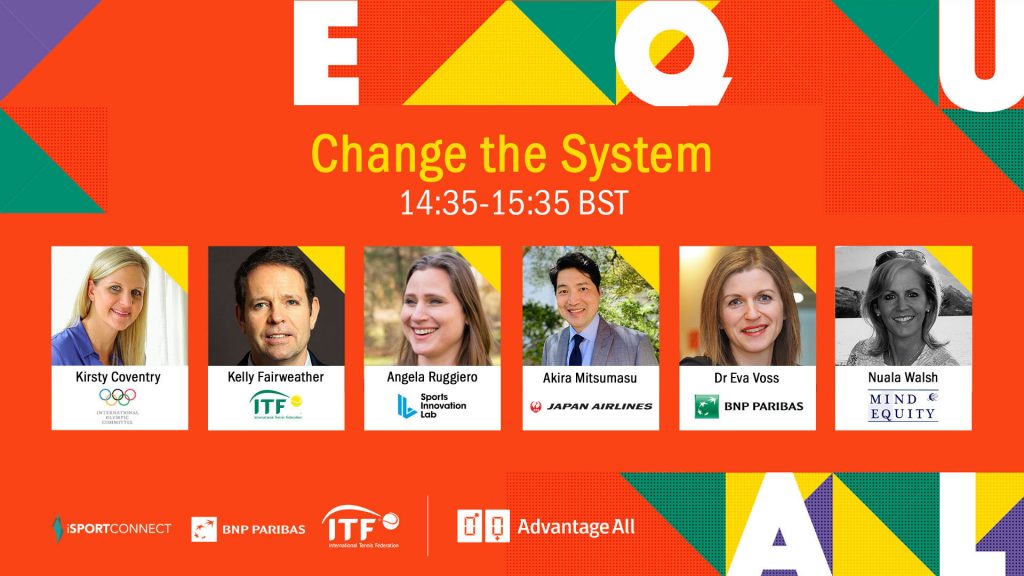
On Monday we are hosting a joint global forum ‘Level The Playing Field’ alongside the International Tennis Federation, taking place between 2-5pm BST.
Taking part in our second panel will be Peter Hutton, Head of Sports at Facebook, Annika Sorenstam, President of the International Golf Federation and Caroline Weir, professional footballer for Manchester City FC Women and Scotland Women.
They are also joined by Victoria Azarenka, former WTA World No.1 and two-time Grand Slam champion, Chanda Rubin, Presenter on the Tennis Channel and former WTA World No.6, and our moderator, Catherine Whitaker.
Gender inequality is prevalent in sport. Girls enter sport later, participate in fewer numbers and exit earlier. One of the key reasons is a lack of role models. But even when female role models are given visibility, they are often objectified or demeaned. Even in more positive coverage, they are regularly portrayed as women first and athletes second. How does representation of male and female athletes vary? What change is needed? And how are we going to bring it about?
The ITF has been working with Ipsos Mori to conduct further research into this, which will be shared for the first time during the session.
In case you have missed any of our announcements, here is also a quick recap for our panel one speakers below.
iSPORTCONNECT and the International Tennis Federation are delighted to bring the sports industry event will bring together influential and inspirational individuals from sport and business to debate and advance gender equality through proactive, solution focused discussion.
With the increasing trend towards sports properties securing long-term commercial partnerships, the Deloitte Sports Business Group have looked at what this means for International Federations and some key factors to take into account before entering into such a partnership.
Multiple sports properties including IFs have entered long-term commercial partnerships. These partnerships include traditional sports marketing agencies as well as private equity and other external investors.
Why should an International Federation consider a long-term commercial partnership?
There are some common themes around why IFs (and indeed other sports properties) have entered long-term commercial partnerships: Investment capital.
“A long-term commercial partnership provides an opportunity for external investment to enter the sport, and thus accelerate the development of these activities.”
IFs with ambitious strategies to develop and improve elements of the presentation of their sport (e.g. broadcast production quality, live event experience, digital offerings, merchandising, fan engagement) are unlikely to be able to implement all of their plans at once, particularly if they have limited cash reserves.
A long-term commercial partnership provides an opportunity for external investment to enter the sport, and thus accelerate the development of these activities.
People and network
In addition to investment capital, a longterm commercial partner can also provide access to people with the skills, experience and connections required to implement growth activities.
Examples of resources partners could bring include:
• An incentivised management team with the drive to accelerate growth; • A strong network of people providing valuable connections; and • Specific skills and expertise that the IF does not have in-house – this is particularly the case in recent years in which digital initiatives have become a higher and rapidly evolving priority.
For example, the growth of direct-to-consumer opportunities (such as live-streaming through rights holder owned platforms and associated fan engagement through social media and mobile applications) are not historic “bread and butter” offerings for many IFs. A long-term commercial partnership with a partner that has strong digital capabilities including monetising digital assets could therefore be particularly attractive to IFs in this situation.
Who might the partner be and what commercial models are available?
There are a wide range of partnership types available to IFs and all can be specifically tailored to create a bespoke deal to suit the IF and the third-party partner…
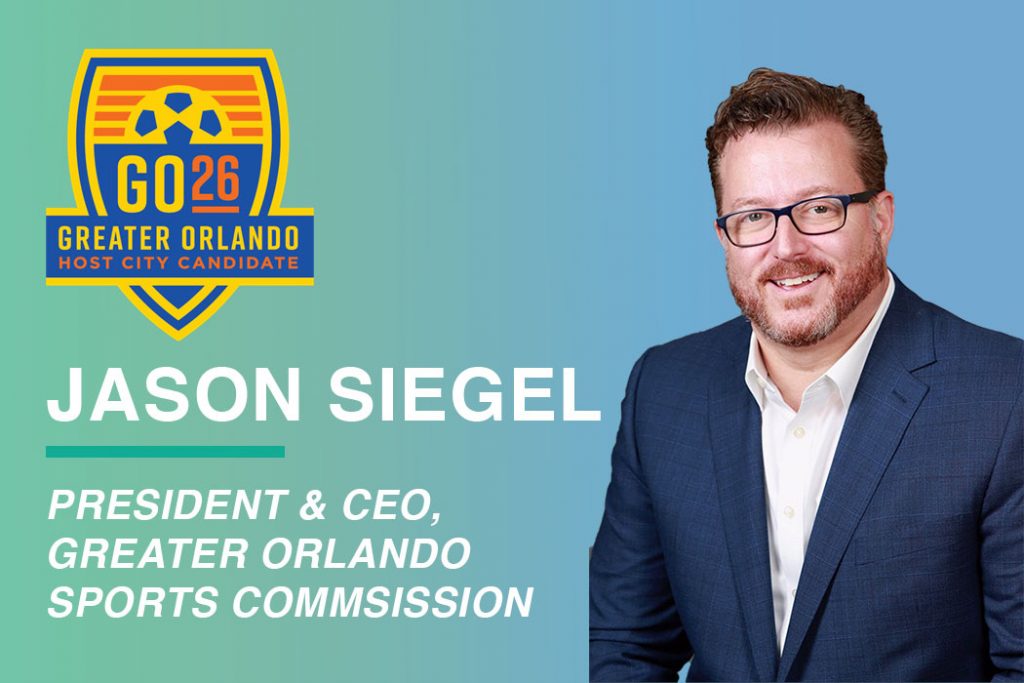
iSPORTCONNECT’s latest Member Insights piece comes from Jason Siegel, President and Chief Executive of the Greater Orlando Sports Commission. Here, Jason provides a closer look at the legacy of the 1994 FIFA World Cup and why he believes 2026 has the potential to bring in even greater rewards.
I’m often asked why.
Why does Orlando want to host matches of the FIFA 2026 World Cup?
This question takes the conversation towards the ‘L’ word. Legacy.
For every great American city seeking to play their part in 2026, legacy is not one of the questions they face.
It’s the question.
It’s the why.
The “legacy potential” of the forthcoming FIFA World Cup in North America is huge and timely. As we anticipate the 2026 event, we can evaluate what 1994 delivered – and dream of an even more ambitious soccer-inspired agenda beyond 2026.
“America has always been soccer’s great growth opportunity – 2026 is surely the moment the dream becomes real.”
Orlando, as one of 17 hopeful US candidate host cities for 2026 and a favorite venue back in 1994, has had a ringside seat to watch the growing relevance and popularity of the game.
The USA is now a soccer nation, home to 100 million soccer fans. Orlando is now a soccer city.
The change has been immense. And in counting the benefits in purely soccer terms, you cannot divorce North America from the rest of the world. For FIFA and for the game, it is potentially the most lucrative region on earth – the biggest sponsorship, licensed merchandise and media marketplace in the world. America has always been soccer’s great growth opportunity – 2026 is surely the moment the dream becomes real.
Major League Soccer (MLS) is the greatest legacy of 1994. Creating a successful league was the USA’s promise to FIFA when it was awarded the event back then. MLS was founded in 1996 and 25 years on, there is a good story to tell.
MLS has doubled in size since 2009, when there were only 15 teams. There will be 30 franchises by 2022, including in Canada; an increase of 300%. The average MLS club has surged 400% in value since 2008 – Forbes put the average value of an MLS franchise in 2019 at US$312 million.
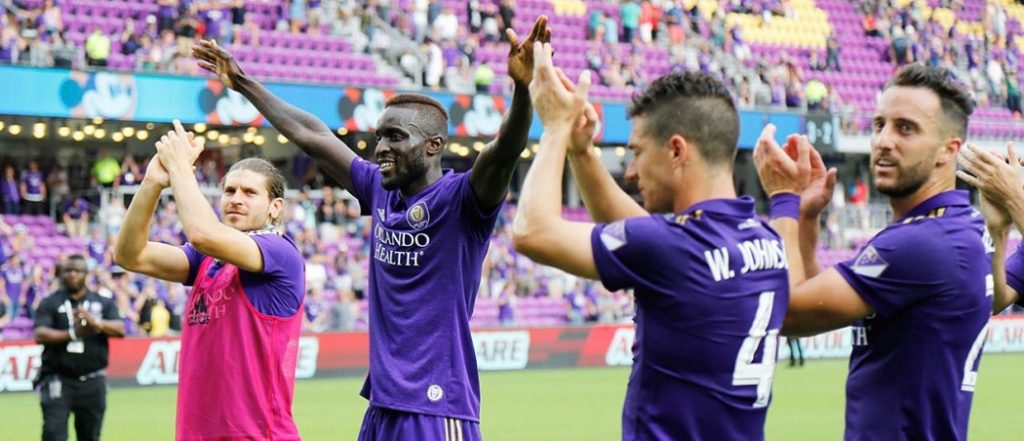
This picture been mirrored and even amplified in Orlando. March 8, 2015 was a day we will remember forever. 62,510 City fans flooded the Orlando Citrus Bowl for Orlando City’s inaugural MLS match against fellow expansion club New York City FC. The match was the largest ever for a soccer game at the Orlando Citrus Bowl and the second largest opening weekend for a MLS franchise.
Orlando has never been as organized around soccer as we are now. This is across government, the private sector and the grass roots. “Go Orlando” is working seamlessly with a huge network of local organizations to promote soccer tourism and – even during the pandemic – we have done so much to keep the dream alive.
We have helped nurse MLS through a desperate year, creating the environment for a safe resumption of play in the COVID-free Disney-Orlando bubble, thus enabling the League to save revenues through preserving many of its commercial contracts.
At national level too, the US men’s and women’s national teams have maintained their strong connection with the city. The men’s team has played seven matches in Orlando to date, winning the last five in a row, including all four held at our Exploria Stadium. And the women’s national team has had a clean sweep, winning every one of its 17 matches in Orlando. There are more to come.
Everything that has happened in the last few years – from the advent of Orlando City to the opening of the Exploria Stadium in 2017; from the Orlando bubble to the recent staging of the Concacaf Tournament in Orlando and many national team matches, confirms the upward trend for soccer in our area. It’s all part of the legacy of 1994. It’s been a great run.
The future lies with the young. Every sport needs strong grass roots, particularly soccer.
The FIFA World Cup USA 1994™ drove a doubling of youth football participation in America. In Orlando, we believe we are on course to double down again.
Orlando City FC joined Major League Soccer as an expansion franchise in 2015
As Alex Leitao, CEO of Orlando City Socer Club points out: “Our organization has invested significantly in the Greater Orlando community – Orlando City, Orlando Pride, Orlando City’s Development Academy, Orlando City Youth Soccer, Exploria Stadium, the men’s and women’s training grounds (in Osceola and Seminole Counties, respectively), and our new Youth Soccer Network”.
“Over the same timeline that Orlando City SC has been growing, we believe the youth soccer participation for both boys and girls in Orlando has likely quadrupled.”
Orlando has been developing into a major soccer center for young players. However, this growth has come to a screeching halt in 2020; a disastrous year for kids’ sport.
Orlando has a raft of urgent plans to resume this growth as we work towards 2026. First and foremost, we need to define the size of the problem. We are developing vital Orlando-specific statistics to guide the creation of mechanisms to push back against the decline in sport participation.
GO Sports has been joined by more than 30 regional leaders to participate in a newly formed youth sports task force. The Greater Orlando Youth Sports Survey, supported by Advent Health will be distributed via members of our task force and the results should give us a real picture of what we face at the youth level.
We believe soccer – inexpensive, universal – is the right remedy. Our recent launch of a Youth Soccer Network, will expand the pool of talented young players in the Orlando area and accelerate the uptake of this sport.
We are bringing soccer to under-served communities by providing free soccer programming and investing in safe places to play. To date, Orlando City Youth Foundation has installed nine mini-pitches in under-served areas of Greater Orlando. This will help all kids and, who knows, nurture some of the home-grown stars of tomorrow.
Orlando City Youth is Florida’s leading program for developing players from eight to 18 and the only club in Florida to offer both U.S. Soccer Development Academy program and the ECNL program. 2026 should bring thousands of young people not currently affiliated – including from underserved and immigrant communities – into the ranks as registered players.
So, looking forward, what will be the soccer legacy of 2026? Like a huge, slow-gathering wave, it is already having an effect, long in advance of the opening ceremony.
“Hopefully the excitement and energized atmosphere of the approaching 2026 event will introduce new people, young and old, to soccer.”
2026 is “the second half” for soccer in the USA. It will enable us to fulfil our soccer agenda. It will provide the momentum to bring the sport into under-served communities, as we work with the US Soccer Foundation to inspire participation and teach life skills. To create a sense of community through the sport.
And hopefully the excitement and energized atmosphere of the approaching 2026 event will introduce new people, young and old, to soccer and enable us all to develop that springboard for homegrown talent that will fulfil America’s ambitions as a great soccer nation.
Meanwhile, Orlando will help deliver – as the best host, with the best facilities to stage all levels of soccer competition – the framework for success. Legacy is not just a question – it is the question.
The new Formula 1 season is almost upon, with competitive racing back underway this weekend, as Bahrain hosts the opening race in the 2021 F1 calendar. Ahead of this, iSPORTCONNECT will be running some special interviews this week before lights out on Sunday.
To kick off the week we begin with Jefferson Slack, Managing Director of Commercial & Marketing at Aston Martin Cognizant F1 Team. Jeff spoke to our very own Jay Stuart as part of a new series of ‘In Conversation With…’, looking at his personal entry to F1 this year and what it means to have the Aston Martin brand back in the sport.
The last time Aston Martin took part in Formula 1 was so long ago James Bond had not yet climbed behind the wheel of the car he made famous in Goldfinger. Sixty years later in Bahrain next weekend the new Aston Martin Cognizant team will start the Grand Prix with four-time world champion Sebastian Vettel joining Lance Stroll on the grid.
The latter is the son of none other than Lawrence Stroll, the billionaire chairman of Aston Martin Lagonda Global Holdings, the LSE-listed group that is jumping back into the racing game with its own Silverstone-based works team after a run as technical partner of the successful Red Bull team. The new team is actually a rebranding of Stroll’s Racing Point team, which competed in F1 for the past two seasons.
“Lawrence Stroll is a visionary. He understands both sides of the equation, the iconic luxury automobile brand and Formula 1.”
But Aston Martin’s new commitment represents a lot more than a branding exercise. It’s full integration of automobile company and motorsport competitor.
“It is an enormous leap,” says Jefferson Slack, the Managing Director of Commercial & Marketing at the Aston Martin Cognizant Team. “Lawrence Stroll is a visionary. He understands both sides of the equation, the iconic luxury automobile brand and Formula 1. This is the best activation ever undertaken by a car manufacturer. It’s a classic case of 1+1 = 3.”
Bear in mind that the ‘luxury’ identity of Aston Martin as an independent manufacturer changes the arithmetic from the start. If F1 gets only two of three thousand potential customers to the new team’s races during the season, that’s half the car the company sells in a year. And making dealers feel a part of the F1 adventure is very much part of the agenda.
You might think that this is also a big jump for Jeff, an American whose career has included four years as CEO of Inter Milan and senior roles at agencies like IMG and Wasserman. But not so much, he says.
“What makes F1 different is the scale of the market and the collaboration. It’s global and we travel around together.”
“My outlook has always been about trying to bring the best learnings from the U.S. to the international stage. They are different on the surface, one’s built around leagues and the other around federations, but underneath the models are usually pretty much the same. There is a central organising body, in the case of F1 there are two with the FIA and FOM. And we have ten entities with their own self-interests competing to win. That’s just like football with a league and the competing teams in it.”
In principle, the F1 team is like Inter.
“What makes F1 different is the scale of the market and the collaboration. It’s global and we travel around together.”
And when it comes to control, there’s an important difference in the media rights. “We have fewer rights than a football team. TV and highlights are controlled by FOM. That means a team needs to be pro-active and creative about the content it uses to engage fans.” Aston Martin Cognizant already has 10 people working full time on that content creation.
Building a fan base is a fundamental aim of the F1 investment. “We have a clear objective of getting people to register,” Jeff says. Again, the luxury profile fits the strategy. If you can get only 0.5% of the fans interested in buying an Aston Martin, you’re sitting pretty.
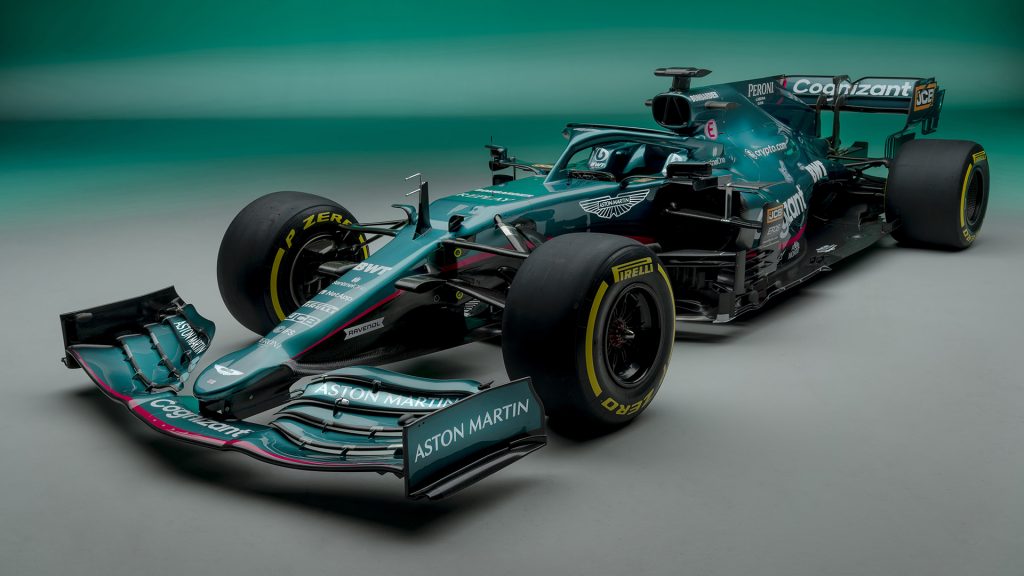
Aston Martin Cognizant F1’s new car for the 2021 season
At a time when the sports business is so focused on building data assets, Jeff sees the building of a fan community as the primary objective. “The big platforms are dominant when it comes to data. We know that we will not have direct access to all our fans or be able to monetize them directly, but it’s still a community, a fan base. At the end of the day what makes the Dallas Cowboys or Manchester United so valuable is the size of their fan bases. That’s what underpins the valuations.”
And what about the future of digital? Will rights owners like football clubs and F1 teams have significantly more direct access to data and monetization opportunities via their own in-house digital assets?
Jeff doubts that a big shift is coming. “It’s basically game over. The big platforms have the power. It’s their sandbox. We have to work with that.”
Aston Martin has its own mega-partner from the world of technology in U.S. multi-national Cognizant (2020 revenues of approx. $17 billion and 300,000 employees worldwide). “They know technology and they give us a capability that we could never have on our own to make us go faster.”
And there’s a marketing dimension too. With its global reach, Cognizant is already driving traffic on social and they will put television advertising behind the F1 team too.
“As we develop ways of moving beyond long-form linear content, the core product will become more valuable.”
Television remains as fundamental for F1 as it is for other major sports properties. F1 has been a bit more focused on staying ahead of the curve than most, pushing into innovative ways of producing broadcast content that speaks to fans directly with new camera tech and personalization options. And innovation will become ever more important.
“The big opportunity in television is in finding new ways to engage,” Jeff says. “The possibilities are huge. As we develop ways of moving beyond long-form linear content, the core product will become more valuable. Every time people say the value of rights will go down, they don’t. I think the value will continue to grow. But you can’t just keep doing what you’re doing.”
As for the first season on the track, Jeff sees a more competitive picture with FOM putting a cost cap in place for the first time in a series where resources tend to translate into results a bit more predictably than in other sports.
But he is realistic about the results to expect. “The Formula 1 championship has been won by the same team (Mercedes) seven years in a row. It’s not that different from football in the big European leagues. We’re probably fighting for third place overall (behind Mercedes and Red Bull). It’s not realistic to think we will win the championship this season. But we hope to win races and compete for the championship in the future.”
Lance Stroll took first for Racing Point in Bahrain last year so the new team might get off to a rip-roaring start. Regardless of what happens next Sunday and in the 22 other races this season, for the Aston Martin brand, the new F1 campaign looks like a sure winner.
The nomination of a new Olympic host city and election of an IOC president are among the biggest decisions in world sport and attract global interest and attention. Olympic Games advisor Michael Pirrie looks at the critical success factors behind Brisbane’s nomination as 2032 Games host city, and Thomas Bach’s reelection and legacy.
The art of calling an Olympic Games host city contest or presidential campaign can seem an inexact science on occasions; the outcomes can sometimes be cloaked in mystery and uncertainty – like picking the winning lottery numbers or interpreting the first wisps of white smoke signalling a new Pope.
The cost of getting such selections wrong can be high – the Olympic Movement ultimately depends on choosing the right cities and presidents.
“Bach’s vision for reform was much more than a marketing strap line to get him through his premier pitch for president.”
The most recent choice of Brisbane as preferred host city for 2032 and re-election of Thomas Bach as IOC president will help to secure and stabilise the Olympic movement in the current era.
BACH’S LEGACY
Bach’s journey as president from Buenos Aires to Brisbane has been pivotal to the durability of the Olympic Movement in ways not imagined when he arrived in the Argentine capital for the first presidential election in 2013.
Bach left the session as new leader with a powerful mandate and powerpoint presentation of his plan for the movement on a USB in his top pocket – the prototype of the forward looking, forward thinking Olympic master plan for the future: Agenda 2020.
Bach’s vision for reform was much more than a marketing strap line to get him through his premier pitch for president.
The plan has proven providential, sustaining the movement through enormous geopolitical, institutional, logistical and cultural challenges.
These have included high-risk detours for Games in Sochi and Rio when other cities were available and better prepared and positioned to host the global event.
The future and fortunes of the Olympic movement rely on the future of the Games and integrity its host city selection process.
Bach’s legacy is already profound even before he officially starts his new term, based on Olympic host city selection decisions and arrangements put in place so far.
These will be further strengthened by Bach’s re-election and new Agenda 2020 plus probity, independence and accountability measures to help manage the Games in the constantly changing world of Covid-19.
Brisbane is an important part of this new agenda and approach, and the city’s confirmation as 2032 host will be one of the first priorities of Bach’s new term as president.
The Olympic movement needs an extended line up of quality cities to deliver successive Games.
Brisbane’s likely selection for 2032 will build out the vital pipeline of host cities developed on Bach’s watch. This is paramount.
OLYMPIIC SUPERPOWER
The Olympic Movement is the world’s sporting superpower.
Like all superpowers, the movement inevitably, is in constant flux as the sprawling Olympic empire and its outposts attempt to respond and adapt to constantly changing international conditions.
Global and continental instability can dramatically deplete the pool of cities available and capable of delivering quality Games.
Brisbane 2032 builds on Bach’s historic joint 2017 announcement of Paris and Los Angeles as consecutive hosts for the 2024 and ‘28 summer Games.
With its promise of warm coastal city beach and surf conditions, Brisbane however is more than a continuation of sunny LA.
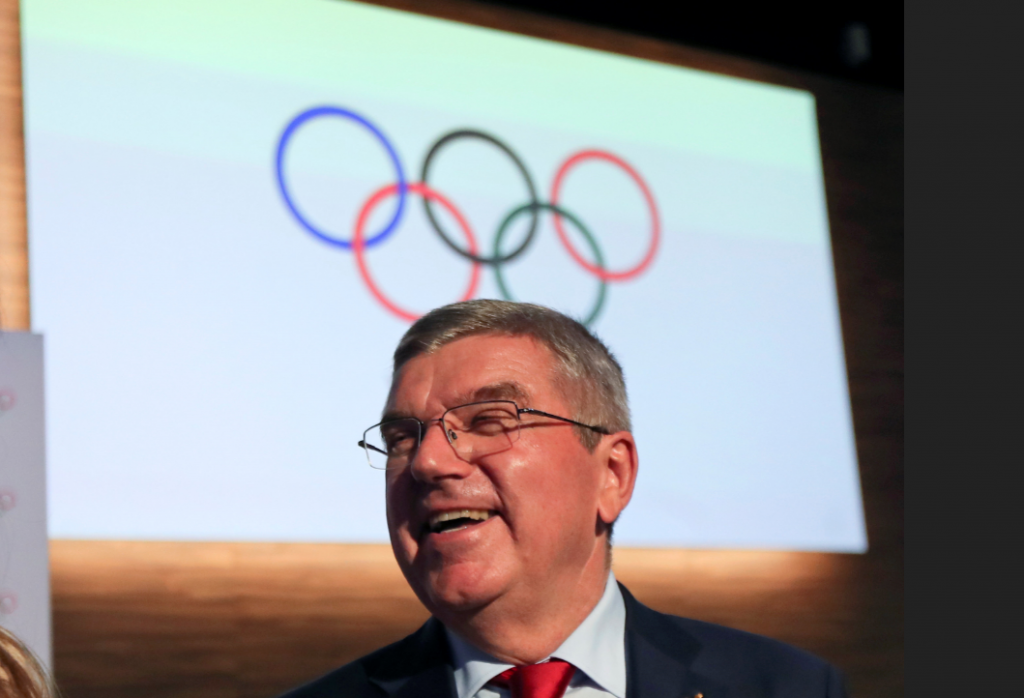
Thomas Bach has been president of the International Olympic Committee since 2013.
The Queensland capital is the first nominated host city of the Covid era.
Brisbane reflects the new politics and priorities of science, safety and stability influencing locations for major international events in wake of the pandemic.
The climate of change, uncertainty and fear that has engulfed the world and Olympic movement in wake of Covid and postponement of Tokyo was central to the broad base of support for Brisbane.
The IOC faced a make or break decision as the new year dawned with the next two Olympic cities in Tokyo and Beijing again in the grip of Covid.
Preparations for Games later in the decade in Paris and Los Angeles also were under challenge as Covid continued to ravage France and US.
This was creating deep uncertainty and anxiety within the movement over future prospects and options for the Games.
“As the 2032 city nomination approached, EB support coalesced around Brisbane as the city that could best provide some certainty and stability around sport and the virus.”
The IOC needed to determine where the Olympics belonged in a world of rapidly growing social, economic and political unrest.
This included growing international support for a boycott of next year’s Beijing winter Olympics amid mounting concerns over human rights violations; also initial notification of human-to-human transmission of Covid as the new virus began its global killing spree.
COVID CIRCUIT BREAKER
Brisbane is an answer to that anxiety about where the Games belongs amid current global instability; it is a much needed circuit breaker.
Olympic Games success depends on certainty, reliability and predictability in timing and implementation of planning.
The key challenge for the IOC Executive Board was to know which of the 2032 cities offered most stability for the global Olympic Games event in a decade of looming turbulence.
As the 2032 city nomination approached, EB support coalesced around Brisbane as the city that could best provide some certainty and stability around sport and the virus.
Support was also forming for Brisbane among key EB influencers such as IFs, NOCs and Olympic stakeholders and partners.
These included athletes and NBC, that Brisbane offered the safest and most secure environment for Olympic sport and a rich global broadcast and digital experience of the Games.
Speaking at the recent Australian Open Grand Slam, tennis superstar, Rafael Nadal said: “The country is doing great with the pandemic. Australia is probably one of the best examples in the world with how they react to these very challenging times.”
Sweeping early border closures, lockdowns, extensive testing, contact tracing and quarantine flattened the curve and the virus in Australia.
This placed Brisbane in a position to plan and grow its economic recovery, profile and future through the Olympic Games as a project of national and international significance.
NEW GAMES ERA
The message from Brisbane’s nomination is clear: the Olympic Movement and IOC are in a deep consolidation phase; a time for prudence and risk minimisation in the selection of host cities.
The era of expansion and experimentation that led to Rio and Sochi is over.
The migration of the Olympic Games further along the east coast of Australia to Brisbane is a journey towards safety and stability.
Brisbane follows Olympic Games stop overs in Melbourne and Sydney in a nation with some of the worlds best domestic sports venues and support services located in the nearby former Olympic coastal cities.
“Australia also rests in geopolitically stable Oceania, distant from most volatile world regions that can threaten major international events.”
These will support Olympic training and qualifying for Brisbane and provide enormous redundancy as potential reserve venues if necessary.
THE BRISBANE BUBBLE
Brisbane offers something unique to the Olympic movement: an Olympic oasis in a nation that has so far controlled the virus, and possesses a collection of world class venues, and a deep reservoir of proven sports events expertise and experience for the Games.
Australia also rests in geopolitically stable Oceania, distant from most volatile world regions that can threaten major international events.
Brisbane and Australia currently offer the best chance to deliver an Olympic event as close and familiar as possible to the pre-pandemic Olympic Games experience.
FUTURE PROOFING THE GAMES
Olympic organising committees are often cautioned that preparing for the Games over seven long years is more like a marathon than a sprint.
From my OCOG experience, Games planning and delivery is actually more like a marathon sprint.
The longer 11- year lead in for Brisbane provides a security buffer to help adapt to sudden threats in the countdown to 2032.
The expanded four-year timeline for Brisbane enables an emergency Plan B hybrid Games model to be developed in parallel with the master plan to cover a worst case scenario.
RISE OF SECOND CITIES
With so much virus still circulating in the world’s super cities and sports capitals from London and New York to Moscow, Brisbane opens up a new tier of second or mid sized cities to follow in the footsteps of Barcelona’s spectacular success as a smaller Olympic city.
Brisbane’s regional Games model also will help to pave the way for Budapest and Doha and other smaller cities as alternatives to traditional major cities in globally troubled times
Brisbane’s nomination for 2032 was as much about successful delivery of the Games as securing the Games.
While the Brisbane blueprint was born of a new era with a new focus, the city shares many of the same factors that have underpinned previously successful Olympic Games.
These include, most recently, the universally acclaimed London 2012 Games.
The success of the 2012 Games was based on London’s innovative vision and successful 3 year global media and marketing campaign against an unprecedented cavalcade of super cities, including New York, Paris, Moscow, and Madrid along with London.
CRITICAL SUCCESS FACTORS : LIKE LONDON
Like the London bid, which was expertly counselled by the British Olympic Association chaired by senior IOC member Sir Craig Reedie, Brisbane was guided by the high performing Australian Olympic Committee.
“Coates’ involvement as Australia’s senior IOC member in the Brisbane Olympic project generated Coe-like confidence in Brisbane.”
This was critical for Brisbane in order to understand what was important for NOCs, IFs and wider Olympic movement in planning for 2032.
Leadership was critical to both London and Brisbane.
In London, along with Sir Keith Mills, a world leader in marketing with a deep belief in sport, we had Seb Coe, the highly decorated and respected world and Olympic running champion with a sharp and intuitive understanding of international sport and politics.
Coe’s reassuring presence generated credibility and confidence in London.
NEW GAMES FIT & FOCUS
Brisbane had highly respected IOC senior executive member and Games operations specialist John Coates, whose oversight in the redesign of the pandemic stricken Tokyo Games has made it possible for sports mission impossible to be modified and staged later this year.
Coates’ involvement as Australia’s senior IOC member in the Brisbane Olympic project generated Coe-like confidence in Brisbane.
Brisbane also had veteran Olympic Games technical expert Craig McLatchey leading the vital 2032 master plan, based on new IOC funding arrangements and priorities for the Games.
These included fitting the Games footprint to the contours of the city, reducing new venue build and minimising costs through extensive temporary adaptation and co-sharing of existing venues and facilities.
Government and national support were highest success factors.
While London had highest level of central government support from former British Prime Minister Tony Blair and dynamic Olympic bid minister, the late Dame Tessa Jowell, Australian Prime Minister Scott Morrison also endorsed national government support for Brisbane.
This included a strategically and symbolically important meeting with Thomas Bach late last year in which the Australian leader expressed full support for Brisbane.
“A former tourism marketing executive, Prime Minister Morrison witnessed the significant sporting, economic, cultural and community uplift across Australia from the Sydney 2000 Olympic Games.”
Morrison reinforced that support in a recent video message to the IOC Session last week, stating that “every level of government is working together to deliver Brisbane 2032.”
A former tourism marketing executive, Prime Minister Morrison witnessed the significant sporting, economic, cultural and community uplift across Australia from the Sydney 2000 Olympic Games – like Vancouver 2010 on Canada and London 2012 on the UK.
The Australian Prime Minster also leads the federal political party that supported the Sydney Games.
CONCLUSION – OLYMPIC OASIS
Brisbane provides a hub of stability where the Olympic Games can belong and adapt to current and new challenges in the decade ahead.
Brisbane also provides a natural home for the Games in a nation with an almost mythical connection to sport.
A nation where the 115,000 capacity Sydney 2000 Olympic stadium, the biggest in Olympic history, sold out night after night.
A nation with an innovative and resilient indigenous sports culture merging with immigrants and visitors who have brought a love of sport from all corners of the world. In recent times these have included Usain Bolt seeking a post Olympic career in football.
Australia’s diverse contributions to science and technology, industry, and medicine have impacted the world. These range from the black box flight recorder, ultra sound imaging and medical application of penicillin to wifi advances and space shuttle heat shield.
The nation’s sporting heroes and attachment to sport however have long been integral to Australia’s global profile, popularity and soft power.
In recent decades Brisbane and Queensland have been a production house for many of those household names.
These include the proudly indigenous Catherine Freeman, star of the Sydney 2000 Olympic Games and Ashleigh Barty, women’s world number one ranked tennis player; Olympic gold medal swimmers Kieran Perkins and Grant Hackett, world and Olympic gold medal champion sprint hurdler Sally Pearson, and many others.
Australia has long basked in the glow of its goldfields gold rush, wheat farms, surf beaches, amber beer, coastal culture and Olympic gold medals.
In sport’s darkened outlook, Brisbane’s golden landscapes offer an oasis of light and hope for the Olympic Games.
Michael Pirrie is an international communications strategy advisor and commentator on the Olympic Games and major events; a founding member of the London 2012 Olympic bid, Michaelwas also executive adviser to the London Olympic Games organising committee and chair, Seb Coe.
The Covid pandemic has not been easy for rights holders, particularly in the sports industry. The shutdown of sports and fan attendance posed many questions about how sports teams will cope.
Connexi undertook some research to delve deeper into the sport specific coping mechanisms and give you an inside look into how football clubs are reacting to the challenges that are coming about as a result of the Covid pandemic. Adapting and changing to the quickly changing environment to not only survive but redefine the future of the sport altogether.
Play for the name on the front of the shirt
The introduction of new digital assets has helped to provide new ways to showcase partnerships. Social media and other digital platforms have helped to create the new sponsorship assets, including virtual match sponsors, pre match shows, interviews with players and in one clubs’ case creating a new esports platform.
Two approaches have been taken with digital assets, either offering these new sponsorship opportunities or they are replacing physical branding in stadiums, for example programme adverts being replaced by digital advertisements. In some cases, On site branding has been created as a result of the pandemic with empty seats making way for branded space such as wraps or banners. Particularly in the higher divisions, this form of branding has 90 minutes of exposure to fans through televised games. One logo within the main TV arc has been able to deliver enormous amounts of media value.
Football is nothing without fans
Similar to partner exposure, digital takes centre stage with fan engagement. Virtual opportunities, through the use of social media platforms and other digital engagement tools, have provided clubs and their sponsors the ability to engage with their fan base on some sort of level. Clubs used the period of time to make developments to apps and to send out digital magazines in order to keep in contact with their fans. This also, in turn, created new advertising inventory to sell to partners.
“One club stated that they delivered virtual opportunities as additional rights in their own stead rather than as a replacement of the original rights.”
Social media platforms could be utilised in many different ways and this benefited the rights holders through flexibility. This was shown through the use of quizzes, polls, votes, competitions, behind the scenes footage, classic moments, and exclusive interviews, to name a few, all which maintained a high level of interaction with fans. Outside of social media, video calling technologies, such as Zoom and Microsoft Teams, enabled clubs to be able to hold regular events when physical events were not an option. Whilst one club mentioned that the broadcasting of classic matches helped to fill the gap during the first lockdown.
Winning as a team
For football rights holders the common theme was that the majority of partners and sponsors were sympathetic to the situation. Flexibility and understanding, from both the rights holders and their partners, has been key to keeping the relationships strong. With clubs being understanding of each brand’s specific situation, some have struggled whilst others have grown.
During the pandemic, the vast majority of sponsors and partners remained associated with their club, or even in some cases committed to new deals. Ensuring that the clubs continue to receive revenue that has never been more important, particularly given the lack of income from ticketing. The use of digital assets has made up for the loss of brand exposure in some instances.
One club stated that they delivered virtual opportunities as additional rights in their own stead rather than as a replacement of the original rights. From this they were able to push rights into next season and extend partnerships by a year at no additional cost. Another club created new opportunities for exposure by launching a scheme to feed 1000s of people in their local community, with sponsors taking up the opportunity to help fund the scheme.
The game is evolving
Digital and virtual opportunities have progressed immensely over the last 10 years. The current high levels of engagement with social media channels, as well as the value association for brands, has provided clubs with new partnership opportunities that would not have existed a decade ago. Digital content and initiatives, particularly with a strong focus on social media channels, have allowed clubs to keep engagement with fans high when they otherwise may have struggled. Football clubs who have taken advantage of this have been able to continue to deliver value to both fans and partners. Not only continuing to maintain exposure for partnerships but also providing opportunities to remain in contact digitally with partners and their fanbases alike, thus proving to be a really important asset over this period.
Additionally to this is the ability for matches to be watched over the internet, as well as additional programmes that can be circulated digitally. The broadcasting of fixtures has meant that there is still a value to perimeter board sponsors, matchday programme adverts etc. Behind closed doors no longer means the same as it once did. Digital streaming and televising games has allowed for an exposure larger than the capacity of stadiums. Prior to the pandemic, each week of the Premier League saw 4 or 5 televised fixtures. However, during this period, every single game has been televised.
Changing tactics
The pandemic has encouraged clubs to be innovative. It has shown the importance of effective fan engagement and social media usage, as well as the need to mutually support partners through new and innovative campaigns. Ultimately, “supporting a club isn’t simply about turning up at the ground to watch a match”, there is much more too it and it shows the necessity to constantly engage with fans and give them a positive experience, whether they are present or not.
The sponsorship model has already been changing over the past 5 years, but the pandemic has accelerated this rate of change. Moving further away from the traditional badging and brand awareness methods to more meaningful, relationship driven partnerships. Partnerships have started to, and most likely will continue to, become more fluid, such as shorter term partnerships anchored on delivery rather than the number of years of a partnership term. The use of data to create partnerships has become more important as a result, providing a broader understanding of what quantifies success and therefore creating more successful partnerships off the back of it.
Changes will occur not only with sponsorship deals but also in stadiums when fan attendance returns. These changes will most likely be permanent rather than temporary with the most notable being the move to cashless stadiums. Over the past few years some clubs, mainly in the top level, have made this shift to contactless payments, but the Covid pandemic should lead to most, if not all, stadiums becoming cashless. Additionally there will be hygiene changes, in-stadia toilet facilities will be forced to improve, and sanitising stations will most likely be present for some time.
“Fan habits and working conditions have changed. A rights holder that is looking to adapt and be progressive will take advantage of this unique situation. Making changes that will not only help in the present but also for the future of the clubs.”
On the pitch, we could see, at least for the time being, a decrease in player transfers and more academy players getting a chance to play in the senior teams instead, due to rights holders refraining from large financial expenditures. This potentially will help to create a more stable future for the club and short term financial relief that could have big long term gains. Whilst outside of football we could see rights holders’ foundations working closer than ever before in their communities to support those that have been affected by Covid. Football clubs have shown large amounts of support for their local communities during this tough time, but with the effects potentially being felt for many years afterwards a continued reassurance of this support could be seen sport wide.
A winning mentality
The pandemic has brought about many challenges for rights holders, and in order to solve them clubs have had to “think differently”. This new mindset produced the inclusion of new products and initiatives to make up for the absence of physical stadium attendance in football. Within football club structures “traditions have historically been very entrenched”.
The Covid pandemic has changed that. Fan habits and working conditions have changed. A rights holder that is looking to adapt and be progressive will take advantage of this unique situation. Making changes that will not only help in the present but also for the future of the clubs. Adapting to the changing environment has given rights holders an opportunity to “try something new”, whether it be using new technologies or implementing stadium changes ready for fans returning. Some of these can already be seen with the emergence of new categories for potential sponsorship, including hygiene and food delivery sectors.
Conclusion
Football is a sport where there are large disparities between the levels. The Covid pandemic has brought about common problems that have been resolved in many different ways. Clubs of all levels would have found the situation very difficult if digital assets were not as big as they are now. Without them, football clubs would have been stripped to the bare bones, whilst solely being dependent on “the core element of the club, the football matches”. Commercial revenue is at the forefront for football clubs. The past year has shown the importance not only of having partners but also of having a strong relationship and aligned values with them.
This is potentially a period of time that lessens the league disparities, bringing the lower league clubs closer to the top leagues. Forcing lower league clubs to utilise digital methods of communication with fans and partners when they otherwise would not have made the jump. Even within stadiums, the implementation of cashless stadiums will bring dated stadiums into the modern world.
On all levels, we will most likely continue to see rights holders work harder for their sponsors in the future, with the added realisation of their support during this tough period. Mutual help has been so important to survival for both sides, but it was best put by one rights holder who said that “the more benevolent we are now during difficult times, the more that will be reciprocated by our partners when things return to normal”.