iSportConnect Sports Tech Index powered by SportsTech Match – 28th September

Who’s hot in Sports Tech? Who is doing deals, launching new products and generally doing some of the best work in the sector? That’s what the Index attempts to dig into. Whether established players or the up-and-coming stars, we go a little deeper for you…

Our eighth edition of the sports tech index sees Fanbase (fan engagement platform) knocked off the #1 spot by Teamworks (communication and collaboration platform for athletic organisations), the latter of whom made no fewer than thirteen partnership announcements (new partnerships as well as renewals) in July, August and September alone.

Genius Sports (sports data and betting) stay in our top five (at #3) aided by a new deal announcement with World Rugby while Sport:80 (membership management) sit at #4 following the announcement of a new deal with the All United States Kendo Federation. Sportradar (sports data and betting) round out our top 5 at #5.

Finally, Prohibet (prohibited bettor solution) are our highest new entry at #15 this month following several new deal announcements over the past month including UFC and Virginia Tech and Iterpro climb to #14 on the back of three new deal announcements in September with rugby and football clubs in Italy, Spain and India.

Want to know more?

Subscribe to the SportsTech Match monthly newsletter for an overview of the activity that generated points towards the index this month (via the footer on the website).

The iSportConnect Sports Tech Index is designed to help rights owners and investors quickly assess who is “hot” from a product and new business perspective and provides sports tech vendors with an incentive to focus their PR announcements on what matters to the market. It follows a simple scoring system (see below).

The iSportConnect Sports Tech Index is published on a monthly basis on iSportConnect.com. Click here to read more about how the Index is calculated.

“Why it is important to pay attention to the positives of the Rugby World Cup”

In this Member Insight piece, Richard Brinkman focuses on the Rugby World Cup and how the fixation on head contact and sending players off is killing the spectacle and ultimately the sport unless more time and attention is paid to emphasizing the positives of the event and sport.

Its a funny old tournament The Rugby World Cup. As a rugby fan the bringing together of all the top nations alongside a host of noble teams that one has never seen and know nothing about in an ongoing series of meaningful games is an enthralling prospect.

However, the immensely physical nature of the sport means that just as you “get into” the competition by watching a number of matches across a weekend you then go into a hiatus of 5 or 6 days where nothing happens. Its hard to maintain interest and enthusiasm – particularly once you get to the latter stages of the group games (where we are now) where most of the major teams have qualified for the knock-out stages and hence are playing “dead rubbers” or very one-sided games in their final group matches with largely second-string teams.

The alternative of playing midweek matches (and these usually fall unfairly on the smaller teams so as not to jeopardise maximum TV audiences in the major markets) remains a sub-optimal solution to this issue.

All this adds up to a tournament that is too long (8 weeks – 8 Sept – 28 Oct) and has too much downtime, too many meaningless fixtures and too little action at the back-end.

And yet, for all that, and despite the chaotic scenes around the stadiums of spectators trying to enter (after the Champions League Final is this now a French “thing”?), RWC is a very compelling and watchable event. It’s great, but at the same time a bit rubbish, in that its never quite as good as you think it should be.

This weekend I was lucky enough to watch Ireland’s epic showdown with South Africa, England finally deliver some rugby against Chile, a wonderfully exciting draw between Georgia and Portugal, Scotland take care of business against Tonga, and Australia’s capitulation against the efficiency of Wales’ Warrenball v2.

It was rugby of all shapes and sizes. However, rather than celebrating the variety and diversity of approaches and athleticism on show the abiding memory I am left with is of refereeing decisions and TV Match Official Reviews. These are, in my opinion, literally killing the game as an entertainment product.

Nothing against the Refs and TMOs themselves – indeed, I was a ref myself for many years and loved it until the travelling around the country became incompatible with a demanding job and youngish family. It is a tough job, very technical and requiring consistent concentration and communication whilst fatigued but it is massively rewarding and second only to playing for camaraderie. No, my beef is with World Rugby and how what they are asking the officials to do in terms of application of the laws.

The Japanese have a form of suicide called “Seppuku”. This was practiced mainly by Samurai  and involves ritual self-disembowelment in order to avoid dishonour, such as after defeat or bringing shame on oneself. I am much reminded of this honourable tradition in World Rugby’s approach to making the game “safer” (as an aside – how many times must we hear pundits churn out this tedious line?).

WR’s motives are no doubt laudable. No-one wants to see people hurt unnecessarily and the wellbeing of participants is important. That said, no-one I speak to wishes to watch rugby where physicality, courage and mental and physical bravery are not to the fore. If you remove intrinsic elements of physical jeopardy from the sport it will have no point of difference and become bland.

In the current climate spectators are very likely to be watching an uneven contest of 14 v 15 for at least part of the game and, in many instances, at least half of it. Given the price of tickets (not to mention the inconvenience of most stadium experiences) this has to effect the sales proposition on an ongoing basis.

Apparently, its just a simple case of players learning to amend their “behaviour”. According to administrators and pundits once they do this the issue will go away. This is an extremely (wilfully?) naïve approach. Players play (and are paid) to win. 99% of their tackles are fine for nearly every player. They are not going to risk being less effective 99% of the time to ensure they are not punished 1% of the time. It is very muddled (and wishful) thinking on the law-makers behalf.

Of course, safety of players is only half the story and impending legal cases from players suffering with various brain injuries is a far more existential threat to the viability of the sport. Violence and careless head-shots in rugby have been straight red card offences for over 30 years it should be remembered.

Rugby Union is already significantly more safe than when most of those claimants played. Understanding of the brain and how players can reduce harmful impacts has been introduced consistently across all levels of the sport. However, World Rugby need to accept that you cannot completely eliminate risk and sterilise the sport into being totally “safe”. Reducing head contacts may reassure a mother that it is a sport that is OK for their child to play – but once she has seen a significantly larger human running full-tilt at her child it is unlikely to convince her that it is a “safe” sport! In order for a sport to teach you important life-lessons it needs to have the ability to place you in very uncomfortable situations.

The disembowelling of their own sport that World Rugby’s current protocols are creating is multi-layered. It involves

  • the punishment of players for innocent mistakes – players are being sent off for tiny mistakes that are not dangerous or harmful purely to make a point. This is frustrating for players and fans – 2 of the 3 most important stakeholders for any governing body. Imagine if a batsman was given out every time they played and missed or a footballer was sent off any time a ball touched hand or arm regardless of circumstance.
  • the conflating of mistakes to the same level as wilful acts of violence – the punishment for slipping up in a tackle is the same as running into a static ruck shoulder to head.
  • the under-mining of on-field referees – TMOs with no feel for the on-field context are advising (often via garbled communication channels) referees to question their instinctive responses under the guise of a review to get to the “right” decision.
  • the continual tinkering to the point of incomprehension of the laws and disciplinary processes–witness the debacle of Owen Farrell’s on/off red card ban or the pundits response to a yellow card bunkering of a Tongan player for a high tackle in their match against Scotland on Saturday. 3 former players and a former player anchor who have played and watched literally thousands of hours of rugby had no idea whether the card would be upgraded to red or not. Even having heard the on-field explanation of the final decision they were at a loss to explain it.
  • as well as the breaking any kind of dynamic flow within a match. There is already a highly physical sport which continually stops and analyses every action via reply. Its called NFL, is highly successful, brilliantly marketed, and World Rugby should be mindful to keep significant clear water between the two sports.

But worst of all is the constant fixation and incessant debate about these incidents in the media coverage. The sport is encouraging the media to discuss little but the very part of rugby they are trying to eliminate! Scotland’s half-time on Saturday was a classic example – nothing else was discussed other than bunker incidents. David Flatman’s “we don’t like to focus on these incidents” whilst rubbing his hands with glee and sending the Scottish pundits off the long-run about it was risible. With this constant focus it is little wonder that casual fans are left with the impression that rugby is a highly dangerous sport.

It will be interesting over the coming weeks to see how this plays out. Can rugby present the myriad positives it undoubtedly possesses during the latter stages of its showpiece event. Or will it continue to shoot itself in the foot by trying to present itself as something its not to casual “big eventers” who are, at best, ambivalent about the sport. Neglecting and turning off your avid followers is an erosion that can take a lot of recovering from. Next you will be telling me that it’s a good idea to launch a cricket tournament aimed at people who don’t like cricket………

ICC adds IndusInd Bank as a global partner

The International Cricket Council (ICC) has announced its multi-year association with IndusInd Bank as a Global Partner for the highly anticipated ICC Men’s Cricket World Cup 2023 and future ICC men’s events.

As the ICC’s Global Partner, IndusInd Bank will access an array of exciting activities and promotions for its customers, employees and for cricket fans. The premium opportunity will be through ownership of the flagship Anthem Companions programme, in which selected customers of IndusInd Bank and employees will have an exclusive chance for their children to participate in the teams walk out onto the field before the start of play for the national anthems. Other elements of the experience include on-field access, engaging brand activations and the chance to witness some of the best cricketing action. 

As a part of this association, IndusInd Bank will also have access to a suite of branding and content assets to build deeper connection with its customers, employees and stakeholders. The partnership exemplifies the Bank’s commitment to the pursuit of excellence, fostering sports, promoting inclusivity and teamwork whilst enhancing the lives of people, through its dedicated sports programme ‘IndusInd for Sports’.  

The ICC Men’s Cricket World Cup 2023, which is set to be the biggest Cricket World Cup ever, starts on 5 October with the final taking place at the world’s largest cricket stadium in Ahmedabad on 19 November. 

Speaking about the association, Mr. Sumant Kathpalia, Managing Director & CEO, IndusInd Bank, said, “We believe in the transformative power of sports and ICC World Cups are one of the most popular sporting events in the world, with millions of fans tuning in to watch the best cricket teams battle it out. We are extremely proud to be associated with the ICC and believe that this collaboration will further strengthen our brand visibility and enhance our customer engagements, both domestically and internationally. We look forward to create exceptional moments that our customers and employees as well as cricket fans will cherish in the time to come.” 

ICC Chief Commercial Officer, Anurag Dahiya, said: “We are delighted to welcome IndusInd Bank into the ICC family as a Global Partner for the Men’s Cricket World Cup 2023 and future ICC men’s events. We believe that cricket’s vision of more players, more fans and more nations enjoying the sport is well-aligned to IndusInd Bank’s reach and unwavering commitment to excellence. IndusInd Bank will add great value to the event experience, both through the delivery of the Anthem Companions programme and the co-creation of unique experiences and opportunities for its customers, employees as well as cricket fans.” 

David Haggerty re-elected as ITF President

David Haggerty received 72.94% of the votes and was re-elected ITF President at the 2023 ITF Annual General Meeting in Cancun, Mexico. Haggerty, from USA will serve a four-year term from 2023-2027.

There were 436 votes cast giving a required majority of 219 votes. Haggerty received 318 votes.

David Haggerty, ITF President, said: “I’d like to thank the ITF membership for placing their faith in me for a further term. Our long-term sustainable growth strategy, ITF 2024, has resulted in the ITF’s funding for tennis development nearly doubling in just a few years since its introduction.

“I very much look forward to working alongside our Executive and Board to review and refresh our strategy for this next phase. We will ensure we place the ITF’s competitions on a strong footing and continue to fuel investment in the global development of our game to deliver the ITF’s mission of tennis for future generations.”

The voting procedure for the Presidential and Board elections has been approved and overseen by the Election Panel (a sub-group of the independent Ethics Commission), with electronic voting procedures implemented for the first time and provided by Lumi Global (an expert provider of electronic voting systems for global corporations and international sporting organisations).

Jugo announced as latest iSportConnect advisory partner

London, September: iSportConnect can today announce that Jugo, an immersive virtual meetings platform with cutting-edge mixed reality technology has become part of iSportConnect’s Advisory service.

Jugo has innovated a unique platform that brings together individuals from different locations in a fully immersive, web-based environment built with the best-in-class technology including Amazon Webs Service, NVIDIA, and Unreal Engine.

 With the power to bring anyone, anywhere, into a fully immersive 3D environment with no special equipment, just a laptop and WIFI –Jugo makes creating next-generation experiences easy and accessible. Jugo recently partnered with Arsenal to engage supporters and bring them closer to the players and the sport they love in a dynamic 3D environment.

“Our mission is to connect people and purpose, and what better way to do so than within the dynamic world of sports. We’re excited to collaborate with iSportConnect, together we’re setting new standards for fan engagement and global connection,” said Joseph Toma, CEO of Jugo.

“I love this platform and aside from creating more immersive and interactive experiences for people who need to meet remotely, there are some interesting commercial opportunities that Rights Owners are already exploring. You really do need to try this as Jugo’s offerings are quite innovative and the platform is bringing people closer and revolutionizing the way in which leading sports teams can engage with a global fan base.  We are really looking forward to working with them.” added Sandy Case, iSportConnect’s CEO.

iSportConnect Advisory

iSportConnect’s advisory service works to help our clients grow – through commercial development, marketing and communications, global sports market entry and business strategy. Our global consultancy clients have included the likes of LaLiga, Vindicia, IAAF, Tata Communications, ITF, ATPI and InCrowd among many others.

About iSportConnect

iSportConnect is all about helping organisations grow in the business of sport. Whatever the organisation. We launched in 2010 with the aim of bringing together sports business professionals around the world in a networking community enabling them to meet one another, find information and obtain access to a wide range of relevant services. The platform is now the largest global private network of sport business executives, where membership is exclusive and follows a strict door policy.

About Jugo

Jugo is an immersive virtual meetings platform reimagining how people connect in the digital world. Harnessing the power of the Unreal Engine and the latest in mixed reality technologies to create stunning immersive spaces, Jugo brings accessibility to virtual experiences, making them more impactful and meaningful, all without the need for any VR headsets. Jugo’s pioneering mixed reality technology places real people in virtual environments, creating a new standard for human connection in the digital world, and unleashing the power of real human interaction to immerse, engage, and inspire. Established in 2022, Jugo is headquartered in Bristol, United Kingdom, with offices in North America and Europe. For more information, visit Jugo.io

For more information, visit their website, follow Jugo on Twitter, LinkedIn or YouTube.

Media Inquiries: Neeha.Curtis@jugo.io

Florida Panthers announce arena naming rights agreement with Amerant Bank

The Florida Panthers and Amerant Bank, the largest community bank headquartered in Florida, jointly announced that the new home for Panthers hockey and premier entertainment in Broward County will be Amerant Bank Arena.

“After a comprehensive search with WME Sports over the past year, we felt expanding our experienced and successful partnership with Amerant Bank would be the best business decision to align with both our goals of delivering first-class customer service and serving our local South Florida community,” said Panthers President & CEO Matt Caldwell. “We are grateful to Jerry Plush and the entire Amerant Bank leadership for their investment and shared commitment to South Florida and to the Florida Panthers, as well as the governments of Broward County and the City of Sunrise who worked with us to ensure a premier partnership.”

Both the Panthers and Amerant Bank, as the community bank of Broward, Miami Dade and Palm Beach counties, are committed to working together to give back to South Florida. Amerant Bank currently has four Broward County branches with another opening soon in Downtown Ft. Lauderdale, an operations center in Miramar, and recently announced a Broward County Regional Headquarters in Plantation.

Amerant Bank will continue their entitlement of the premium center-ice seating area ‘Amerant Vault’ and remain a supporting partner of the Panthers Kids Club and youth hockey initiatives.

Last season, the Panthers and Amerant Bank partnered for the inaugural ‘Saves for Vets’ campaign to donate $40 per save made by a Panthers goaltender throughout the 2022-23 regular and postseason. With over 3,011 saves by Panthers goaltenders, $120,440 will be split and donated to nine veteran-focused nonprofit organizations including Broward County Community Development Corporation, Chariots On Ice Sled Hockey, DELIVER THE DREAM INC, Faith-Hope-Love-Charities, Inc., Heart2Heart Outreach of South Florida, Our Father’s House Soup Kitchen Inc., Rebuilding Together Broward County, Inc, Soldiers’ Angels and The 22 Project, Inc. within the South Florida area.

“Adding naming rights to the arena to the already strong and extensive partnership we have with the Panthers just seemed like the next logical next step for us,” said Amerant Bank Chairman and CEO Jerry Plush. “In addition to showing our support and alignment with Matt Caldwell and the Panthers organization, we are also excited to step up our commitment to the people and businesses in Broward County. We aim to be the bank of choice in the markets we serve and believe this is another big step we are taking to demonstrate that commitment.”

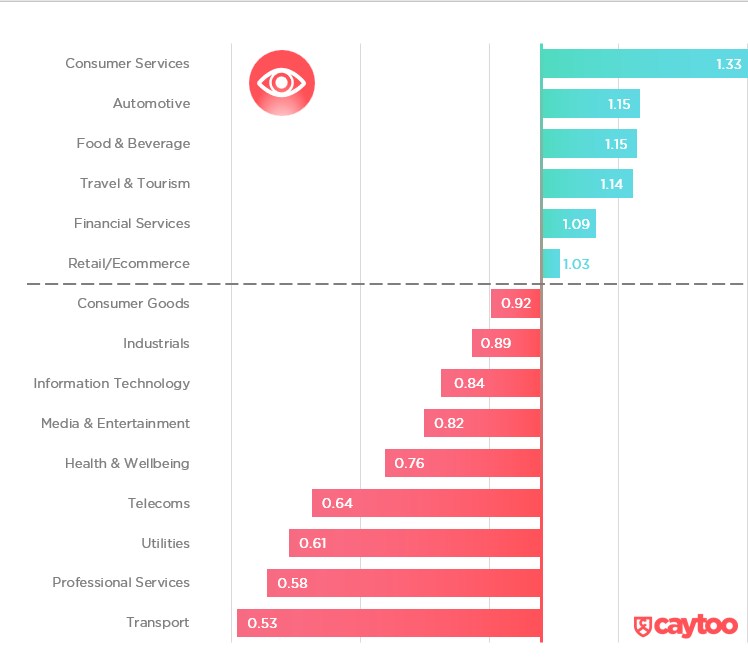
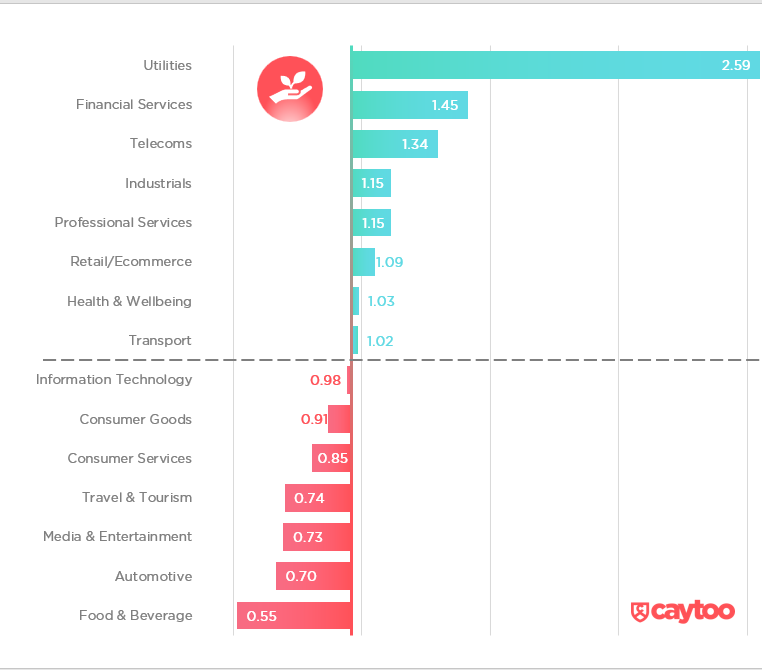
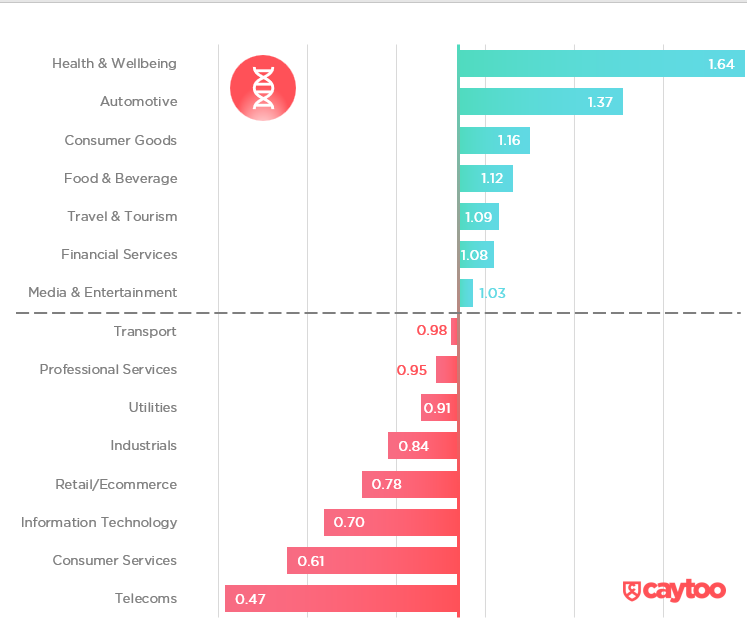
iSportConnect Sponsorship Index: Gambling, games and specialist business services lead the way among Champions League teams sponsors

With the group stages of the 2023/24 Champions League kicking off this week, we decided it was time to take a deep dive into the sponsors of the 32 teams with this month’s Sponsorship Index powered by caytoo.

Food & Beverage is the most prevalent sector (at 12.9% share), just ahead of Financial Services (11.1%) and Consumer Services (9.8%). F&B is driven by Alcohol (4.1%), itself driven by beer, and Soft Drinks (3.9%). While Alcohol is driven by beer, Soft Drinks is driven by Coca-Cola – the single most prevalent sponsor – at 11 (one-third) of the participating teams.

Financial Services is driven Banks (3.1%) and Insurance (3.0%) brands while Consumer Services is driven by Gambling (the most prevalent sub sector at 5.0% share) and Specialised Consumer Services (2.2%). The latter is driven by fan token brand Socios who partner with 10 of the 32 teams – joint second alongside EA Sports behind Coca-Cola.

EA Sports contributes to Games being the second-most prevalent sub sector (4.3% share) behind Gambling and narrowly ahead of Specialist Professional Services (4.2%) which is admittedly a fairly wide sub sector. Games’ very high share among CL teams compared to almost all other sports is due to the sector’s endemic link with football games; EA Sports (through its FIFA series) Konami (eFootball game) and Sorare (fantasy football) all feature in the five most common sponsors.

As a result, CL sponsors over-index on Media & Entertainment sponsorships (in which the Games sub sector resides) compared to other sports; the sector accounting for 7.3% among CL sponsors compared to 0% among Rugby World Cup Teams, 0.5% in The Tour de France, 1.3% in both Formula 1 and the MLB, and 2.5% in the NBA.

When compared to other sports, F&B’s share of CL sponsors is similar to cycling’s Tour de France but much lower than the likes of teams competing in the Rugby World Cup (22.9% share), baseball’s MLB (19.5%) and basketball’s NBA (18.2%). However, it is much higher than in Formula 1 (5.2%). CL sponsors also over-index slightly on Retail/Ecommerce compared to these other sports but nowhere near to the degree.

In contrast, CL teams tend to ‘under-index’ compared to other European-centric rights holders when it comes to attracting Consumer Goods sponsors. For instance, the sector accounts for 9.5% of CL sponsors compared to 23.2% in the Tour de France, 21.8% in Formula 1 and 12.7% among Rugby World Cup Teams. However, its share is higher than in the US-based MLB (6.2%) and NBA (8.0%).

It’s a similar story with the Automotive sector – although not to such a strong degree – with CL teams attracting a lower share compared to the European-centric rights holders but higher than the US-based counterparts.

The House View: AI takes centre stage at IBC 2023 amid calls for media industry disruption

IBC 2023, one of the world’s leading trade shows for the media, entertainment, and technology industry, was held in Amsterdam from September 8-12. Some of the big recurring themes this year included the future of work in the media industry, the role of technology in promoting diversity and inclusion and the impact of climate change on the media industry.

The term disruption is never far away from the lips of exhibitors, delegates and speakers at any self-respecting tech conference. Evan Shapiro, self-proclaimed “Media Universe Cartographer”, addressing delegates in his day one keynote, did not disappoint. He called on the industry to rid themselves of privileged CEO’s focused on the next earnings call and shift to a diverse management focused on user-centric business models more akin to the approach of Amazon. Shapiro is quoted as saying, “you need to be able to ignore the short term and hook your wagon to a big moonshot”.

For anyone who has not attended the event in recent years, the scale is difficult to convey. As the doors closed earlier this week the organisers reported that there were more than 1,250 exhibitors, 325+ speakers and 43,065 attendees from 170 countries.

It will come as no surprise to learn that artificial intelligence (AI) was being thrown around by anyone and everyone on the stage and exhibition floor. It seems that no credible pitch or presentation can be delivered these days without mentioning the term. Ten years ago the big themes at IBC were very different and back then the floor was buzzing with talk of 4K and Ultra HD video, IPTV and cloud computing.

The growing influence of sport at IBC

Sport occupies an increasingly important role at the event as more and more stage time as well as exhibition space is devoted to sports content and technology themes. Around the exhibition floor you are never far away from a booth featuring sports content imagery, which is clearly the media industry’s “sexy sell”. 

Sport use cases dominated the shortlists for the three IBC innovation award categories suggesting that sports’ place as a content and technology innovation platform is very much accepted by the wider media industry. 

Sport use cases featured in three out of the five shortlisted companies in the content creation category (Fox Sports, Riot Games and Formula E), two out of four in the content distribution category (Cellcom Israel and TelevisaUnivision) and all four nominees in the content everywhere category (SportTV App, Sky Sports, KAN and TNT Sports).

The various stages also had more than their fair share of sports presentations. Amongst other sports rights owners represented on stage F1 showcased the F1 TV platform, Verizon spoke about their NFL coverage, Warner Bros. Discovery presented updates on their Paris Olympics broadcast plans, Formula E took the stage together with Tata Communications to talk video distribution and Liverpool FC talked about cloud storage and media asset management.

IBC has a history of showcasing esports going back to 2019 when they featured an esports tournament. However, IBC 2023 was the first edition to have a dedicated esports and gaming zone on the showfloor, as well as a full day of content on esports and gaming.

Sport: a natural playground for AI

One of the most exciting applications of AI which was evident at IBC is the creation of virtual reality (VR) and augmented reality (AR) experiences in sports broadcasting. AI is increasingly being used to create more realistic and immersive VR and AR graphics and help rights owners and broadcasters to tell stories in new and innovative ways by creating interactive experiences that allow viewers to explore different perspectives of a game.

IBC also showcased other AI use cases in sport including its ability to improve the production of sports broadcasts. The automatic generation of highlight reels, personalised recommendations for viewers, and the generation of real-time statistics and analysis are not new use cases. However, we have undoubtedly witnessed great strides in the reliability and affordability of the technology to deliver them.

Let’s not forget streaming. Streaming remains a hugely important topic at IBC and the increasingly competitive streaming market was in full view on the exhibition floor. Broadcasters are offering more streaming options than ever before, and they are also experimenting with new ways to monetize their content.

IBC cements its place in the (sports) media industry calendar

IBC 2023 was as big and bold as ever and cemented its place in the calendar of content and technology professionals across the media industry. 

Is it a must-attend event for sports content and technology professionals? That depends on your perspective. However, given sport has much to learn from the wider media industry from a technology and content perspective, a well-planned trip to IBC including a tour of Amsterdam’s canals is, without doubt, time well spent. 

By David Fowler, MD Advisory, iSportConnect

The View From The US: U.S. Open Finalists’ Prize Grows as Early Round Cash Plateaus

In this week’s View From The US article, Sportico’s Data Reporter Lev Akabas spotlights on the rollercoaster the US Open prize money structure is.

After years of offering larger prize money increases to early round losers, the U.S. Open is putting more money toward the brightest stars this year.

The 2023 tournament has the largest purse in its history at $65 million, an 8% increase over last year for an event that has long paid the most of tennis’ four Grand Slams. 

But not all prize money increases are created equal. The winner’s payout jumped from $2.6 million in 2022 to $3 million in 2023, a 15.4% raise. The runner-up distribution increased by the same percentage, while the compensation for players reaching the semifinals is up 9.9%. In contrast, the winnings for the other 124 players in the singles main draws is just 2% higher than last year, and the money given to players who lost in the qualifying rounds was bumped up just 3%.

The significantly larger increase in prize money for players at the higher end of the earnings spectrum is notable given that it’s the exact opposite of the U.S. Open’s approach in recent years. From 2019 to 2021, compensation went up 29% for first-round losers and 66% for qualifying-round losers, while the winner’s prize dropped from a record $3.85 million in 2019 all the way down to $2.5 million in 2021 after COVID.