Deltatre have today announced a multi-year agreement with Major League Soccer making Deltatre the League’s web technology provider.
Under the agreement, MLS and Deltatre will work on a series of digital products for the League and MLS Clubs.
“Being selected by MLS is testament to Deltatre’s unique ability to provide cutting-edge digital solutions that serve the needs of the most forward-thinking and high-profile sports federations and rights-owners,” said Jeff Volk, SVP, Head of Business and Revenue, Americas at Deltatre. “This collaboration is another outstanding step for Deltatre, underlining our incredible progress and growth in the U.S.”
“Deltatre shares our commitment to implementing leading technology that enhances and evolves the fan experience,” said MLS SVP of Media Chris Schlosser. “Their impressive track-record in working with some of the largest sports leagues, allied to its reputation for innovation and delivery, made working together an obvious choice.”
The news follows a strong 12 months for Deltatre. Among many highlights, last year Deltatre announced it had completely redesigned and revamped Juventus FC’s digital ecosystem.
This collaboration marks another key milestone for Deltatre, boosting its already impressive presence in the U.S. Deltatre technology now underpins the digital offering for three of the largest North American professional sports leagues, adding MLS to a roster that also includes Major League Baseball.
Monday, March 8th 2021 is a key date for many across the world, as it represents International Women’s Day, when women across the world are celebrated for their achievements. It signifies a day in which women are also fighting for greater equality, which iSPORTCONNECT is totally behind, particularly in an industry with much to do.
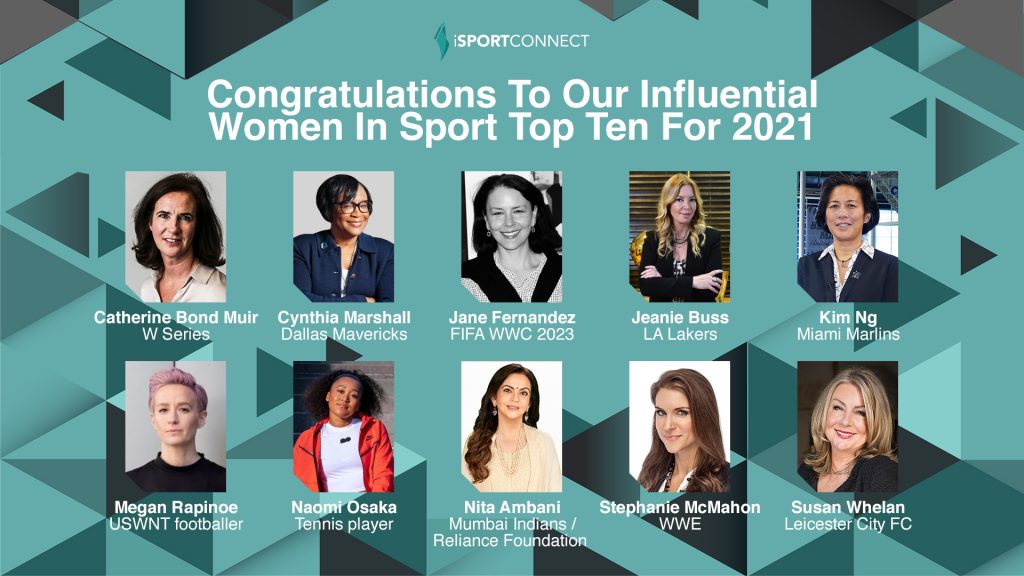
On this day, therefore, we are thrilled to reveal our fourth annual iSPORTCONNECT Influential Women In Sport List for 2021, highlighting some of the industry’s key female players and those who have led from the front over the past 12 months.
This year YOU, our iSPORTCONNECT community, were able to play a part by being able to put forward those you believed should be recognised as being female leaders within the sporting space, nominating a huge amount of worthwhile contenders and helping us to create our Women In Sport Top Ten.
We also have four brand new categories we received nominations for from the community, in order to recognise those in other areas who are deserving of recognition for their efforts.
A massive thank you must also go to our seven external jury members (Ebru Köksal, Seema Jaswal, Fredda Hurwitz, Simon Chadwick, Lingling Liu, Anna Lockwood and Tim Crow) who were willing to give up their time to help us narrow down our contenders alongside iSPORTCONNECT to make up the final list.
Finally, here it is, the iSPORTCONNECT Influential Women In Sport Top Ten for 2021. Thank thank you to everyone who took part in nominating contenders and congratulations to all of our winners and to everyone who was nominated.
The Top Ten
Catherine Bond Muir – W Series, Chief Executive Officer.
Catherine has grown the W Series from the ground up and is providing terrific opportunities to female drivers in motor racing. In 2021 it will feature it alongside eight F1 Championship weekends, across the UK, Europe and the Americas.
Cynthia made history as the first ever female Chief Executive Officer in the the National Basketball Association when she was appointed in 2018.
Jane Fernandez – FIFA WWC 2023, Chief Operating Officer
Jane led Australia’s successful bid for the FIFA Women’s World Cup 2023 and was recently named as Australia’s COO of the co-hosted event with New Zealand. She has united the sport, state and national governments to secure the largest female event in the largest global sport, at a time when female sport continues to gather momentum.
Jeanie Buss – LA Lakers, Owner & President
A longtime part of the ownership and executive with the Lakers, Jeanie was in charge of the organisation as they won their first NBA championship for more than a decade, become the first female owner of a championship team.
Kim Ng – Miami Marlins, General Manager
Kim, a leader of women in baseball for many years, was appointed as the first female General Manager in MLB history when appointed by the Miami Marlins towards the back end of 2020.
Megan Rapinoe – USWNT Footballer
As one of the most recognisable athletes in the world since the 2019 World Cup, Megan has used that platform to expose inequalities in sports and society. Raising awareness about gender bias and social injustice, Rapinoe has been a role model for all athletes in all sport.
Naomi Osaka – Tennis Player / NWSL Investor
Naomi has been a leader for women in sport in the past year, making her voice heard when discussing equality and equal rights while excelling on the court once again. She has also become an investor in North Carolina Courage in the NWSL.
Nita Ambani – Mumbai Indians / Reliance Foundation
Under Nita’s guidance the Reliance Foundation has been encouraging and creating a youth sports revolution in India all while she is leading the Mumbai Indians IPL franchise, who won yet another IPL title in 2020.
Stephanie McMahon – WWE – Chief Brand Officer
Stephanie has been helping a number of initiatives to boost the profile and give greater opportunities to women in sport as well as having to be part of leading the WWE through Covid.
Susan Whelan – Leicester City FC, Chief Executive Officer
Susan is a high class operator who highly professional, clearly successful, but also a warm and generous person. Susan is an excellent role model and is overseeing an extremely positive period for Leicester City as a club.
Shortlisted: Ashley Ehlert – International Ice Hockey Federation, Barbara Slater – BBC, Fatma Samoura – FIFA, Hashimoto Seiko – Tokyo 2020, Joanna Coates – UK Athletics, Julia Fry – Extreme E, Louise Johnson – Fuse Sport & Entertainment, Lucia Montanarella – IOC, Soraya Sobh – Fnatic, Tatjana Haenni – Swiss Football Association, Tracy Power – Rugby League World Cup 2021.
The Inspirational Standout During Covid-19
Sarah Wall – NETFIT, Founder & Chief Executive Officer
Australian Netball player Sarah Wall’s NETFIT saw their free Facebook Live fitness and skills series gain over 3,000,000 views through isolation-inspired streams lead by various elite and community players through NETFIT Netball’s Facebook Page. NETFIT also partnered with the INF (International Netball Federation) to create the 24 Hour Live Netball Challenge.
Shortlisted: Mikaela Shiffrin – created the Jeff Shiffrin Athlete Resiliency Fund to support athletes that have been impacted by the COVID-19 pandemic. Tammy Parlour – co-founder of the Women’s Sport Trust, who has pulled together a report on how women’s sport responds to Covid. Sue Anstiss MBE – In 2020 she co-created the Women’s Sport Collective, founded during Lockdown one it offers women working in sport the opportunity to connect, learn and share.
Up-And-Coming In Sport Business
Alexandra Willis – All England Lawn Tennis Club, Head of Communications, Content and Digital
Alexandra has been leading the digital transformation of one of the UK’s most loved sporting brands, Wimbledon, while working for the AELTC. Later this year she will take up a new post as Communications and Marketing Director.
Joanna Coates – UK Athletics, Chief Executive Officer
Joanna is an outstanding CEO who has for years has tirelessly worked towards greater inclusion, equality and diversity across sport and is now doing so at UK Athletics. Prior to that she had led strong work at England Netball, culminating in a Commonwealth Games gold medal for the team and hosting the successful 2019 Netball World Cup.
Shortlisted: Sue Anstiss MBE – Women’s Sport Collective, Leadership Woman Football (Organisation), Jane Purdon – Women In Football.
Platform For Good: The Best Campaign Or Work Supporting Women In Sport
Burger King– Burger Queen Sponsorship With Stevenage FC
The fast food chain signed a deal to sponsor English Football League Two side Stevenage FC and were able to rework their logo to be named ‘Burger Queen’, something that was incredibly innovative and drew a huge amount of attention to women’s football.
Shortlisted: Nike’s ‘You Can’t Stop Us’ campaign, Extreme E for creating the first gender equal sporting format in motorsport, the WNBA’s Orange Sweater Campaign to engage with public figures to bring more attention to the league and women’s sport.
iSPORTCONNECT are delighted to reveal our jury for this year’s 2021 Influential Women In Sport List.
Following a whole host of nominations from you, our iSPORTCONNECT community, the jury will be providing their own opinions from the shortlist to bring together the final top ten, which will be released on International Women’s Day next Monday, March 8th.
We would like to give a massive thank you to the jury for giving their time to be part of this and are incredibly grateful to them for doing so.
Without further ado, here is our jury:
Ebru Köksal
A football and finance forerunner, Ebru Köksal, Chair of Women in Football, has a portfolio of Board and advisory roles including as senior advisor at J Stern &Co, INED at Doublepass BV, MNT Healthcare and the Professional Footballers Association. She is passionate about gender equality and building a better future for female leaders.
Seema Jaswal
You will currently find Seema presenting the Premier League’s global Match-Day Live coverage, ITV’s international football, BBC Snooker‘s Triple Crown events and the Premier League on Amazon Prime UK. Seema has presented a multitude of sports and covered some of the world’s most prestigious tournaments, including the 2020 UEFA Champions League for CBS Sports, the 2019 Cricket World Cup and 2018 FIFA World Cup.
Fredda Hurwitz
Fredda is a proud mum (human and furry) and a seasoned strategic global brand marketer (25+ years), whose experience is rooted in sports & entertainment, sponsorship & partnerships, employee and brand engagement for agencies, brands and rights holder. She’s the Founder & Chief Nut of Gingernut Thinking, a DC-based consultancy, working with SMEs, non-profits and agencies to help solve their marketing challenges and better articulate their “why”. Fredda is a regular contributor to the marketing press and a passionate supporter of causes focused on advancing access and understanding for children who are neurodiverse.
Simon Chadwick
Professor Simon Chadwick is a researcher, writer, academic, consultant and speaker with more than twenty-five years experience in the global sport industry. Chadwick is Director of Eurasian Sport at emlyon business school (based in Paris & Shanghai), a global-top-50 ranked, triple accredited business school. He is also Professor of the Eurasian Sport Industry and Director of CESI – the Centre for Eurasian Sport.
Lingling Liu
Dr. Lingling Liu is the Managing Director of China Sport Business Consulting Co., a boutique sports consulting firm based in Beijing and operating worldwide that provides strategic communication and sports marketing services.
Anna Lockwood
Anna Lockwood is an experienced media industry executive specialising in broadcasting and sports. She is currently the Head of Global Sales for Telstra Broadcast Services.
Tim Crow
Tim is an Advisor, Investor and Non Executive Director who has worked within the sporting space for over 30 years, most prominently in the area of sports marketing and sponsorship.
Team iSPORTCONNECT
Our eighth and final jury member consists of our very own Beth Hushon, Ben Page and Taruka Srivastava, joining forces to provide a vote on behalf of iSPORTCONNECT.
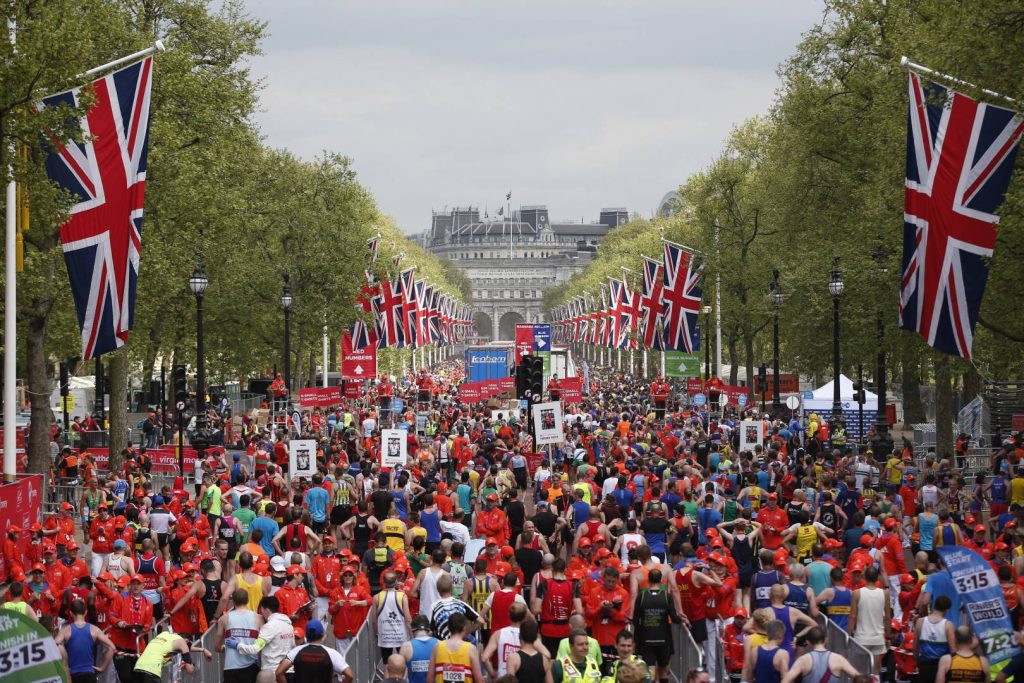
In our latest Member Insights piece, Nick Rusling, CEO of Human Race, give his thoughts and perspectives on how outdoor events will be able to return following the UK government’s announcement that it hopes to have all coronavirus restrictions within the country lifted by the 21st of June.
Outdoor exercise events are ready and raring to go in 2021. As a unique area under the events industry umbrella, there are a number of key steps that are being implemented to ensure they can go ahead in a Covid-safe environment.
Not only that, but the appetite for such events is strong; they play a critical role in society for charities, which are losing millions without them, as well as in supporting the nation’s mental and physical wellbeing and health. Once full lockdown restrictions are lifted, the industry stands at the blocks, awaiting the starting gun.
The state of play for the charity & events sectors
Outdoor exercise events are a significant part of the charity sector calendar, which are used as a key piece of fundraising. With government guidelines restricting large outdoor gatherings for much of the past 12 months, such events have been cancelled or put on hold.
“Large scale events like the London Marathon generate upwards of £150m to the UK economy, while even smaller-scale events like the Race for Life can generate revenues over £50m per year.”
As such, fundraising income from the 25 biggest outdoor exercise events organised by charities in the UK fell by approximately £100m in 2020. These events have historically been huge for charities, with the biggest raising £142m in 2019. Even sporting events which are not charity-owned, raise millions for charities each year; the London Marathon alone provides over £43 million annually to charities.
For race organisers, over 50% have reported losses of over half of their annual revenue as a result of the cancellation or postponement of events. Meanwhile, the economic impact of such events must not be underestimated either. Large scale events like the London Marathon generate upwards of £150m to the UK economy, while even smaller-scale events like the Race for Life can generate revenues over £50m per year.
The role of outdoor exercise events in society
At present, the UK is facing a growing obesity crisis, with 63% of adults in England overweight or living with obesity, which means making exercise a fun, and accessible, part of people’s lives, is crucial for the health of the country— and for easing the strain on the NHS.
“Parkrun alone claims to have got nearly 40,000 previously inactive people running.”
Many outdoor exercise events market themselves explicitly to those who are less active, ensuring they are accessible and designed for all fitness levels, so that they are fast becoming vital spaces for enabling those less accustomed to regular exercise to become active. Research finds outdoor exercise events tend to motivate people to become more active since they have a longer-term fitness goal; Parkrun alone claims to have got nearly 40,000 previously inactive people running.
As well as that, the impact of Covid-19 on the nation’s mental health is also well-documented, with doctors seeing a surge of mental health cases, particularly in the young. This is why outdoor exercise events will be more important than ever as the UK looks to get back on its feet when lockdown restrictions begin to ease, given the myriad mental health benefits of being active. Exercise can have a profoundly positive impact on depression and anxiety and can relieve stress, improve memory, improve sleep and boost mood.
Appetite for a return
Sportcal reported in September that 96% of past mass sports event competitors have expressed the confidence that they will participate in an event within the first 12 months once lockdown measures are eased, and the desire to compete in such events has remained strong even during lockdown, with over 61% taking part in virtual events.
Outdoor exercise events will thrive in a post-Covid-19 world, following the increase of people becoming active during lockdown. What’s more, there are simple ways that events organisers are already preparing for such a return. A phased return of events will give people the confidence to see they’re being delivered successfully and from there, the industry plans to deliver bigger events. With both space and time available to many organisers hosting such events outside means that people can be spread out in a controlled manner, while separate starting times mean that people will arrive at different times, putting less pressure on public transport.
Such events can be held across a longer time-frame so that participants can be spread out and can take part at a safe distance throughout. Sanitation stations can be erected at regular intervals, and participants can be encouraged to bring and maintain their own water bottle supplies- a practice that will also help events to reduce plastic waste.
“Once full lockdown restrictions are lifted, the industry stands at the blocks, awaiting the starting gun.”
Event planners have also been mapping out the logistics of managing the movement of people at such occasions; implementing simple features like channels can control the flow of people and maintain safe social distances .
The industry hopes smaller scale events to return from April or May, and plans to work alongside stakeholders, venues and local authorities to build confidence in these events and put in place measures to protect residents and control spectator numbers. Industry leaders have decades of expertise in managing such events with a logical and safe approach, and are therefore in the best possible position to bring these invaluable occasions back to society.
The events industry’s ongoing campaign, We Create Experiences, is reassuring businesses, stakeholders and consumers that events can be delivered safely this year, as well as pointing to their economic and social importance to the UK. We therefore look forward to a more active spring and summer in 2021. Together, let’s do it right.
The authorNick Rusling is CEO at Human Race, Chair of 2.6 Challenge and a leader of the MSO Group for the Outdoor Exercise Event industry
In one month’s time, on the 25th of March, iSPORTCONNECT’s eMasterclasses will return for 2021 in a new and improved format.
We are excited to utilising a brand new platform in order to provide the best experience possible to our members while they are attending our events and interacting with their peers.
The success of last year’s eMasterclasses were a delight to us to at iSPORTCONNECT, and we were pleased to be able to give something back to the industry by making these free and open to the public. However, we are slightly adapting this model for 2021 to something which resembles more closely to our physical events.
Our first event coming up will be our Media and Broadcast eMasterclass, and here are the four key points to note for the event changes:
1 – Chatham House Rule
Our eMasterclass events will now be running for three hours, split up into smaller sessions with breaks between each of these sections.
They will also follow the same procedure of Chatham House Rule, mirroring our physical events, in order to provide the most open discussion possible between everyone in attendance.
2. Invitation-only
Our events will be open exclusively to top-level executives at brands, right holders and broadcasters, if you would like to register interest for this event please contact our Community Manager Bethany Hushon on bethany@isportconnect.com
3. Capacity capped
There will be a maximum of 150 delegates allowed at these events in order to ensure there is intimacy and access to key decision-makers while keeping the conversation in-house.
4. Unique Networking
We will be utilising new breakout sessions to create a close & relaxed environment which will allow people to flow freely and get involved in networking virtually with each other and allowing new conversations to happen and connections to be made.
We have already announced our first speaker for the event, TV4 Media’s Head of Pay Channels and Rights, Johan Cederqvist, and more are on the way in the coming days and weeks as we build up to the event so stay tuned for further information.
Watch iSPORTCONNECT’s Feature Interview With Rory Stewart-Richardson, Founder & CEO of Connexi.
iSPORTCONNECT recently talked to Connexi’s Rory Stewart-Richardson to hear about how Connexi has been able to grow throughout Covid, brands and athletes better understanding the power of their voice, Esports in sponsorship and more.
Brandon Garcia, iSPORTCONNECT’s Head of Consultancy, has picked out his three key points noted from this week eMasterclass ‘The Key Role of Short-Form Videos in Digital Content Strategies’.
I would like to share with you, our iSPORTCONNECT community, a number of key-learnings from a very experienced and innovative panel discussion at our latest digital content strategies webinar.
Content segmentation
Using Artificial Intelligence and Automation is key to reach every layer and target audiences especially in a day and age when we are flooded with a constant flow of content. The quality also plays a big role in this efficiency exercise.
Available vs Behind the paywall
The right balance tried and tested by many leaders in the space.
All platforms aiming to have a profitable business but taking the step too abruptly on placing most content behind the paywall can have a serious detriment in the number of subscriptions generated and retained.
The human element
There are times when technology cannot replace that moment and the capture driven by emotion. The element of finding and connecting the story around the game is a gift that keeps on giving for a loyal fan.
Wasps Rugby Club are delighted to announce the launch of an innovative digital business club and networking platform with the help of Bundeling.
The new initiative, developed in conjunction with Bundeling and sponsored by long term club supporter Genesis Wealth Creation, will provide a unique business hub enabling existing Wasps partners to be connected to the club 365 days a year, meet new contacts, share business opportunities, and receive invitations to exclusive events.
Bundeling, headquartered in the Netherlands, focus on creating solutions to transform the way in which people come into contact with one another, how they maintain their business network and how they stay informed.
Genesis, a team of well qualified financial advisors, have been part of the Wasps family for several seasons now, initially sponsoring Wales International Bradley Davies and then supporting Thomas Young. Last season they continued their sponsorship of Thomas and agreed to support winger, Zach Kibirige. They are also loyal season ticket holders and often travel to away games to support the team.
Adam Benson, Wasps Chief Commercial Officer, explained: “This new digital offering provides a fantastic platform for our partners to engage with the club and its many stakeholders. It is vital, particularly in the current climate, that we continue to evolve our offering for the companies we work with. We are delighted that the team at Genesis have already seen the potential benefits of this and agreed to become an Official Business Club Partner.”
Genesis Wealth Creation partners, Roy and Sarah Perry, said: “We are delighted to extend our relationship with Wasps by committing to a multi-year agreement as their Business Club Partner. Over the past five years, we have made many strong business connections through the club’s sponsorship programme and are looking forward to building upon this.
“We would like to thank Wasps for this opportunity to build on our strong relationship, and also the players and fans who have accepted us as part of the growing Wasps family.”
“We’re thankful to iSPORTCONNECT for helping to facilitate the creation of this deal”
Bundeling CEO, Elroy Jansen, added: “We at Bundeling have a passion for helping clubs connect smarter with their new and existing partners. With the signing of Wasps, we aim to bring their communication with their partners to the next level! We from Bundeling wish Wasps a successful season and are looking forward to this great partnership. We’re thankful to iSPORTCONNECT for helping to facilitate the creation of this deal, our first with a major rugby club in the UK, and we look forward to creating more deals and helping to benefit more organisations within the sports industry.”
Ray James, iSPORTCONNECT’s Chief Relationship Officer, stated: “We’re delighted to be able to play a part in this new partnership, by utilising our industry relationships we believed there could be synergies between Bundeling and Wasps. From our own knowledge of having a digital community, we know the benefits a platform such as Bundeling can bring to an organisation.”
The cooperation of Seyu and CD Leganés shows that generating extra revenue does not necessarily depend on the stadium experience, but rather on a good idea.
Branding is crucially important to every company, but in sports it often carries an even greater weight in the significance of a franchise with its history. In this week’s Meet The Team piece, our CRM and Membership Manager Raghav Chawla looks at the importance of branding in sport and some recent major changes across the sporting world.
What lies at the core of all the marketing efforts? It’s branding.
In sports, brands are everything. Fans like us find identity in logos, those unique emblems elevate the singular symbol of the emotions and experiences of fandom. Branding gives a fan that unique identity and provides a personality with which we can relate to.
From a business point of view, there comes a point where the brand has to reconnect with its audience and needs to be updated to match their evolving personalities or to engage a new market with a different identity, and this is where the concept of rebranding comes into play.
Rebranding is a tool that could be used to recapture the excitement or to expand boundaries. The concept of rebranding in sports is risky since it requires a change in the existing culture, and a change of culture in a sports organization is not always welcome due to the sentiments involved. However, when executed correctly, it has been seen to induce a positive effect on customer engagement.
There is no particular formula for recreating a brand, it all depends on the situation and what an organisation wants to achieve with its brand.
Thankfully, we have a company like Cravens to ease out the process, it gives the audience insights that really help the rebranding process to eventually position one organisation stronger and better in the market. In addition to that, it helps the organisation to connect with brands, which facilitates the process of branding.
Here are some of the positives and negatives from prominent rebranding campaigns by some of the major Rights-Holders:
City Football Group
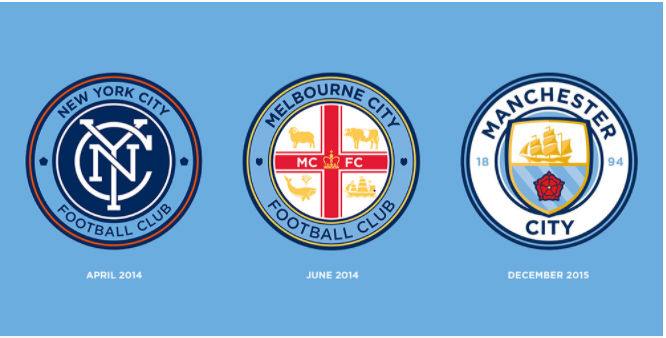
With more money being poured into the industry, the owners of Manchester City have begun to invest in multiple teams. A few years ago, with Manchester City having a rebranding, we also saw a somewhat similar New York City Football Club logo pop up, emphasising the uniformity within the brand.
New York City has a worldwide reputation as a city, but not so much as a football (soccer) city. This alliance with Manchester City aims to clamp down on the US market and make New York City FC a well-known club nationwide.
This is a multi-directional strategy, as it not just helps the flagship club, i.e. Manchester City to build its brand globally, but it also gives a reputation boost to the other clubs owned by the City Football Group.
From New York City FC to Mumbai City FC to Melbourne City FC, all of these clubs reap the benefits of shared Manchester City FC’s vision.
WWE (World Wrestling Entertainment)
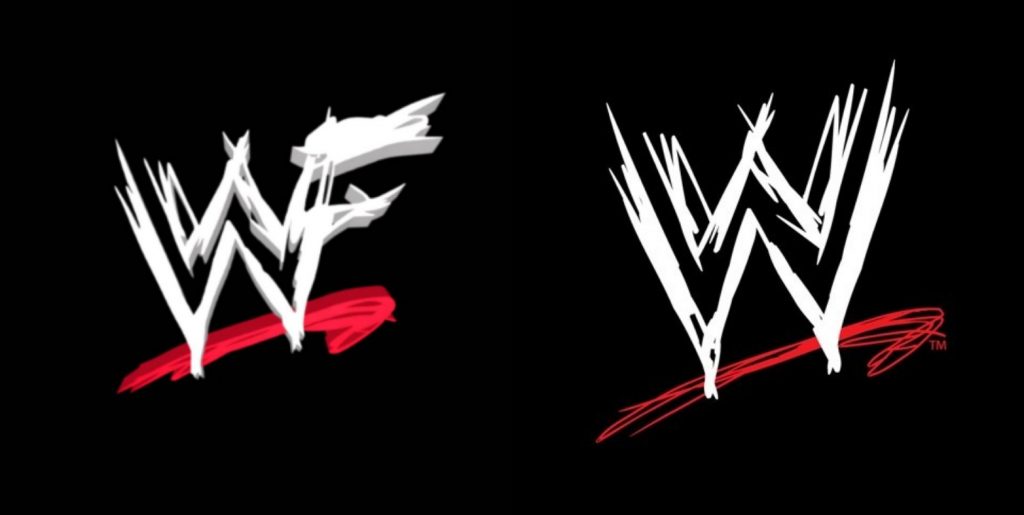
When it came to their branding way back at the turn of the century, WWE (formerly WWF) had a fascinating conundrum.
They were already facing a legal battle with the other WWF (World Wildlife Fund) and also had to face a reputational issue, with professional wrestlers drinking beer, being generally violent and occasionally foul-mouthed. Hence, during the late ’90s, Wrestling was considered to be a product for teenagers and above.
What was fascinating about the whole rebranding was what it allowed the company to do:
The transition to WWE made it possible for them to remove the stigma attached to its brand and helped them to open the floodgates to a mass family market; something that the brand’s image was missing before.
The transition from the word federation to entertainment also helped the brand to claim that it’s not just about wrestlers, WWE can offer an “action soap opera” where the matches occur between “superstars.” And those “superstars” might not be just wrestlers.
They could be karate experts, parkour experts, ninjas, acrobats, street brawlers, Thai boxers, kick fighters, anything at all, notoriously having Floyd Mayweather ‘fight’ the Big Show at Wrestlemania.
Los Angeles Chargers
A classic example of reactive rebranding: minutes after the Chargers announced that they were leaving San Diego for Los Angeles, the team unveiled a new alternate logo incorporating the letters “LA” with a lightning bolt on its Twitter page.
The logo was immediately and widely ridiculed/mocked by fans, the media, and even other professional sports franchises, in part for its resemblance to the Los Angeles Dodgers logo. By changing the colour scheme of the new logo before scrapping it completely after two days, the team sought to defuse the controversy, by sticking to the mantra- “if it ain’t broke, don’t fix it.”
There is not always a need to discard a proven brand.
Cardiff City FC
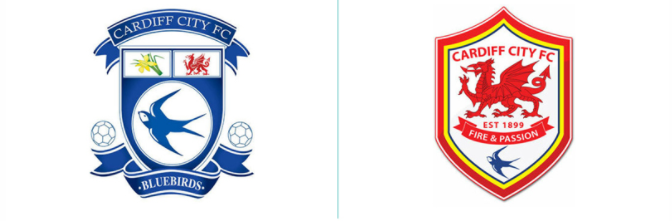
Under new ownership, it was decided to change the Cardiff City’s brand as much as possible.
The football team which was known as the “Bluebirds”, always had blue kits and a blue logo.
In 2012, it was announced that forever blue Cardiff City would change their home kit to red with the traditional bluebird crest dropped for a dragon too. The Bluebirds had to play in red with their kit logo being a red Welsh dragon. This rebranding move sparked strong opposition from some fans who have held previous demonstrations.
Following the pressure from fans, it was then decided in 2015 that the club will be moving back to its original colour, i.e. blue and the club also redesigned its badge which featured a bluebird as the primary focus.
It could be understood from the above example that how history and heritage play an imperative role in branding and why it should be respected.
Major takeaways from the above examples
There are plenty of things to be considered when it comes to sports branding. The situation needs to be assessed and identified correctly, only then can it be figured out whether a reactive or a proactive approach is required to rebrand, or whether it is best to not try to fix something which is not broken.
The consumer or the fan needs to understand what the organisation is trying to achieve, while the organisation should know that if it tries to change every rule, it will lose its audience.
“Branding is not purely visual, it’s cultural, and a logo is not just an emblem, it’s a story.”