EngageRM announce partnership with New Orleans Pelicans and New Orleans Saints

The ownership group overseeing the New Orleans Saints and New Orleans Pelicans today announced a 3-year partnership with EngageRM.

Under the agreement, both teams will employ the EngageRM platform to drive day-to-day operations, strengthen fan engagement and attract new audiences for the teams.  

Both the Saints and Pelicans will drive sales, ticketing, partnerships, event and customer services management capabilities through the EngageRM platform, deepening the relationship with their global fanbase. 

The partnership with the Saints represents EngageRM’s first move into the NFL, whilst the Pelicans expand on EngageRM’s growing presence in the NBA. The team joins a growing list of NBA clients including the Milwaukee Bucks, LA Lakers and LA Clippers. 

The EngageRM solution, native to Microsoft Dynamics 365, will work seamlessly within the New Orleans organizations technology ecosystems, to enhance capability and connect datapoints across their businesses. 

Rich Barbier, Vice President Consumer Insights and Analytics at the Saints and Pelicans, is delighted to be joining forces with the CRM leader. 

“We’re proud to partner with the team from EngageRM, their platform is a leader in sports technology and will strengthen connections with our passionate fans and partners,” said Barbier. 

“The capability and power of the platform is significant, and we look forward to leveraging EngageRM to create experiences that boost the quality of our engagement.” 

“The Saints and Pelicans are a dominant force in their respective leagues, with both organizations boasting an exceptional global fanbase,’ said Tim Barber, Chief Commercial Officer at EngageRM.  

“It is thrilling to join forces with Rich and his team to deliver amazing digital experiences and help them connect with their supporters in new ways.”  

EngageRM CEO, Ned Coten, is also excited to join forces with both teams from New Orleans. 

“This partnership with both the Pelicans and Saints is a significant milestone for EngageRM, expanding our reach in the US sports market, and allowing both to bring their fans closer to the action,” he says. 

“It is a pleasure to be working with the Saints and Pelicans for the next 3 years and assist them in maximizing their relationships with key stakeholders and fans,” Coten said. 

EngageRM’s partners include major US sports franchises including the NBA’s Milwaukee Bucks, LA Clippers and LA Lakers, in addition to teams and venues across the US, UK, and Australia, including the iconic Melbourne Cricket Ground and Co-op Live in Manchester. 

To find out more about EngageRM click here

SailGP announces calendar for Season 4

SailGP, the world’s most exciting racing on water, has unveiled its final Season 4 calendar, featuring a mix of already established fan-favorite locations, new territories and some welcome returns to the SailGP host city fold. As a continued sign of the league’s rapid growth, the season will comprise 12 events, across four continents, over 13 months. Season 4 will start in June in Chicago and culminate once again in a spectacular Grand Final event on San Francisco Bay July 13-14, 2024. 

Season 4 will have an increased focus on the U.S. with three of the country’s biggest cities playing host to a Grand Prix and four events in total. This includes a new stop in Los Angeles – hosted from the Port of Los Angeles – and the reprise of New York, which will be one of the largest events of the season with a re-located racecourse off Governors Island, providing better racing conditions and spectator facilities with a backdrop of Manhattan and the Statue of Liberty. 

The new season starts in less than three months with the Rolex United States Sail Grand Prix in Chicago on June 16-17, 2023 at the stunning Navy Pier precinct – an event that delighted large crowds when it made its debut in Season 3 last June. From there, the league will remain in the U.S. and head to the West Coast for a first-ever Los Angeles Sail Grand Prix on July 22-23. While it will be a debut for SailGP, Los Angeles is no stranger to world-class events and is due to host its third Summer Olympics in 2028.

Following the two opening U.S. events, the league crosses the Atlantic for the European leg of the Season 4 calendar – starting with the iconic riviera destination of Saint-Tropez, France, on September 9-10, where last year, Quentin Delapierre’s home team set the all-time speed record of 99.94 km/h which currently still stands. Afterwards, the historical surrounds of Taranto, Southern Italy await on September 23-24, with the city returning to SailGP calendar after first appearing in Season 2. 

The European event schedule concludes with the league’s most economically impactful event to date, the Spain Sail Grand Prix, which takes place October 14-15, and once again is hosted by the vibrant city of Cádiz in the Andalucía region. Boasting the biggest spectator crowds of Season 3 – with over 50,000 fans cheering from the shorelines per day – a record 56.9 million USD was generated for the local economy. 

Season 4 continues on January 13-14, 2024 with the Middle East Sail Grand Prix. While the location and title partner will be announced in May, the event will take place for a second time in UAE after a successful Season 3 debut. 

Further South, the league makes a record fifth visit to the iconic Sydney Harbour on February 24-25. The event is supported by the NSW Government via its tourism and major events agency, Destination NSW and is the only city that has been in the calendar every year since SailGP’s inception – proof that this is one of the best racecourses for fans and athletes alike. Following that, and after a sold out and hugely successful New Zealand debut in Christchurch last month, the second iteration of the ITM New Zealand Sail Grand Prix will take place in Auckland on March 23-24 as part of a multi-season agreement that sees Auckland and Christchurch alternate as hosts for four seasons.

With the Southern Hemisphere stage complete, SailGP will move back to one of its most picturesque locations with the Bermuda Sail Grand Prix taking place on May 4-5 – another firm favorite on the calendar, having hosted two previous editions of SailGP. In great news for fans thrilled by Canada’s victory last month in New Zealand, the Phil Robertson-led team will have a home event in Season 4 with the Canada Sail Grand Prix taking place on June 1-2. Over ten cities submitted bids for the event with the shortlist of Halifax (Nova Scotia), Kingston (Ontario) Montreal (Quebec) and Victoria (British Columbia) making the final four. The successful city will be announced in May.

Following the first-ever Canada Sail Grand Prix, the season will conclude with two final U.S. events; New York on June 22-23 before the season finale, which will once again take place on the iconic waters of San Francisco Bay on July 13-14, 2024.

At the conclusion of the season, the league will pause for both the Olympic Games and America’s Cup to allow its athletes to participate in both, while at the same time the SailGP Technologies and Shared Services teams will perform maintenance and upgrades to the fleet. Season 5 of SailGP is scheduled to commence in late 2024. 

Andy Thompson, Managing Director of SailGP said: “The fact that we are again expanding our season from 11 to 12 events, and now have many multi-year agreements in place, shows the continued demand to host events and the strong momentum the league continues to experience. The impressive array of global locations and wide range of event title partners – with more to be announced soon – is great news for our passionate fans and partners alike and is further evidence of the growth and appeal our sport has on a global scale. It is amazing to see how far we have come since our inaugural Season launched in 2019 with just five events.”

Final SailGP Season 4 Schedule //

2023

June 16-17 // Rolex United States Sail Grand Prix | Chicago at Navy Pier

July 22-23 // United States Sail Grand Prix | Los Angeles

September 9-10 // France Sail Grand Prix | Saint-Tropez

September 23-24 // Italy Sail Grand Prix | Taranto

October 14-15 // Spain Sail Grand Prix | Andalucía- Cádiz

2024

January 13-14 // UAE Sail Grand Prix | Venue to be announced

February 24-25 // KPMG Australia Sail Grand Prix | Sydney

March 23-24 // ITM New Zealand Sail Grand Prix | Auckland

May 4-5 // Bermuda Sail Grand Prix

June 1-2 // Canada Sail Grand Prix | Venue to be announced

June 22-23 // United States Sail Grand Prix | New York

July 13-14 // SailGP Season 4 Grand Final | San Francisco 

DP World Tour release statement on LIV decision

Sport Resolutions today announced it has upheld the DP World Tour’s conflicting tournament release regulation and its ability to sanction members who breached it. Furthermore, appeals brought by those members have been dismissed.

The decision follows an arbitration which took place before an independent three-person panel, chaired by His Honour Judge Phillip Sycamore CBE, from February 6 -10, 2023.

In summary, the Sport Resolutions panel found that:

  1. Keith Pelley, the DP World Tour’s Chief Executive, “acted entirely reasonably in refusing releases”.
  2. The relevant regulations are lawful and enforceable.  The regulations “cannot be said to go beyond what is necessary and proportionate to the [DP World Tour’s] continued operation as a professional golf tour” and the DP World Tour has a legitimate and justifiable interest in protecting the rights of its membership.
  3. The sanctioned members “committed serious breaches of the Code of Behaviour of the DP World Tour Regulations by playing in [LIV Golf events] despite their release requests having been refused”.
  4. All of the players’ challenges therefore failed, their appeals are dismissed in their entirety, and the £100,000 fines originally imposed must now be paid within 30 days.

STATEMENT FROM THE DP WORLD TOUR

Keith Pelley, the DP World Tour’s Chief Executive, said: “We welcome today’s decision by Sport Resolutions which upholds our regulations and our ability to administer them.

“We are delighted that the panel recognised we have a responsibility to our full membership to do this and also determined that the process we followed was fair and proportionate.

“In deciding the level of these sanctions last June, we were simply administering the regulations which were created by our members and which each of them signed up to.

“It is, of course, regrettable that resources, both financial and staffing, which could have been otherwise deployed across our organisation, have been impacted by this lengthy arbitration process.

“However, with the clarity provided by today’s decision, we look forward to continuing to focus on our 2023 global schedule, whilst also continuing to plan for 2024 with the valued support of our many partners and stakeholders.

“We will now carefully consider the details of today’s decision with our Board, our Tournament Committee and our legal advisors and take the appropriate action in due course.”

Dan Rossomondo joins Dorna Sports as CCO

After a global search for a new Chief Commercial Officer, Dorna Sports is delighted to welcome Dan Rossomondo to the role. Dan joins the company from the National Basketball Association (NBA) and is ready to put his commitment, drive and experience into one of the world’s biggest sports entertainment properties: MotoGP™. Dan will lead the media rights, global commercial partnerships and digital business teams, using his expertise to fuel the continued international growth of MotoGP™’s profile, audience and revenue.  

Dan arrives at Dorna from his role as Senior Vice President of Global Partnerships and Media at the NBA. After gaining his bachelor’s degree from Georgetown and then an MBA from New York University, his career began in advertising sales at Madison Square Garden and has since taken him to IMG, Time Warner Global Media, the NBA and now, Dorna Sports.  

At the NBA, Dan worked across a range of different business lines, both domestically and internationally, and was responsible for substantial growth across sponsorship, media, global attractions, licensing, and retail. He and his team negotiated agreements across an array of NBA properties and oversaw sales relationships with Walt Disney and Warner Media Discovery, as well as rights holders across the world. His experience in driving the growth of the NBA as a sports, entertainment and lifestyle property sees him join Dorna Sports with a proven track record of passion and results, ready to focus on taking MotoGP™ to even greater heights.

Endeavor announce ground-breaking acquisition of WWE

Endeavor Group Holdings, Inc. and World Wrestling Entertainment, Inc. today announced that they have signed a definitive agreement to form a new, publicly listed company consisting of two iconic, complementary, global sports and entertainment brands: UFC and WWE. Upon close, Endeavor will hold a 51% controlling interest in the new company and existing WWE shareholders will hold a 49% interest in the new company.

Together, UFC and WWE will have global reach, impressive scale and omnichannel distribution. On a combined 2022 fiscal year-end basis, UFC and WWE achieved revenue of $2.4 billion and a 10% annual revenue growth rate since 2019.

“This is a rare opportunity to create a global live sports and entertainment pureplay built for where the industry is headed,” said Ariel Emanuel, CEO of Endeavor. “For decades, Vince and his team have demonstrated an incredible track record of innovation and shareholder value creation, and we are confident that Endeavor can deliver significant additional value for shareholders by bringing UFC and WWE together.”

“Given the incredible work that Ari and Endeavor have done to grow the UFC brand – nearly doubling its revenue over the past seven years – and the immense success we’ve already had in partnering with their team on a number of ventures, I believe that this is without a doubt the best outcome for our shareholders and other stakeholders,” said Vincent K. McMahon, Executive Chairman of WWE.

McMahon continued, “Together, we will be a $21+ billion live sports and entertainment powerhouse with a collective fanbase of more than a billion people and an exciting growth opportunity. The new company will be well positioned to maximize the value of our combined media rights, enhance sponsorship monetization, develop new forms of content and pursue other strategic mergers and acquisitions to further bolster our strong stable of brands. I, along with the current WWE management team, look forward to working closely with Ari and the Endeavor and UFC teams to take the businesses to the next level.”

The new company will be led by Emanuel (Chief Executive Officer), who will also continue in his role as Chief Executive Officer of Endeavor, McMahon (Executive Chairman of the Board) and Mark Shapiro, who will be President and Chief Operating Officer of both Endeavor and the new company. Dana White will continue in his role as President of UFC and Nick Khan will serve as President of WWE. The Board of Directors will consist of 11 members who will be appointed at a later date, six of whom will be appointed by Endeavor and five of whom by WWE.

Together, UFC and WWE expect to deliver an estimated $50 million to $100 million in annualized run rate cost synergies by leveraging, among other things, Endeavor’s back office and robust infrastructure. Endeavor also expects significant growth across revenue areas including domestic and international media rights, ticket sales and yield optimization, event operations, sponsorship, licensing and premium hospitality. Endeavor’s success at UFC, including increasing commercial opportunities that have driven more than 2x Adjusted EBITDA growth since its acquisition in late 2016, demonstrates the significant value creation opportunity and upside potential of having UFC and WWE under one roof.

Transaction Details and Approvals

The transaction values UFC at an enterprise value of $12.1 billion and WWE at an enterprise value of $9.3 billion. The transaction represents a contribution price of WWE of approximately $106 per share (before any post-closing dividend). Additionally, UFC and WWE will each contribute cash to the new company so that it holds approximately $150 million. At closing, Endeavor intends to sweep all excess cash at UFC, and shareholders of the new company (other than Endeavor) are expected to receive a post-closing dividend.

Under the terms of the transaction, existing WWE shareholders will roll all existing equity into the new entity that will be the parent company of UFC and WWE (“NewCo” until it is named at a later date) and intends to list on the New York Stock Exchange under the ticker symbol “TKO”. The listing of NewCo will expand the collective investor base to allow for broad market participation across Endeavor and NewCo.

The transaction has been unanimously approved by the Executive Committee of the Board of Directors of Endeavor and by the Board of Directors of WWE. The transaction is subject to the satisfaction of customary closing conditions, including receipt of required regulatory approvals. The transaction is expected to close in the second half of 2023.

This marks the successful conclusion of WWE’s strategic alternatives review process. WWE embarked on this process to take advantage of the company’s unique position in the entertainment ecosystem as well as the inflection point coming with its media rights renewals, both of which were widely recognized in the marketplace through this process.

The View from the US: March Madness 2023, eliminated early, SEC nabs tournament high $34 million

While the rest of the world is focussing on the end of the English Premier League season and the IPL, over in the States, March Madness has been topping the headlines for the last month. In this article we find out from people on the ground how it went down.

An SEC team won’t win the NCAA men’s basketball tournament, but the league will eventually take home roughly $34 million from its March Madness success, more than any other conference.

That’s because of the complicated way the NCAA distributes money during the tournament. Instead of paying schools for their success, the governing body distributes money directly to the conferences themselves. The amount of money each conference receives is determined by the number of tournament games each team plays prior to the final.

Not subscribed to our weekly newsletter? Click here to sign up and receive more content like this to your inbox every week.

The SEC sent eight teams to this year’s tournament, more than anyone except the Big Ten, and those teams will end the tournament having played 17 games. Each game played will be worth roughly $2 million, according to Sportico’s calculations, paid out in annual installments through 2029, bringing the SEC’s haul to roughly $34 million. The Big 12 is next with 16 games played for $32 million, followed by the Big East with 15 games for $30 million.

The SEC’s haul is historic for multiple reasons. It’s been at least two decades since the SEC led all conferences in tournament earnings. It’s also just the second time in the past 20 years that the highest-earning conference failed to advance a single team out of the Sweet Sixteen—Arkansas, Tennessee and Alabama all lost one win short of the Elite Eight.

A quick summary of the NCAA’s tournament distributions: A team earns one “unit” for every game it plays before the championship, including the first four games held in Dayton. There are therefore 132 units awarded each tournament, and those units stretch over six years, generating payments to each school’s conference in annual chunks.

The value of a unit changes each year, meaning the total payment for a 2023 win won’t be fully apparent until 2029. But the NCAA’s revenue and distribution guidance provides estimates, and Sportico calculates that each game played this year will be worth about $2,001,400. That starts with a unit payment of roughly $342,000 next year and ends with a unit payment of roughly $326,000 in 2029 (the value eventually goes down because the canceled 2020 tournament concentrated payments for the following six years).

Because there is no unit award for the championship game, this year’s haul is fully set. The Mountain West, led by Final Four participant San Diego State, finished sixth at $16 million. Conference USA sent just one team to the tournament but will earn $10 million thanks to FAU’s surprise run.

The NCAA encourages its conferences to share their tournament money evenly, and most of them do. That means that the Columbia Lions, who went 2-12 in Ivy League play, will receive the same amount as 2023 upset specialist Princeton, a 15-seed that won twice before falling in the Sweet Sixteen. Not every league, however, cuts the unit money into even chunks. Gonzaga has won a vast majority of the WAC’s tournament money in recent years, and has enough in-conference leverage to command a higher share.

One more interesting wrinkle this year—conference realignment. UCLA, which made it to the Sweet Sixteen, is leaving the Pac-12 for the Big Ten. Texas, which lost in the Elite Eight, is leaving the Big 12 for the SEC. The units they earn, however, stay with their current conferences, meaning a number of schools are earning money that they won’t fully realize. (It’s unclear how their new conferences will treat them for distributions earned before they joined).

In the women’s draw, the SEC and ACC have already played 19 games each, with a few more units left to be earned. The NCAA, however, distributes no money based on teams’ success in the women’s March Madness.

By Eben Novy-Williams and Lev Akabas

With assistance from Emily Caron

March 25: Players Still Adapting to New Wilson Ball

March 24: UConn Women Beat Football Team in Ticket Cash

March 23: FAU’s Dusty May Earning Bonuses and Job Attention

March 21: Financial Upsets Erase Chalk in Women’s Bracket

March 20: Biggest Financial Underdog Is… Princeton?

March 19Princeton’s Ivy Peers Score NCAA’s Most Valuable Wins

Move over blockchain: AI is the future of fan engagement

Fan engagement? Is that still a thing? 

Not everyone likes the term fan engagement. Like many buzzwords the problem is not the buzzword itself rather the contradictory contexts within which it’s used (and abused).

Google Trends is a good proxy for the gradual reduction in attention given to fan engagement as a concept as new buzzwords have grabbed the headlines. Google search data suggests a steady decline since 2004 in usage of fan engagement as a search term. 

However, despite this, 71% of respondents to a recent sports industry survey conducted by iSportConnect (in Jan / Feb 2023), in collaboration with Choicely, see fan engagement as important or very important to their organisations.

Not subscribed to our weekly newsletter? Click here to sign up and receive more content like this to your inbox every week.

While the web3 movement continues to gather momentum (and spawn a whole new lexicon of buzzwords), it seems that sports industry respondents are turning their attention to artificial intelligence – at least as far as fan engagement is concerned. 43% of survey respondents believe that AI / generative AI will be revolutionary for the field of fan engagement over the next 3-5 years versus 7% for blockchain technology. Virtual / augmented / mixed reality also scored very well (33%).

What single technology will be the most revolutionary for the field of fan engagement in the next 3-5 years?

[Single response]

n= 289 (all respondents)

I like to think I’m an optimist. The fact that data analytics (25%) and market research (25%) are the skills / capabilities that sports industry professionals recognise as most lacking to deliver on fan engagement goals, is a good starting point from which we as an industry can start to explore ways to rectify this.

What skill/ capability is most lacking in the sports business to enable organisations to deliver on your fan engagement goals?

[Single response]

n= 289 (all respondents)

If this has whetted your appetite for more, you can access the full report here.

David Fowler is the Managing Director of iSportConnect’s Advisory team where he supports best-in-class companies with their sports market entry and growth strategies and is also a Co-Founder of the world’s first sports technology marketplace, SportsTech Match.

Why IT are the big winners this F1 season

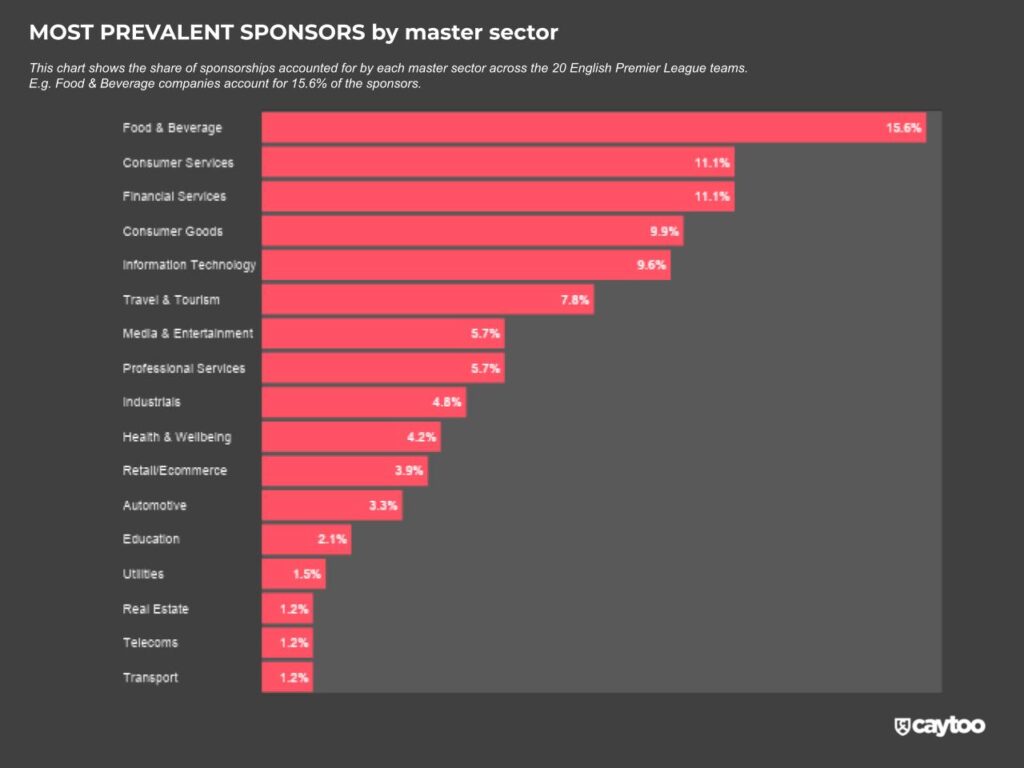
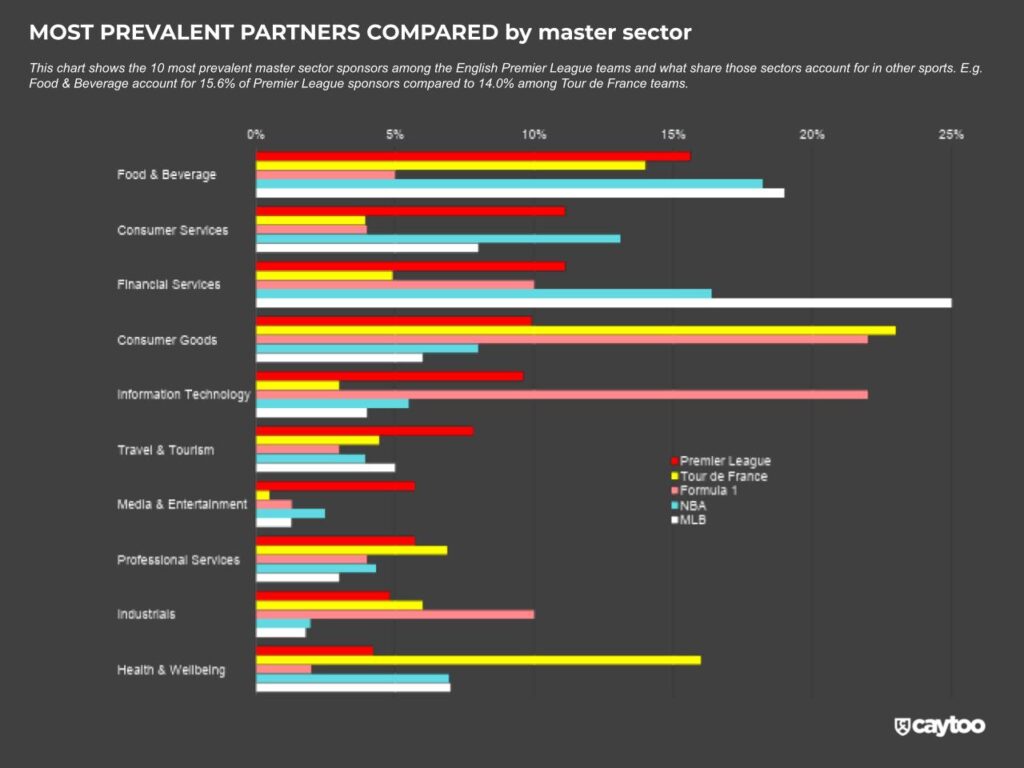
The 2023 Formula 1 season is just starting to rumble into life and as the travelling circus begins the journey from Melbourne to Azerbaijan we are going to take a look at the 300+ sponsors across the sport.

Our F1 Sponsorship Index powered by caytoo analyses all the sponsors across the sport to see how the landscape has changed and the key sectors that the individual teams should be prioritising.

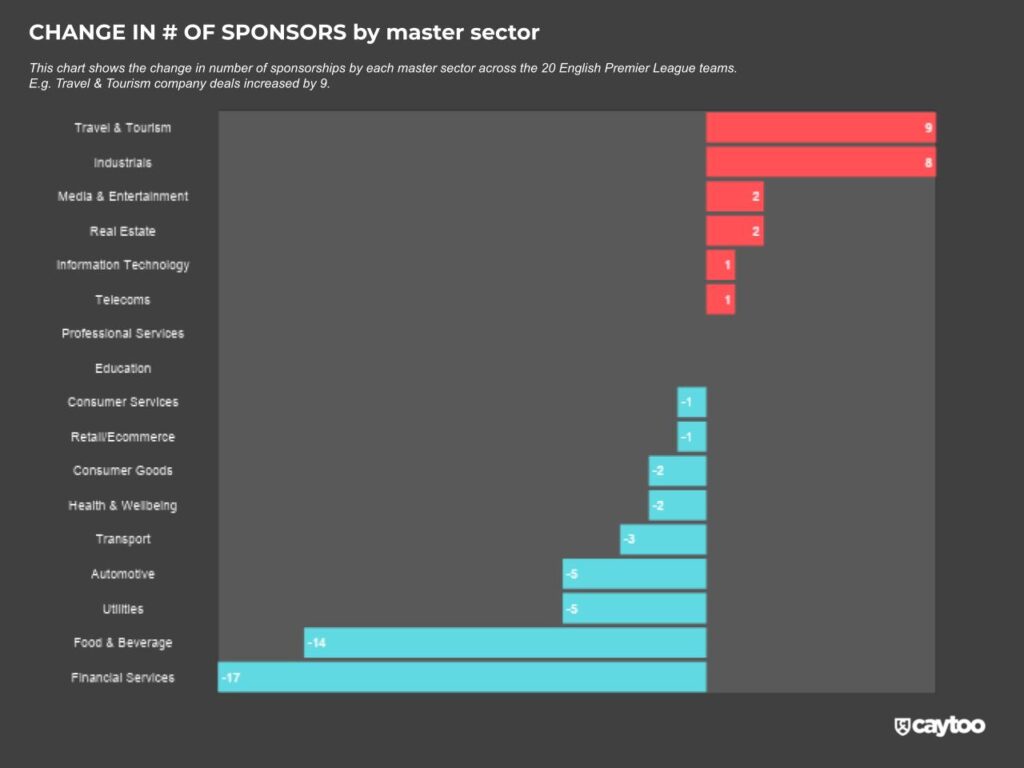
Over the last nine months, the 10 Formula One teams and F1 itself have signed nearly 14 new sponsors per month. In that period, Information Technology has seen the biggest increase in the number of sponsors (+15), narrowly ahead of Financial Services (+14) and Consumer Goods (+8).

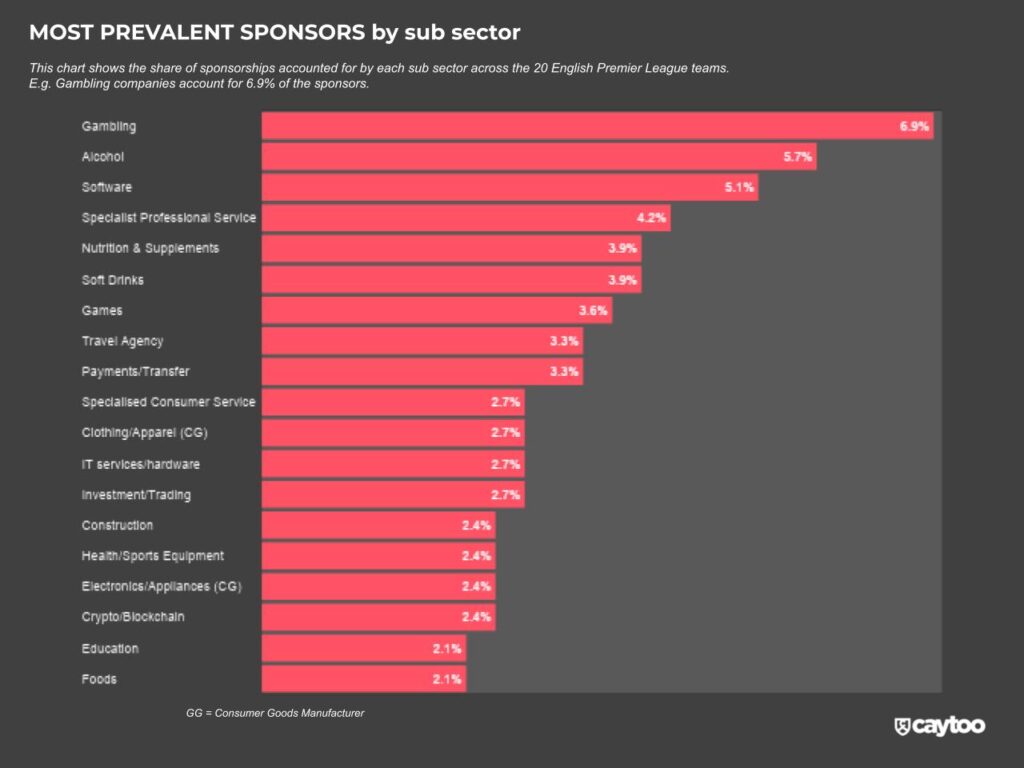
IT’s growth was driven by both Software (now the No. 1 sub-sector, up from No. 4) and Cybersecurity brands; Financial Services growth was driven by Investment/Trading brands (up from No. 12 to No. 7) while Consumer Goods was driven by Accessories brands such as luggage and sunglasses.

The growth of these sectors is driven by the brand rationale of ‘showcasing capability’ as a reason to undertake the sponsorship.

Not subscribed to our weekly newsletter? Click here to sign up and receive more content like this to your inbox every week.

IT is a particularly natural bedfellow for F1 in this regard; technology powers the sport and so many partnerships are technical supply or value in kind deals. Cognizant (Aston Martin) and Oracle’s RedBull deal show that the tech can power the car and the partnership delivers for the brand. These true partnerships lower costs, provide technology and revenue for the team and brand assets for the partner. The demonstration of the technology in action adds authenticity by showing that it delivers elite performance.

Consumer Goods is also a natural partner; clothing, watches, sunglasses and luggage are crucial to the day to day lives of the drivers and the teams – its inherent globetrotting DNA – as well as reflecting the sport’s close links with fashion and some of the world’s most glamorous locations.

Data correct as of February 22nd.

Let’s get into the index:

Meet the Member: “It is certainly exciting, but it is also daunting”

We finished Q1 last week, so far we have had 12 interviews from all over the sports business. From the NFL to Davanti Tyres and from Wave FC to World Aquatics, in this round up piece we are going to pull out the best quotes from each interview.

We asked Brent Nowicki, CEO of World Aquatics, about how they are trying to avoid the peaks and troughs related to Olympic sports:

“Yes the peaks and troughs of Olympic sports, it is unavoidable really. We think that as long as you are always progressing in an upwards trajectory, and you are doing what you can to keep the gap between the peaks and troughs as small as possible, then you are doing the right things. 

Not subscribed to our weekly newsletter? Click here to sign up and receive more content like this to your inbox every week.

One of the things we have done is work with our athletes more to get them brought into what we are trying to achieve. I think the days of International Federations being able to sit back and think that just because they’re an Olympic sport the world owes them something are gone. That might have been the case at one point in time but today I can honestly say nobody owes us anything, we actually owe our athletes everything.

Read the rest of Brent’s interview here

In his interview, Lamberto Siega, Digital, Media and The Studios Director for AC Milan, explained how social media algorithms really decide what fans are interested in: 

Sports clubs don’t choose what is interesting for fans, social trends enhanced by the algorithms (it can be a music, a dance, a behaviour) “dictates” how to build  content, choosing what works and what follows a specific trend. It is a radical change.”

Read the rest of the interview with Lamberto here

NFL UK General Manager, Henry Hodgson told us about NFL UK’s target audience:

“Our focus is still really on growing our fan base in the UK, and we’ve set ourselves a target of becoming a top three sport amongst 12- to 24-year-olds in the UK. So we are myopic about how we reach and engage that younger audience. And really everything that we do is going to be filtered through that lens”

Read the rest of the interview with Henry here 

On the eve of the Cheltenham Festival we caught up with the Head of Operations for the racecourse, Gethin Jenkins to find out about the effect of The Festival on locals:

“The Festival alone contributes more than £274 million to the local economy, but while we celebrate it as an event of national sporting significance, it clearly has a local impact and it’s important that we are good neighbours and contribute throughout the year. 

“These people are our neighbours all year, not just during the four days of The Festival, and it’s really important that we consider them before, during and after all our racedays.”

Read the interview with both Gethin and the CCO of The Jockey Club, Charlie Boss here

We spoke to Sean Maddocks, Davanti Tyres’s Sales Director for Davanti Tyres about the challenges in defining ROI from partnerships:

“It is always hard to quantify ROI from sports-based partnerships but particularly in our field. Tyres are a distress purchase, you don’t wake up in the morning and decide ‘oh brilliant, I am going to buy some new tyres today’. So we can’t measure ROI by a sudden spike in sales. We have to speak to our dealership network and find out if they are using it as a selling point? Are customers speaking about it? Are they displaying it at their depots? 

Click here to read the rest of the interview with Sean Maddocks

Jeanene Valentine, Director of Ticketing at Wave FC, gave her prediction for the direction ticketing is going to go in the next few years: 

“I think that RFID technology will probably become more prominent. I definitely wanted to try that years ago with X Games, I thought it would be cool to have a tangible item, like a skateboard deck or something that was kind of your ticket to get into like big premium spaces and stuff. So I think that we’re gonna keep going down that road of making it easy and fun. Now with digital ticketing, you can use your Apple Watch to gain entry. 

So we just gotta keep thinking of new fun and innovative ideas like that. I want to see holograms or something. It’s 2023. Let’s get creative, let’s get fun.”

Read the rest of the interview with Jeanene here

We asked Harry Browne, Strategy Director of Formula E, about the challenges they are facing at the moment: 

“Firstly, with all those changes we really need to work to maximise each of those opportunities. We really need to make sure we nail every point on the implementation and use data to help us do that. 

Secondly, what we are trying to do is to short-circuit our growth path as a sport, that is the real challenge. Most sports take decades to grow and mature; we are only in our ninth year and we are striving to become a tier one sport.”

Read the rest of Harry’s interview here 

Matt Bennison, Commercial Partnerships, Arena Racing Company, explained how he is trying to make horse racing an attractive proposition for sponsors:

“I think this comes down to investing in data. The great thing about Horse Racing is that we have lots of different audiences. We have your hardcore racing fans and racehorse owners who visit racecourses on a very regular basis alongside also those who visit less regularly, to celebrate special occasions, or to enjoy a day out with friends, for example.”

Click here for the rest of Matt’s interview

It was a surprise to many in the sport’s industry that FIFA are going to allow host cities to secure their own commercial partners , Chris Canetti, President of Houston’s World Cup bidding committee, explains why he it isn’t keeping him up at night:

“We are fortunate in the sense that there’s a culture in this city that the major corporate partners want to support major events, they understand the value of what it means for our city and its future. We have ten of these spaces to fill, so with all of the above it isn’t something that is keeping me up at night.”

To find out what else we spoke to Chris about click here

Stephen Sidlo, Head of Media for Airspeeder, spoke about the challenges of having a blank canvas:

“It’s certainly exciting, but also quite daunting. We’ve determined that the element of danger is what truly drives interest in sports. Racing with flying cars brings its own level of risk, especially when they become manned, and fans will be able to experience the sensations of the pilots through 5G haptic gloves at home.”

Read the interview with Stephen here

The Chairman of the Sports Rights Owners Coalition, Mark Lichtenhein explains why European legislation might help fix a global problem:

“Well obviously not, but having clear pan-European legislation can go a long way towards it. We had similar problems in China, when copyright wasn’t viewed in the same way that we did in the West. That wasn’t a reason for giving up on copyright, it was an opportunity to educate China and now we have seen massive changes in their approach. But to bring it back to piracy, we have to get it right in Europe first before we can transfer a policy to the rest of  the world.”

Click here for the full interview with Mark

We spoke to Erdinger’s Felix Durchdewald about how they managed to turn their non-alcoholic beer into a sports recovery drink:

The fact that there are isotonic benefits to ERDINGER Alkoholfrei actually made it a ‘sports recovery drink’ and this was – and still is – a massive part of our marketing around the beer. The fact you could have a beer after finishing a marathon and it actually helps your recovery by replacing lost fluids and vitamins is such a fun idea and that is how we got into our work with mass participation events.

Read the interview with Felix here

Member Insights: Lineker social media storm shows BBC lack of communication planning

David Alexander, MD of Calacus PR, looks back at the Gary Lineker Twitter storm and the PR nightmare that it caused for the BBC.

The BBC has been one of Britain’s crown jewels for more than a century, revered around the world for its reporting and wider content creation.

In the past decade, that status has been eroded by a succession of cuts and curtailments that have compromised its editorial independence and integrity.

A consequence of that is that so much top talent has walked out of the door, and who can blame them when senior executives, many with links to the government’s Conservative Party, affect its impartiality, ignoring some of the major stories or viewpoints?

When the government introduced a new Bill aimed at curtailing migrants coming to Britain, there was plenty of outrage from opposition politicians and even the United Nations, with Home Secretary Suella Braverman “pushing the boundaries” of what is lawful.

Not subscribed to our weekly newsletter? Click here to sign up and receive more content like this to your inbox every week.

Gary Lineker, the former England international striker now as well known for his presenting of sports shows including Match of the Day, Lineker, who has taken in refugees himself, was expressed his outrage at the language used by politicians promoting the Bill and tweeted: “There is no huge influx. We take far fewer refugees than other major European countries. This is just an immeasurably cruel policy directed at the most vulnerable people in language that is not dissimilar to that used by Germany in the 30s, and I’m out of order?”

While the Bill was controversial, Lineker immediately became the story, infuriating right-wing pundits who in one breath proclaim the right to free speech and accuse the left of being snowflakes and then complain when a sports presenter shows concern for the tone of Ministerial comments.

He later tweeted: “Great to see the freedom of speech champions out in force this morning demanding silence from those with whom they disagree.”

The outrage, which included condemnation from the home secretary for the analogy with 30s Germany and front page editorials criticising his apparent abuse of position, centred on whether Lineker should adhere to the BBC’s strict adherence to neutrality from its presenters.

The outrage falls down because Lineker is a freelance presenter whose work never relates to hard news – while he was permitted to open the BBC’s coverage of the FIFA World Cup in Qatar last year with a monologue referencing the host nation’s poor human-rights record.

Other presenters with far stronger political links, be that the chairman of the Spectator Andrew Neil or Alan Sugar, who is an active member of the House of Lords, have made far more disparaging comments related to their political opponents without censure or controversy and yet Lineker was singled out.

The focus on Lineker does raise questions about what makes news and what matters in the big scheme of things, particularly with a war taking place almost on our doorstep and the cost of living crisis affecting millions of households.

But it is also a reminder that sport, and those working within it, has a voice that transcends society and can be a valuable platform for positive change.

Not subscribed to our weekly newsletter? Click here to sign up and receive more content like this to your inbox every week.

The BBC did not help itself when, amid the furore, it initially announced its disapproval of his comments and then said that Lineker was stepping back from his duties presenting Match of the Day – when it later transpired that Lineker had been suspended.

The episode raises questions about the true nature of the BBC’s impartiality; the direction and conduct of some of its senior executives; and the lack of clarity over its social media policies.

In the chaotic few hours after the news that Lineker was suspended, fellow Match of the Day presenters including Ian Wright and Alan Shearer alongside other commentators and presenters working on BBC sports output withdrew, leaving a skeleton service that resulted in the flagship football show reduced to limited highlights.

As has been the case with this government in the past, there is a discomfort about sports people, and footballers in particular, from getting involved in societal issues.

There has long been a debate about whether sport and politics should mix, but given that so many athletes come from deprived and often multi-cultural backgrounds, is it any wonder that they comment or take action to support those less fortunate than themselves?

We have seen in recent times how Marcus Rashford demanded more support for hungry children which resulted in a government climbdown while England players also took the knee to highlight racism and a lack of civil rights across the world despite criticism from some of the government’s most prominent members.

No wonder several players were prepared to boycott BBC Sport’s interviews as well.

British prime Minister Rishi Sunak, whose government had prompted the original Lineker tweet, issued a statement distancing himself from the furore.

Even Piers Morgan, whose views rarely align with Lineker’s, issues a defence in a column, saying: “Of all the objections to Lineker’s remarks, the one that I find most ridiculous is that he shouldn’t be allowed to express an opinion at all because he is one of the biggest faces of BBC Sport.

“I get that the BBC has strict impartiality rules for its news and current affairs presenters, because they read or report on the news and a taxpayer-funded national broadcaster should remain scrupulously neutral in those areas. But no offence to Gary, who cares what an ex- footballer says about news or politics on his Twitter feed?”

Conversely, Matthew Syed, who writes about sport and current affairs for The Times as well as being a former Olympian, tweeted: “This isn’t about Lineker’s politics; it’s about him consistently violating his own agreement on impartiality. It makes a mockery of the entire system.”

The fact that the story dominated the news agenda for three or more days speaks volumes
about the culture war taking place in Britain.

Lineker is often criticised for his sizeable BBC salary despite his popularity and excellence in his role – and having a successful production company and a brief sojourn with BT Sport covering the Champions League, there was a sense that the BBC needs Lineker more than he does them.

No wonder, then, that on the Monday after the weekend of self-inflicted drama, Lineker was reinstated.

BBC Director-General Tim Davie, whose own position was under threat and whose integrity
had been questioned because of his former links with the Conservative Party, said: “Everyone recognises this has been a difficult period for staff, contributors, presenters and, most importantly, our audiences. I apologise for this.

“The potential confusion caused by the grey areas of the BBC’s social media guidance that was introduced in 2020 is recognised. I want to get matters resolved and our sport content back on air.

“Impartiality is important to the BBC. It is also important to the public. The BBC has a commitment to impartiality in its Charter and a commitment to freedom of expression. That is a difficult balancing act to get right where people are subject to different contracts and on air positions, and with different audience and social media profiles. The BBC’s social media guidance is designed to help manage these sometimes difficult challenges and I am aware there is a need to ensure that the guidance is up to this task. It should be clear, proportionate, and appropriate.”

The statement went on to announce an independent review to look into the BBC’s social media guidance.

And that gets to the heart of the problem for the BBC and for other organisations who wait to react to a crisis once it happens, rather than taking preparatory action in advance.

Clear systems and processes, including robust social media guidelines, consistently adopted, would have helped to avoid this unsavoury episode and underlined the brewing challenges the BBC faces to re-establish itself as an impartial and well-run British institution.

Dame Melanie Dawes, the chief executive of broadcast regulator Ofcom, told the Digital, Culture, Media and Sport Committee that the row goes “straight to the heart” of the BBC’s wider reputation “weighing freedom of expression alongside the wide reputation they (the BBC) have for impartiality.”

The failings of senior executives turned a minor story into one which became headline news around the world.

It also underlined a complete failure to grasp the impact that social media can have when Lineker’s supporters used their voices to amplify their solidarity for Lineker.

The hashtag #IStandWithGary went viral with nothing from the BBC to counter the criticism of their stance.

Davie denied his deal with Lineker was a “climbdown,” adding: “I’ve always said we needed to take proportionate action. For some people, by the way, we’ve taken too severe action… others think we’re being too lenient.”

But Davie appeared to have had no clear plan on how to deal with the problems of his own making, further undermining his authority as well as the reputation of the BBC.

Had he and his team identified what success would look like once the decision had been taken to suspend Lineker in the first place?

Did they ever have control of the story, to any degree? Did the entire sorry episode just further undermine the waning reputation of the BBC amid reasonable accusations of inconsistency, a lack of transparency and a real crisis of leadership?