
End of Sport’s ‘Blank Cheque’ Era – Sports Still Sells But Must Be Real
September 17, 2026
Olympic advisor Michael Pirrie says the contrasting fortunes over the past week involving Saudi-backed sports ventures, new ‘Ultimate Athletics’ in Budapest, and 100,000 NFL blockbuster in Australia point to a changing global sports story for governing bodies and federations.
For years, sport seemed to have almost inexhaustible new sources of wealth that took new codes, competitions and regions into the ever-expanding sector, curbed only during the Covid pandemic before roaring back and globalising further.
Sovereign funds, state-backed investors and ambitious host nations poured billions into leagues, tournaments and headline-grabbing events, convinced sport could purchase influence, transform national image and open new political, commercial and community frontiers and legacies.
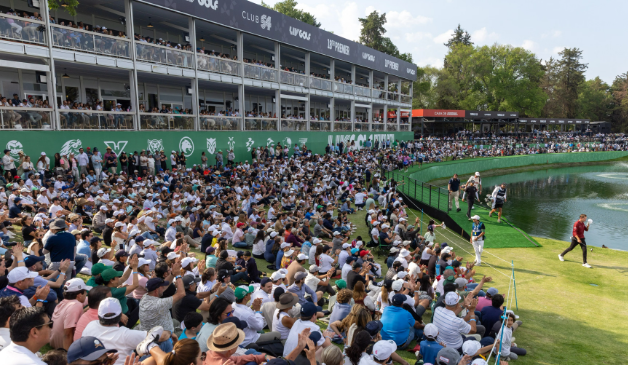
While investment opportunities seemed to just keep coming, last week’s spectacular collapse of the Saudi-backed LIV Golf tournament may have signalled an important shift if not inflection point
Saudi’s sports spending spree had seemed unstoppable, taking over from Gulf state neighbour and rival Qatar and prompting speculation about where it would go and end.
LIV provides insights and lessons for governing bodies and international federations.
While LIV’s arrival marked a high point in sports investment globally, its sudden demise looms as an equally dramatic reality check.
“LIV and Let Die” may be the inevitable story headline after the Saudi-backed breakaway league ran out of financial fairway
The LIV ecosystem, cloaked in secrecy, discovered that even unlimited Saudi money has a back nine
Behind the fireworks, celebrity signings and private jets was a flawed business model – based on the mistaken belief that money alone could prevail – and did not recognise what was necessary for sport to survive in a rapidly changing world.
For five years LIV played by its own rules, but its collapse has demonstrated that economic gravity cannot be indefinitely suspended despite luxury of having the wealthiest benefactors in the world. investment .
LIV’s demise signalled an end to sport’s ‘Blank Cheque’ era.
While the downfall of sport’s most extravagantly funded experiment has been the subject of intense speculation, LIV’s fate may be more that a stunning financial collapse.
LIV’s downfall, along with the earlier cancellation of the WTA Finals tournament in the Saudi capital of Riyadh loom as more than isolated setbacks
They suggest an important global shift may be underway in sport.
This includes the impacts of deteriorating geopolitical and economic conditions, Middle East war, rising inflation, higher interest rates, mounting pressure on public and sovereign investment, changing community and state priorities, and declining trust in institutions, including world governing bodies such as FIFA.
LIV’s bankruptcy filing indicates that even vast state backing cannot substitute indefinitely for a sustainable sporting product, committed audiences and solid commercial foundations.
The LIV collapse following the earlier cancellation of the Riyadh WTA Finals have raised concerns of over dependence on Saudi investment as well as the future of the wider region as the Iran war’s impact deepens across the Middle East.
In an era of growing conflict, inflation and tightening capital, even the world’s richest sports patrons and investors are being forced to decide whether the game is worth the price.
This is testing long held beliefs that money alone can buy sporting success, loyalty and legitimacy.
This means international federations must now plan less like traditional sports administrations and think more like long-term risk managers, product developers, media companies, diplomats and guardians of public trust.
The old assumption that a major event could be secured through a wealthy host, a large rights fee and celebrity driven promotion is no longer sufficient.
LIV lacked a clear vision for its event beyond promoting Saudi’s interests in international political, business, diplomatic and tourism circles, and the troubled tournament became a divisive and disruptive presence without purpose.
This was perhaps sport’s most spectacular slide – from billions and birdies to bankruptcy. A new league that was designed to break golf’s old order discovered that disruption can be a very expensive game to play amid soaring costs and falling revenues, interest and international support.
The relocation of the WTA Finals to Indian Wells sees the return of a flagship event to a traditional low risk tennis environment with a proven venue, audience, broadcast market, player support and sponsor base,
While some sports leaders were concerned about the emergence of a new underclass of nations unable to compete for sporting events and assets against the vast wealth of the Gulf states, the recent Saudi setbacks may lead to a geopolitical and geographic rebalancing.
This could see a return to more traditional sporting territories in Europe, North America, and Australasia.
Cities in these regions all featured in significant new and successful sporting events last weekend that highlighted failures of the Saudi sports model.
The events also underscored critical success factors in post-LIV sport for governing bodies and international federations.
These involved the birth of a new global sports revolution event in track and field in Europe, and the first ever in-season NFL game in the Asia Pacific hosted in Melbourne, Australia.
The contrast between the launch of the new Ultimate Athletics Championships in Budapest by a governing body trying to make its sport more meaningful to its athletes and audiences and LIV Golf, whose focus lay outside the sport, was telling.
World Athletics’ Ultimate Championship was presented as a modernisation project with a compelling vision – to create a landmark end-of-season occasion in which the world’s elite compete when the stakes are highest; make rivalries easy to follow; give television and social platforms and audiences a more visually integrated and shared sporting experience; and let young people get closer to the action and see athletes as personalities, not merely names in a results sheet.
The premise behind the new event, overseen by WA President Seb Coe, was that athletics should be built around the athletes, their rivalries and the next generation of fans—not around political agendas ahead of sport.
The compact three-day finale, elite fields, record high prize money of $10 million, national identities and streamlined presentation was designed to give track and field a decisive annual climax, providing a showcase that creates heroes, stories and aspiration as accessible to teenagers watching on a phone as lifelong stadium fans.
By comparison, LIV never fully resolved the fundamental question of what it was for, beyond the money. It had elite players, vast funding and global visibility, but no compelling public purpose or deep connection to younger participants, and no clear contribution to the health of golf.
The difference is not that World Athletics uses money while LIV did not;
While LIV and Ultimate Athletics Championships both relied on significant investment, World Athletics sought to make investment serve the sport’s future growth and development, focussed on athletes’ earnings, fan engagement, broadcast and social media relevance and youth inspiration.
LIV by contrast appeared to make the sport serve Saudi’s wider strategic interests—commercial expansion and international positioning and influence.
By contrast, Seb Coe’s ambition was not simply to stage the richest athletics meeting but rebuild the sport’s emotional connections with fans and supporters; to bring the best athletes together in a television and social media-relevant event to give a young viewer a reason to dream of becoming the next Duplantis, or Josh Kerr.
The event’s value and purpose centred around athletics itself and the host city and nation responded with three nights of sell out crowds.
Money can secure famous names and spectacular production, but it cannot by itself create sporting purpose, inspiration or a generation of young players. An event or league can become resilient when people believe it matters, and not merely when it can afford to exist.
While World Athletics used modern entertainment technology to deepen sport’s purpose, LIV used sport to deepen a state’s strategic narrative.
While the high-quality sporting drama and presentation connected strongly with the host city, the ban by World Athletics on Russian track and field competitors was also a backdrop to the championships.
The governing body’s position on the ban was understood at the event and supported more widely across the European host continent that has been traumatised by Russia’s invasion of Ukraine
Following the recent downfall of Hungary’s former pro-Putin leader, there was growing recognition that the ban by World Athletics and its president Seb Coe was to defend the moral and competitive integrity of sport;
While Ukrainian athletes have been killed, displaced, recruited into military service, deprived of training, and had facilities destroyed, the prospect of their Russian counterparts representing and competing at sporting under the flag and institutions of the state responsible for the murder and slaughter of families of Ukrainian athletes remained firmly opposed by many.
Despite the Saudi setbacks, this is not a story of global sport in decline.
In Budapest, the inaugural World Athletics Ultimate Championship showed what can happen when a sport reshapes itself around elite athletes, high stakes, shorter television-friendly competition and record rewards.
Meanwhile, in Melbourne, a capacity crowd of more than 100,000 for the first NFL regular-season game played in Australia demonstrated the extraordinary pulling power of a competition with established teams, deep fan culture and a long-term commitment to building a market.
Melbourne’s Rams–49ers game showed what sport looks like when the spectacle is anchored in genuine fan passion, competitive meaning and a city ready to embrace the event more than an imported novelty.
Following the LIV collapse, the historic NFL game became a shared city and dual continent occasion, further highlighting that vast investment and political ambition cannot, by themselves, manufacture credibility, atmosphere or enduring public affection.
Saudi Arabia remains a major global sports power and investor, and the Saudi setbacks may mark less a retreat from global sport than the end of the assumption that money alone can permanently redraw sport’s map.
The golf and tennis tournaments were marque events in the Saudi trophy cabinet of sporting spectaculars designed to help rebrand the kingdom, and the demise of both events may also point to the limits of Saudi’s sportswashing campaign to reduce attention to human rights violations.
While the collapse of LIV and the loss of the WTA Finals do not signal the Middle East is leaving world sport, the events in Budapest and Melbourne suggest that global sport may be rediscovering the value of its traditional homes, in places where crowds, culture, commercial ecosystems and sporting credibility have been built over generations rather than bought in a single cycle or a mega start up event.
While Saudi-funded event excesses faltered, Budapest and Melbourne showed where the global sports economy is still winning.
The contrast was telling. Sport remains one of the world’s most potent economic and cultural forces, but it is entering a more demanding age. The ventures most likely to prosper will not simply be those backed by the biggest cheque books. They will be those able to create a contest people believe in, an experience fans want to share, and a lasting value for athletes, broadcasters, cities and communities.
The lessons over the past week of shocks and surprises in sport have been dramatic and will endure longer than the last seven days over which they unfolded.
The next generation of successful international sport will not necessarily belong to the bodies with the deepest pockets, but to sports that are able to combine financial discipline with moral clarity, purpose, sporting excellence and a credible relationship with athletes and fans.