
The War at The Doorsteps of Global Sport
May 21, 2026
The Iran conflict is shaking the Gulf states that have become indispensable for the transport, travel, financing and hosting of global sport. Michael Pirrie, who has worked on major events in the Gulf, looks at how the Middle East conflict is impacting world sport.
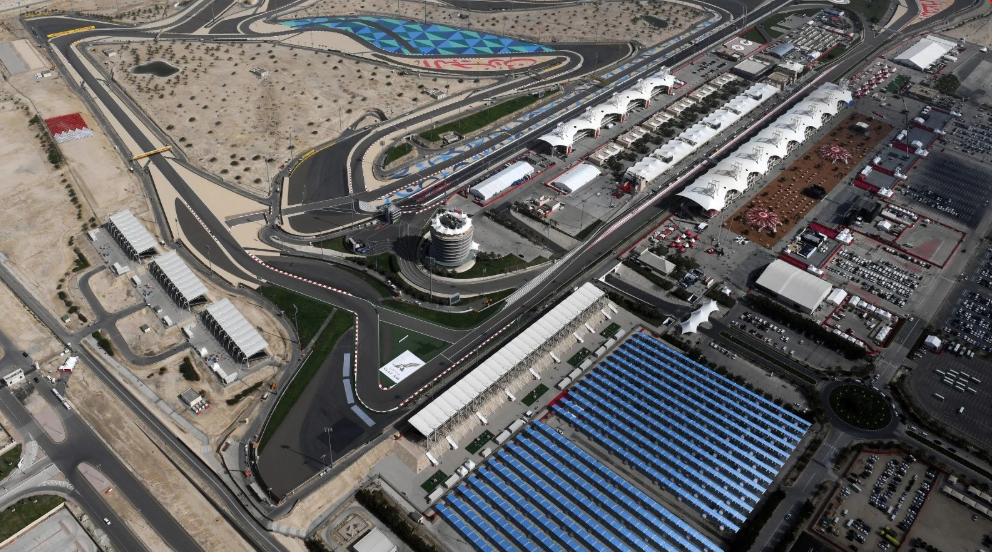
There was a bitter irony in the fact that one of the first global sporting casualties of the Iran war was Formula One in the Gulf — the event, that more than any other, binds the world of sport together through fuel and flight, the foundations of modern international competition.
Engines stalled. Races were cancelled. The roar of the crowds was replaced by the sound of fast-moving objects of a different kind as the loud buzz of drones and boom of missiles launched by Iran echoed across military and urban sites and installations around the Gulf.
The ongoing Iran conflict has had a broad, disruptive impact on sport in the region and wider sporting world, cutting across events, athletes, economics, and geopolitics, and has exposed how deeply sport is tied to global stability.
The main impacts have involved major event cancellations and delays, including
- Formula One races in Bahrain and Saudi Arabia were cancelled
- MotoGP in Qatar was postponed and rescheduled
- Over 100 sporting events across the Gulf have reportedly been scrapped
Modern sport depends on global movement, and the war has severely disrupted this with airspace closures and missile threats causing mass flight cancellations.
Athletes, officials, and fans have been stranded or unable to travel, and teams have struggled to organise fixtures and training camps
Even outside the region, competitions have been affected by delayed travel and uncertainty.
The Iran crisis has also threatened planning for major global tournaments.
This includes Iran’s participation in next month’s 2026 FIFA World Cup which remains uncertain following cancellation of warm up matches, and visa and political tensions complicating logistics.
There were also increasing safety concerns about whether teams would be able to compete normally.
The failure of the Iran women’s national football team to sing the anthem in apparent protest over violence against women in their homeland just two days after the start of war over the radical clerical regime’s pursuit of nuclear weapons dominated the recent Asian Football Cup in Australia.
The conflict has since hit the business of sport with rising oil prices, increased travel costs, and increased event staging expenses, among the impacts
Planning for tourism-related sport such as F1, golf, tennis, and mega-events is uncertain and under constant review.
SPORT AT WAR
The cancellations of Formula One races in Bahrain and Saudi Arabia and multiple other sporting events were more than isolated scheduling problems.
Beyond the Middle East, the Iran conflict, if it worsens, could also affect airline sponsors involved in Europe, Asia or Africa; global broadcasting markets; player and team mobility; tournament safety; sponsorship confidence and spend; fan engagement and energy costs across world sport
The Gulf states, particularly Saudia Arabia in recent years, have invested trillions into becoming the new centre of influence in global sport to diversify their economies and to enhance and repair the image of the kingdoms through sport, known as sportswashing.
Formula One, golf, football, boxing, esports, tennis and mega-events have made the region almost indispensable to world sport
While the Gulf’s big buy out of world sport has brought much attention, visibility and influence it has also brought further scrutiny and criticism.
The very region that has been presented as the future of global sport has suddenly become a symbol of its vulnerability since the outbreak of war.
FORMULA FOR FEAR
Meanwhile, world governing bodies are scrambling to understand the longer-term implications of the war and what it means for the international sports calendar, the heartbeat of the global sports economy.
A broader reassessment within parts of the international sporting community was also underway over the Gulf’s future as a location for world sport.
The conflict has triggered discussions amongst some international federations, world governing bodies and major sponsors about whether the Gulf model represents a sustainable rebalancing of global sport in the region or heralds instead an era of high-risk sport vulnerable to geopolitical instability, fluctuating energy markets and regional conflict.
Sport today depends on systems that war smashes – open airspace, stable energy markets, predictable borders and uninterrupted supply chains, along with airlines, tourism, freight, broadcasting infrastructure and investor confidence.
When missiles fly across the Gulf, those foundations begin to crack.
While sporting events around the world will be impacted in different ways the longer the conflict, the biggest impacts initially have been in the Gulf region, now in Iran’s direct line of fire.
The advent of war and recent failure of Saudi’s signature LIV Golf tournament loom as defining moments in the Gulf’s business strategy for regional and world sport
While LIV’s future had been under scrutiny, the conflict hastened its demise and has triggered a review of Saudi’s controversial sport domination and washing strategy, under mounting domestic and international pressure and uncertainty over the conflict.
‘SAFE & LUXURIOUS’ IMAGE GONE
Vast infrastructure spending by Saudi and other Gulf monarchies on sport, aviation, entertainment and tourism had created an image of the region as a safe and luxurious destination immune to the volatility of the region
The war has dented that illusion and plunged the region’s formula for success into doubt, along with the future of Formula One and other events hit by a war the Gulf states never wanted and have tried to avoid.
The conflict was also likely to impact selection of the host city for the 2036 Summer Olympic Games with both Saudi Arabia and Qatar expected to compete for the mega event, regarded by each as the ultimate sports showcase.
While the military presence of the United Stars in the Gulf has failed to deter Iran from striking deep into the region and the regime may remain a clear and present danger even after the conflict.
The close proximity of the violent and unpredictable rogue nation would pose an unacceptable risk to extensive international preparations for the Games, which require geopolitical stability and certainty
The Iran war, coupled with LIV’s demise after significant financial losses, may herald a significant shift in the Gulf amid concerns its sporting buy outs may not be working exactly as intended – concerns that have been heightened by the conflict
Saudi’s model for sporting dominance assumed that global sport was like any other financial product or asset and could simply be acquired, delivered and controlled.
The war in Iran has threatened this model along with the very assumptions around which it was based
This was also highlighted by LIV’s collapse, which went beyond the balance sheet and the almost incomprehensible player payment fees and demonstrated that sport must have integrity, history, tradition, passionate competition, and stability.
LIV had few friends and there was little sympathy or love for its multi-millionaire marquee players, but most of all there was no clear or compelling need or reason to for LIV.
The Saudi strategy however has been successful in other ways but perhaps not exactly as initially intended
SPORT’S BRAVE NEW WORLD
The unprecedented spending on sport has helped to normalise engagement with Saudi Arabia and has expanded its soft power and diplomatic influence in wider international society.
Sport has helped Saudi Arabia integrate more deeply into global business and cultural networks. Major events now bring political leaders, corporations, media executives, celebrities, and investors into the kingdom
While some critics argue that Saudi Arabia has effectively proven that enough investment can overcome reputational resistance, the kingdom’s dubious human record remains cloaked in suspicion and the wider narrative surrounding its rise as a new sporting power.
The Gulf’s vast spending on sport has not washed away human rights concerns, fuelling tensions instead over the traditional values, roles and responsibilities of sport, often dividing the sector and wider international society.
FIFA was forced to abandon plans for Visit Saudi, the tourism arm of the Saudi Arabian government, to become a major sponsor of the FIFA 2023 Women’s World Cup hosted by Australia and New Zealand.
The back down followed fierce opposition from the host nations, governments, football federations and leading players over Saudi’s violent human rights record and historic repression of women.
The human rights criticism hasn’t disappeared, and critics continue to highlight the murder of journalist and Saudi critic Jamal Khashoggi, who was ambushed and assassinated in a Saudi consulate in Istanbul; restrictions and repression of political dissent; LGBTQ+ rights; questions about women’s freedoms despite reforms; and brutal execution of prisoners
Saudi’s spending on sport ironically may have reinforced the human rights debate rather than removing it and made “sportswashing” one of the defining political issues in modern sport.
Indeed, it may have reinforced the debate rather than silenced it
Many of the major Saudi-backed events have tended to revive these discussions rather than erase them.
SPORTWASHING & HARD TO REMOVE STAINS
Critics of FIFA for example often claimed that a Saudi-hosted World Cup risked repeating human rights abuses and mistreatment of migrant workers who died while constructing venues to entertain the world at the 2022 World Cup in Qatar.
Phil Mickelson, infamously called the Saudin government “scary motherfuckers” with a “horrible human rights record,” yet justified joining LIV as a “once-in-a-lifetime opportunity” to reshape the PGA Tour. He later stated that he did not condone human rights violations but golf was “very lucky” to receive sovereign wealth fund investments.
The broader reality may be that sport has almost become financially dependent on Gulf investment.
Independent financial observers indicate one of the key reasons Saudi Arabia has been relatively successful was that many sports needed new capital and that the Gulf sports strategy, pioneered initially by Qatar, was perfectly timed for many leagues, federations, and clubs that were financially struggling or seeking to grow but faced rising costs, fragile broadcasting models, infrastructure demands, and intense competition for audiences.
LIV’s significant losses, failure to secure big enough audiences, and $5 billion downfall have left a vacuum of uncertainty and doubt over Saudi’s future sporting investment plans, exacerbated by ongoing uncertainty over how and when the Iran conflict might end and what this means for Gulf sport investment.
LIV Golf, Saudi’s most ambitious, audacious and controversial showpiece, was seen by many as the kingdom’s boldest and most consequential sporting experiment and clearest example of using sport and entertainment for soft power and geopolitical influence.
While LIV highlighted how central Saudi investment in sport has become, the rebel tournament also exposed both the reputational risks and fragility of dependence on the Saudi sovereign wealth business model.
This has included continuing accusations of “sportswashing” and backlash over human rights; questions about economic sustainability; and especially, concerns that entire sporting competitions might only exist while Saudi funding continued.
Those concerns have intensified with continuing uncertainty over the Iran war negotiations and recent reporting that the Saudi Public Investment Fund (PIF) will redirect many billions back home to concentrate on preparations for the 2034 FIFA World Cup and other emerging domestic priorities.
The planet’s most popular game remains a centrepiece of Saudi’s controversial geopolitical sports influence strategy, and the Fifa World Cup in Saudi Arabia is expected to be the most expensive sporting event ever staged, featuring several new multi-billion-dollar stadiums
SPORT DESERT STORM
High funding levels were expected to continue to build and promote the Saudi Pro League around its mega super star recruits, including Cristiano Ronaldo, whose total Saudi earnings, according to recent reports, could be as much as $1.6 billion by the time his Al Nassr contract ends in 20207 – the equivalent of approximately $32 million a month.
The stronger funding focus on domestic sports is also expected to target grass roots sports with new athlete development programs designed to produce more home-grown Olympic medals. Popular local sports targeted include judo, karate, taekwondo, shooting, fencing and equestrian as well as swimming and athletics.
The uncertainties and risks posed by Iran have put Saudi’s staggering investments in sport under closer internal scrutiny, leading to a diversification of investment into domestic sectors, according to Saudi observers.
This has seen Saudi expand deeper into film, media and gaming, including the $76.5 billion dollar purchase of Electronic Arts group.
This will give the kingdom access to many of the world’s biggest games, including the digital football simulation series FC 26 (formerly FIFA), in what critics have described a ‘bread and circus’ distraction for Saudi’s youth instead of providing greater political freedoms and choice.
CONCLUSION
The Iran war has created a high risk geopolitical and military desert sand storm impacting sport and society in the Gulf and well beyond.
The conflict has posed the first major test of the Gulf’s radical regional investment and development model which has changed modern sport.
The conflict has already resulted in cancellations of elite and lower-level sporting events and raised questions about the future of the sport model
While the Gulf states have a sporting strategy that delivers glittering spectacles and transforms cities into event capitals, the model depends on vast flows of oil wealth, aviation networks, tourism, imported labour and constant international movement that is acutely vulnerable to geopolitical shock.
The premise underpinning Saudi’s disruptive LIV Golf showpiece was that vast wealth could buy credibility, heritage and loyalty. It assumed that global sport was like any other financial product or asset and could simply be acquired, delivered and controlled.
Sporting visions and events however built too quickly, too expensively, and too far removed from the culture of sport itself become unstable and struggle when the world becomes unstable in times of conflict.
Gulf leaders remain hopeful that a peaceful settlement to the conflict will see life get back to normal, business return to full force and tourism and major events resume.
Much will depend on how much longer the ceasefire and peace negotiations last and any future military attacks the Gulf might suffer.
Diplomatic and military analysts fear that even if the missiles and drones are grounded, the risks from a hostile Iran, weakened but not vanquished, and close to the Gulf will continue to cast a shadow over the region