FIFA’s Digital Content Team have chosen Fifty Digital, the multi-award winning digital and social agency in sponsorship and sport, to galvanise its men’s World Cup accounts ahead of the 2022 tournament in Qatar.
Fifty Digital will help create, develop, evolve and amplify FIFA’s hero, hub and hygiene content on social and digital media, from the ideation and creative process through to content production, all the while delivering best-in-class content designed to reach, engage and inspire new audiences across the globe through the unifying power of football.
Through innovative and emotive storytelling, Fifty Digital will deliver a world-class service ensuring FIFA are authentically engaging young football fans through bold and vibrant content, as well as helping football’s global governing body reach a non-traditional football audience.
“Fifty Digital have a brilliant track record and understand what younger audiences want. We are looking forward to an exciting and successful partnership together.”
This has been evident for this week’s celebration of FIFA World Cup Mexico 1986™ across the FIFA channels, with Fifty Digital providing new and innovative content that has helped bring the tournament into the modern world. The wide-ranging offering includes an animated illustration combining the stars of 1986 and 2021, a watchalong video introducing a new audience to the best moments from Mexico ’86, and an original production which sees fans attempting to recreate Diego Maradona’s famous ‘Goal of the Century’.
Football has the power to unite all races, genders and nations through the passion and purity of the world’s most popular sport. It is these angles which Fifty Digital will be bringing to life via its creative thinking, to showcase inspiring stories that entertain audiences and get people talking through the positive connection of football across modern culture.
Fifty Digital will ensure FIFA are continuing to be both across and leading on contemporary digital trends, consistently innovating in not just the content produced, but also how that content is experienced across the platform’s fans love.
FIFA World Cup Qatar 2022™ will be a tournament of firsts for many reasons and Fifty Digital are confident the world of football can be expanded to new eyes and ears through FIFA’s unique access, helping present FIFA as the centre of the sporting universe.
Giuliano Giorgetti, Head of Digital Content at FIFA, said: “We’re delighted to have Fifty Digital onboard to help us create great Digital Content. Fifty Digital have a brilliant track record and understand what younger audiences want. We are looking forward to an exciting and successful partnership together.”
Nick Jackman, Co-Founder of Fifty Digital, said: “We’re incredibly excited and proud to be working with FIFA’s Digital Content Team. The World Cup is the pinnacle of world sport. This passion and love of the game is what we want our content to encapsulate, especially as football is something we live and breathe at the agency.
James Campbell, Co-Founder of Fifty Digital, said: “Everyone remembers their first FIFA World Cup™ and everyone at Fifty Digital is delighted to be working on celebrating this event as the excitement for Qatar builds and builds. World Cups are some of the most iconic sporting events in history and are a bucket list item for players, managers, fans and sports lovers alike. It’s truly the jewel in the crown of football, so we’re honoured and thrilled to be working with FIFA’s Digital Content Team and know our team will deliver exciting and engaging content which transcends traditional audiences and inspires a generation.”
We are pleased to once again be a partner of the prestigious Sports Business Awards.
The deadline is approaching and the Sports Business Awards Judges are poised to start appraising your inspirational stories of success against the odds.
START YOUR ENTRIES TODAY
There are plenty of categories you could enter depending on what your have achieved.
Perhaps you have been particularly innovative in your response to COVID-19 or you can impress with your engagement with fans?
Or maybe you can make a case to be the best sports agency or the best professional services company of the year?
iSportConnect Brands eMasterclass today found that brand purpose and clear alignment with organisations who hold similar beliefs and vision is by far the most prominent theme for brands as the world moves past the Covid-19 pandemic.
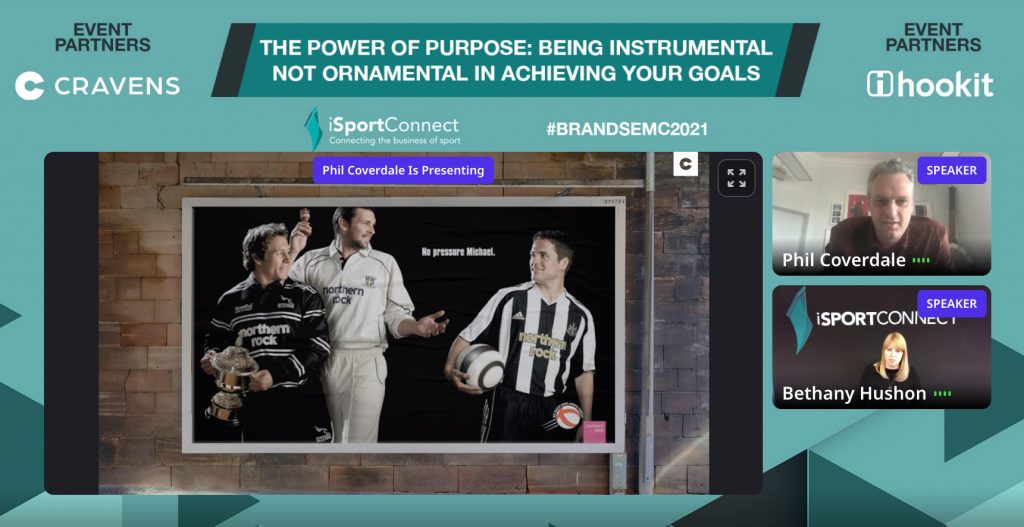
We had a terrific start to the eMasterclass looking at ‘The Power Of Purpose: Being Instrumental Not Ornamental In Achieving Your Goals’, through a presentation by Phil Coverdale, Managing Director of Cravens.
Phil provided a terrific session for our audience with his presentation on purpose within brands and sport, showcasing contrasting examples of some of the best and worst examples of purpose-led organisations and the importance of having true buy-in from those within the organisation.
This was a session that was very relevant for brands in a world where CSR and having those positive impacts societally and environmentally, with a younger generation who see a company’s values as a large factor when buying their products.
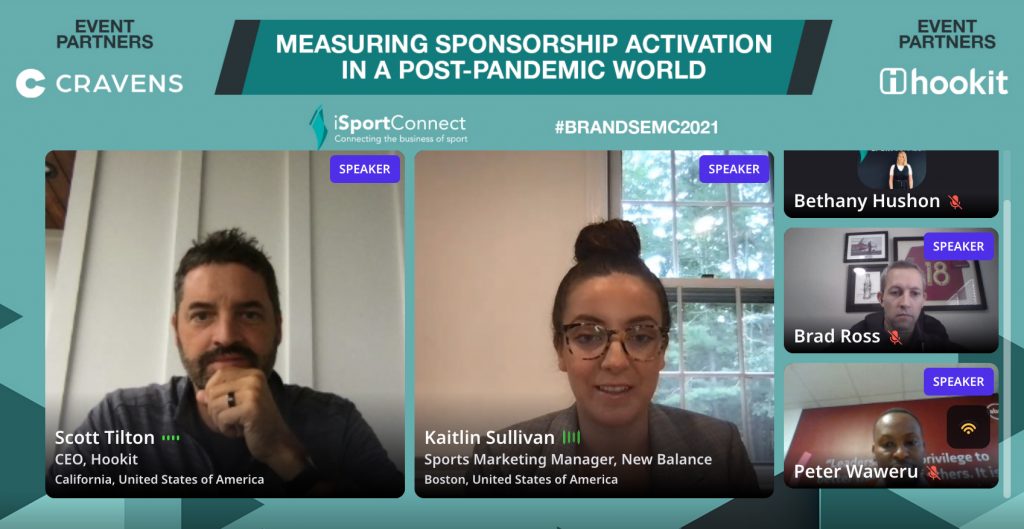
For our first panel we had a discussion surrounding ‘Measuring Sponsorship Activation In A Post Pandemic World’, which was led by an expert in this space, Scott Tilton, CEO of Hookit.
The panel, containing Kaitlin Sullivan of New Balance, Brad Ross from the Coca-Cola Company and Absa Bank’s Peter Waweru, looked at sponsorship measurement and ROI and how these have been adapting over the last year.
There were also some great thoughts expressed by the panel when discussing whether social and digital has taken a greater aspect moving forwards even now stadiums are filling up once again, how leveraging data through social metrics is impacting this and particularly the personalisation aspect that comes with digital.
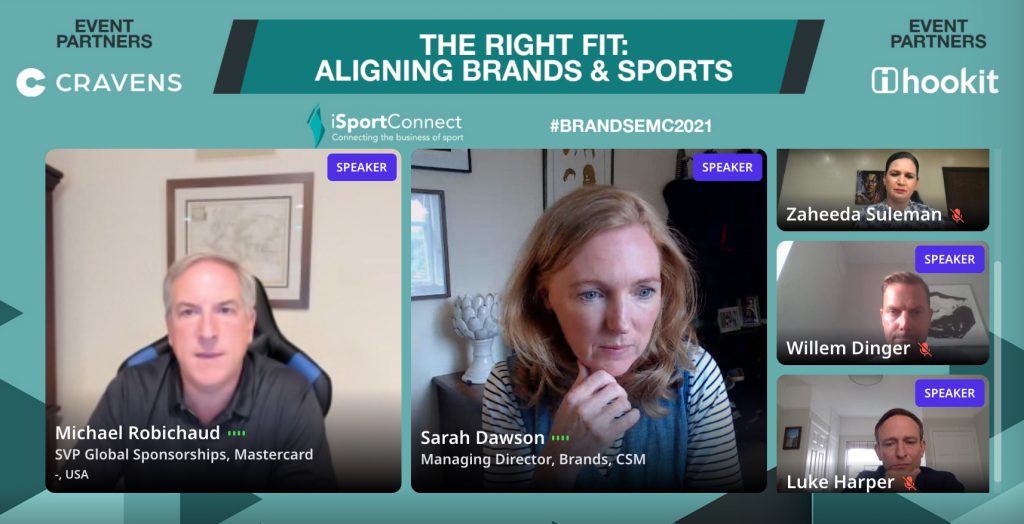
After our networking break, our second and final panel of the day ‘The Right Fit: Aligning Brands & Sport’, moderated by Sarah Dawson of CSM and featuring HSBC’s Luke Harper, Michael Robichaud of Mastercard, Unilever’s Willem Dinger and Zaheeda Suleman from Safaricom.
This session looked at how some of these major brands are looking to constantly find the best fit for the audiences they are trying to reach, but also those that are already involved with these brands.
Our panel looked at the importance of looked at how existing partnerships had been changing over the past 12 months, looking at ensuring the alignment of values between brands and partners and how risk management of sponsorship is changing.
We would like to thank everyone who attended today, there were certainly lots of great advice and learning to take away from leaders at some of the world’s biggest brands.
Alexandra Willis, Head of Communications, Content and Digital at The All England Lawn Tennis Club (Championships) pens down her thoughts as Wimbledon returns.
It’s been over 700 days since a professional tennis match took place at Wimbledon. It’s a tiny thing really. Just a tennis tournament. There are much bigger problems in the world than whether or not Wimbledon goes ahead. But last year’s cancellation felt like a small reflection of what the world was going through. ‘Even Wimbledon is cancelled…’ prefaced the narrative that this pandemic was serious. If we needed telling.
For all the right reasons, our lawns rested last summer, we tried to recreate the Wimbledon spirit during our great pause, and, as things improved over the summer, we started planning optimistically for a ‘normal’ Championships in 2021. How wrong we were. This pandemic is still very much with us, and around the world. We are not back to ‘normal’ yet.
“There’s a lot about this event that is completely new. Some of our proudest traditions are on furlough.”
But Wimbledon is back. With the support of the government, public health, and our local authorities in Merton and Wandsworth, we are going ahead as part of the Events Research Programme, with players back on the courts, and spectators in the stands. There’s a lot about this event that is completely new. Some of our proudest traditions are on furlough. But it is also reassuringly familiar. The grass, the flowers, the strawberries. Even the rain. (It’s raining as I write this and we haven’t start play yet. So what’s new.)
There is plenty we’ve been asked to do differently – our colleagues across operations, security, food & drink, HR, IT, membership, ticketing, courts and horticulture, estate management, estate development, player relations, and so many who come together to make Wimbledon happen, have all worked tirelessly – these are the heroes behind everything you’ll see.
There’s also a lot we’ve tried to do differently across our marketing, communications and content, to help take Wimbledon even further around the world, and to celebrate our return, appropriately. Here’s a little overview.
First up there’s our campaign, It’s a Wimbledon Thing, which aims to celebrate the passion of our fans, through their own traditions, not just ours. All around the world, people have their Wimbledon rituals. We’ve created a trailer, the work of the wonderful McCann London, to kick this off, asked a series of influencers to create their own Wimbledon Things, and are encouraging fans around the world to share their #WimbledonThing with us.
“We are always in pursuit of new ways to keep Wimbledon relevant and, while continuing to serve our existing audiences, take it to new ones as well.”
Then there’s Wimbledon at Home. Recognising that many fans may not get the chance to come to Wimbledon this year, or in fact ever at all, we wanted to create a home for them, a series of ideas and inspirations that cover food and drink (order your own afternoon tea, or try out one of our recipes), fashion (get the ultimate fan pack – limited edition, or take a look at our new creative positioning, Proudly Understated), and fun (our set of Explore Wimbledon activity packs, and our mobile game, BreakPoint).
We’ve also got our Wimbledon Kids series, which launched on YouTube Kids this week, created by the brilliant LiveWire Sport team. We are always in pursuit of new ways to keep Wimbledon relevant and, while continuing to serve our existing audiences, take it to new ones as well. Young people are pivotal to the future of sport, and so we hope that children around the world fall in love with Blade and Bounce, just as we have during the process of creating them.
And there’s the Virtual Hill, our first virtual world, which we’ve developed in partnership with American Express. You can grab a spot, create an avatar, choose your outfit, and roam around collecting WimbleCoins to win prizes. It’s a first year, but we think it has plenty of potential.
Next cab off the rank, are our digital innovations. Working in partnership with IBM, we’ve recognised that tennis can be a pretty intimidating sport to follow, especially when you’ve only heard of one or two players. So, we’ve sought to address that in three ways:
Help fans know who to follow by letting them know who is in form. That’s the IBM Power Rankings, which allow AI to mine punditry, statistics and match analysis to help provide a guide to who’s hot and who’s…less so. We started working on this idea three years ago, so to see it come to life is very exciting.
Help fans prepare for the match they are following with Pre-Match Insights, a handy scorecard that picks out the major talking points of the match, and provides a likelihood to win projection, and…
Give fans value back for following players, through player recommendations and personalised highlights reels, delivered to them via their myWimbledon account.
“There’s the Virtual Hill, our first virtual world, which we’ve developed in partnership with American Express.”
Then there’s playing our part in saying Thank You. Every day of the Fortnight, we will have various individuals who have gone above and beyond during the past 18 months in both the Royal Box and in the stands, from the NHS, TFL, teachers, PE teachers, theatre, arts, culture, charities and more. We’ve worked with the Together Campaign as well, with the beautiful Thank You card illustrated by Charlie Mackesy making its debut on the Hill.
And, inspired by last year’s NHS Rainbows, the Wimbledon Foundation is running a ‘Thank Your Champion’ scavenger hunt. Download a poster, colour it in, write the name of your champion, and put it up in your window. And then go find everyone else’s!
In addition, we have all our usual stuff covering the actual tennis! The Wimbledon Channel, live on the radio and video, wimbledon.com, the Apps, our social media channels, collaboration with UEFA on EURO 2020, new player stories, and much more.
So that’s it. If you’ve made it this far, hope it’s been interesting. Hope you enjoy the two weeks. And let us know what your #WimbledonThing is…
It’s time to say thank you to London’s business heroes who have made significant and invaluable contributions to the community physical activity and sport sector as the London Sport Awards returns for 2021.
Londoners are being encouraged to nominate the business or corporate partnership which has made its mark for the London Sport Awards 2021 – the biggest celebration of grassroots physical activity and sport in the capital – by Thursday 15 July.
The Awards is run by strategic body London Sport who are aiming to make London the world’s most physically active city by supporting the inactive to get active and ensuring young Londoners develop healthy physical activity habits for life. The London Sport Awards will be supported, for the second year running, by the City of London Corporation, with an in-person ceremony set to take place at the stunning Guildhall on Monday 6 December, subject to the easing of covid-19 restrictions on social gatherings.
The Business Contribution Award category will recognise the contribution of commercial organisations, large and small, to community physical activity and sport whether that is through practical support, advice, mentorship, collaboration and/or investment.
The Award, won by UBS in 2020 for their work alongside SportInspired in Hackney, celebrates businesses with a bold and innovative approach to Responsible Business who can demonstrate they make a real tangible difference in local communities using the power of sport and physical activity.
Keith Bottomley, Vice Chair of the City of London Corporation’s Policy and Resources Committee, and London Sport Awards judge, said: “Business has always played a vital role in promoting, sponsoring and providing resources to allow more people to take part in sport, and that has only increased in importance during the pandemic.
“The Business Contribution Award is about recognising firms across London who’ve gone the extra mile to help people get fit, get active and take part in grassroots sport, making a real, positive difference to the communities they serve.”
Tanya Rabin, London Sport’s Director of Commercial, Marketing and Communications, said: “The Awards shines a spotlight on the incredible, and often unrecognised, work done by individuals and organisations in communities across the city to improve Londoners’ lives through physical activity and sport. Nominate your business for a London Sport Award
This year’s Awards will be particularly special as we recognise and celebrate the individuals, organisations and projects that have continued to champion the power of sport and physical activity and kept London moving during the pandemic.”
The sixth London Sport Awards, which remains free to enter, will have ten categories to reflect the breadth of activity in the capital. Find out more about the categories and how to submit nominations here or by contacting awards@londonsport.org.
Billy Dawson, Sales Executive at Harlequins who spent time with iSportLearn during his time on furlough with the rugby team, explains what he learnt from being involved with iSportLearn.
How did I get into sport?
Having always had a passion for playing sports, it was clear for me that working in sport would be where my career started. After completing my Sport Business Management at Leeds Beckett University, a particularly varied course covering areas such as marketing, sponsorship, strategy, and globalisation of sport I was certain it was the right area for me.
Having exited university I applied to many roles at sports clubs and companies before finally getting my chance with Harlequins Rugby.
How did working at iSportLearn help me?
Something that I wish I had access to during my time at university was an additional learning resource like iSportLearn.
Whilst I enjoyed the theory side of the learning at university, had I been able to have an additional resource with practical industry examples from some of the top sports leaders in the world this would have been a great additional benefit to complement my learning.
When I was put on furlough in 2020 having still been fresh into the role, I was keen not to let the time go to waste and looked for any opportunities available in the sports industry where I could broaden my knowledge during this time.
When I approached iSportConnect to express my interest, they mentioned they had this new learning platform aimed at helping those from disadvantaged backgrounds get a step on the ladder into the sports industry, something which excited me when the prospect of getting involved was voiced.
Speaking to 60 industry leaders about how they could get involved with the iSportLearn programme was a daunting experience at first but one that I learned a lot from, these guys have a wealth of knowledge about the sports industry and being able to talk passionately about how they are helping the next generation of industry leaders and adding them to my network of people wasn’t something I had imagined a few months prior.
Sandy and Joe integrated me into the team straight away and it was great to be on board such a brilliant initiative which I will certainly keep an eye on.
I would recommend everyone from the of 16-24 looking to get into sport to take a look at these programmes, this is the best way of educating yourself on what working in the sports industry is really like through actual examples from those who have been there and done it.
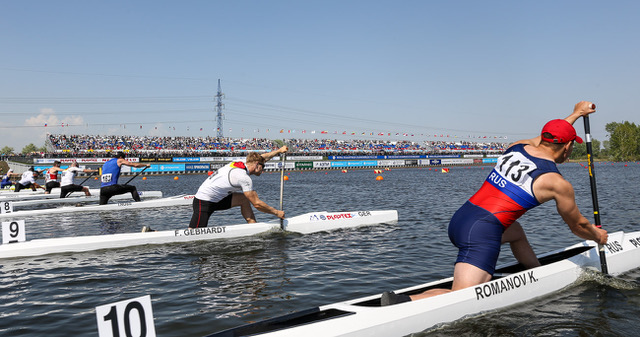
iSportConnect’s Ben Page recently spoke to Adam Collins and Martin Marinov of the International Canoe Federation after their Sprint World Cup in Barnaul, Russia, one of the markets the organisation is targeting for expansion.
How has the restarting process been this year for the ICF, and how did the recent Sprint World Cup go with not long until the Olympics begin?
Martin – Well in 2020 we held only one competition for the whole season and our athletes were hungry for racing, we did a survey and discovered they really wanted to continue racing if it were possible, so we’ve been doing everything to hold events again.
We put safety measures in place like wearing masks, distancing, temperature checks, and we had test centers on site taking PCR tests on arrival and departure plus regular lateral flow tests. Luckily we had no positive Covid tests, so it was a really good experience and the athletes were really good [with the restrictions], because they were thinking about the Olympics where, if they got COVID now, it would be very difficult for them if they need a couple of months to recover. So the athletes were strict in following all the restrictions, protecting themselves and others even more than we asked, so it was a good experience.
“We had to create something sustainable, that we can use for the future as we don’t know how long Covid will stay… we had to learn how to run competitions during this pandemic.”
We tried to create a different approach and told everyone competing ‘Covid is not going to disappear from the world in a month so we have to learn how to deal with it in this environment. We had to create something sustainable, that we can use for the future as we don’t know how long Covid will stay, but we couldn’t just cancel competitions, we had to learn how to run competitions during this pandemic.
That’s interesting, I haven’t heard anyone else speak about the athletes themselves, particularly those going to the Olympics, being even more cautious than the actual organisations that are setting up these events.
Martin – Obviously you get some slight differences between nations. Some are much more wary from what they maybe experienced within their home nation, compared to others. But it really is a big risk for them to potentially affect everything logistically, if they were to catch it and have to quarantine somewhere that affects their training, their flights, so it’s a big deal.
We saw with some who have already booked their place it wasn’t worth trying to go to that extra effort to compete when they already have a place, for instance the Australians, it was almost impossible for them to get out. If they do get out, they’re probably not going to be able to return to Australia before the Olympics.
Looking at a digital perspective, what has the ICF been doing in terms of developing your online presence over the last year?
Adam – It was a challenge for us without any competitions, we rely on them a lot as we have 10 different disciplines. So for that reason we have a lot of events to get through, we’ve got the two Olympic disciplines, sprint and slalom which have a World Championships and World Cups every year, then with the other disciplines, some have World Championships every year and some every other year.
In 2019 we live-streamed 18 events across all the disciplines, which was more than we’d ever done before, which shows how heavy our event schedule is and geared towards the live coverage of those competitions. It was a real challenge for us to think about content outside of that, because we weren’t doing enough of it, but it was also quite good for us to realise that actually there’s more we should and can be doing.
“I’m really happy with 2020 because 2020 really gave us the opportunity to learn what the younger generation wants, using what we can do online, how we can engage people, and how we can improve.”
We did a whole manner of things to engage people and keep content going. We created canoe kids, resources for kids to do at home to try to educate them about the sport. We also did some podcasts, tried new things with athletes and challenges to keep people active by paddling and livestreams for coaching to upskill people. Stand up paddling also had a big uptake once people started to get out of lockdown, so we’ve to help give some tips to beginners through live sessions with athletes.
Martin – I’d also like to add that, actually, I’m really happy with 2020 because 2020 really gave us the opportunity to learn what the younger generation wants, using what we can do online, how we can engage people, and how we can improve.
A lot of our partners were talking for years and years to create virtual competitions and virtual training between people from different areas, by the end of 2020 that was in effect, so we now have options to have virtual competitions and online training between different people which is really positive.
What are the main keys you are looking to gain through your broadcasting and the content that you produce?
Adam – At the moment we’re most committed to exposure and growing the sport, we utilise YouTube for reach and help the SEO of our website to drive traffic to us. The exposure through YouTube is obviously great and has been doing really well, it’s tripled over the last few years prior to the pandemic.
We also started to distribute to other channels, we utilise Facebook Live, and we have developed a Huya channel for exposure in China, which was a new development in 2019 and had huge success as we had up to 500,000 live viewers and 30 million views for the five events we covered, so we’ve continued with it.
It was fantastic because prior to the Olympics there had been no live coverage of canoeing within China and the next step is to build a better connected audience with them.
You just held the recent sprint World Cup in Russia, is this a key market that you’re looking at expanding and what’s the role an event like this can play to do so?
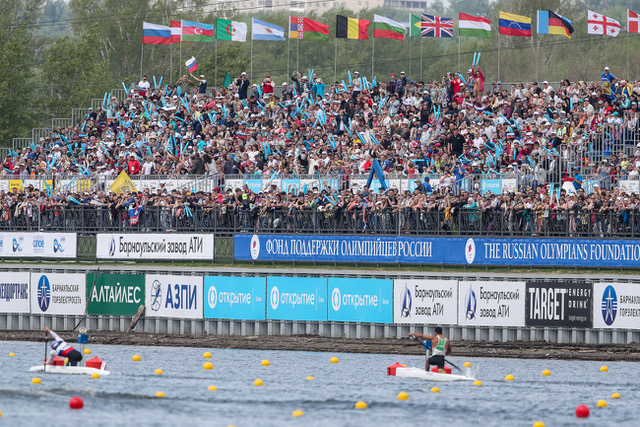
Martin – Russia is one part of what we’re targeting. Russia and all these countries say they’re hungry for more action, and having a competition in a different part of Russia definitely brought a lot of people to the course and also in front of TVs in Russia.
Like Adam said, a couple of years ago we had massive expansion in China and in 2019 they had four gold medals at the World Championships for the first time which was a massive success for them. So Russia and of course the US market is a goal and that’s why we have the ICF Canoe Sprint Super Cup this year in Oklahoma in August, one of our top events with superstars of the sport.
Adam has also successfully managed to gain massive support from India, we’ve seen so many Indians watching our competitions, so our targets are the big countries, also Australia, and, following on from Rio 2016, in Brazil there’s a big interest. Right now we have top guys from all these countries, which really helps us to promote our sport.
As you have so many different events, you can take them to many places, does that give you a bigger opportunity by being able to get closer to those potential fans?
Martin – That was definitely our goal in Russia, and we want to expand our sport outside of Europe. We also want to create a culture that competitors can use rental boats, they don’t have to bring their own boats. We want to have competitions in America, Africa, Asia and Oceania. This was like a pilot project, which was successful, no one complained about the boats, which usually have their colours on and maybe their sponsors, even though it was an Olympic qualifier which brings a lot of stress to the athletes.
What are your current key markets? You mentioned expanding to some major countries, but what are your biggest markets currently?
Adam – As Martin mentioned we are predominately a very European sport at the moment, and I think most of that centres around the boat issue which is what Martin has been trying to solve and did successfully in Russia. The other challenge is thinking about the environmental side. Normally they drive from one event to the other in Europe and can transport the boats much easier, so we have to think about those impacts as well but for that reason it’s a very European sport.
It’s a difficult question to give a single answer because of our different disciplines, they’re almost like different sports themselves. Sprint is huge in Hungary, canoe sprint is like football to them, and then we have a lot of the predominant European nations, UK, France, Spain, Germany, but we know there are markets with good athletes outside that. We worked with Redtorch to do some digging into our social analysis to identify our current and potential key markets across all our disciplines. This has helped to target our developments, America has that culture and history of paddling but are only just having some top athletes come through so we focus on recreation and look to build that bridge to competing.
Martin mentioned athletes from China and Brazil having success, outside of your own content have you involved those athletes?
Adam – The Chinese Federation have really helped develop the sport a lot there, and they have medal hopes for Tokyo. In 2019 they invested a lot into events, we’d never been holding events in China before, suddenly we had three in one year. So when a nation wants to help push the sport that much, we should embrace it and that was a fantastic opportunity for us to do that.
“With Brazil, they’ve got a couple of athletes who are really popular and have really good following, so anything they do on social media goes really and therefore we target them. These are partnerships we’re trying to build.”
Of course you get the challenges with the Chinese, it’s harder for us to communicate and work with them and we need to start working with other agencies to help that through our strong relationship with the Chinese national coach, who actually was doing some commentary for us on our live stream in China.
With Brazil, they’ve got a couple of athletes who are really popular and have really good following, so anything they do on social media goes really and therefore we target them. These are partnerships we’re trying to build and we have been working closely with some of those. One of these athletes was Pepe Goncalves, who’s a Brazilian slalom paddler and also extreme slalom paddler, he’s been fantastic for us, he’s great to work with, and he always goes down really well on social media so we’ve developed for a good relationship with him and hopefully we can do that with more athletes too.
How do you try and capitalise on the boost of the Olympics despite it not being your own event?
Martin – Events like the Olympics are actually a reasonably small competition for us as it’s a small regatta and we are looking at how to spread this between more countries because people are interested to watch their representatives. We want competitors from continents like Asia, America, Africa, so we have methods from each continent to engage these people to watch it.
We do have dialogue with the IOC but it’s quite difficult to implement changes to events as they have so many other competitions, whereas with our own we’re obviously in total control. Then there are restrictions on the sport presentation which Adam can talk about.
Adam – Yes, the promotion of it is a real challenge from our side and always has been with the Olympics because understandably they’re very protective of their brand and their content, which has only being escalated by the Covid situation, the safety is paramount there so it’s going to be very difficult to have any access to athletes.
We’re working on ways we can communicate with them and get content differently from normal, using technology to help give us access to them and using them to upload videos and content to us. So we’ll have to rely on athletes who are proactive there. On the one hand athletes are more focused on performance, and it’s hard to request too much, but now they won’t have the same experience as normal and could just be in their hotel room for large amounts of time so may be more willing to produce content for us.
We will have a lack of content as we’re one of the smaller sports, so won’t have any live coverage on the Olympic channel, which becomes a challenge to try and promote the coverage in different countries as it will come down to the rights holders.
How much of a part do the athletes play in terms of making themselves available in order to promote the sport that they love for someone like the ICF?
Adam – Some athletes really understand that and I think a lot maybe don’t fully get the bigger picture of how it’s all connected and how they can help grow the sport, and themselves at the same time. Some just don’t make that connection. We tend to revert back to the same people, just because we know they’re easy to work with, but hopefully we can build more relationships.
I think when I first started, there was clearly a sort of breakdown in relationship between the Federation and athletes, so we’ve done a lot of work to build on that and work much closer with them and hopefully I think they’re starting to understand the benefits and how we can help each other.
The explosion in digital media channels is posing both a challenge and an opportunity to sports clubs, governing bodies and rights holders, according to a London based sports TV producer that has just launched a new service to help sports navigate the multichannel minefield.
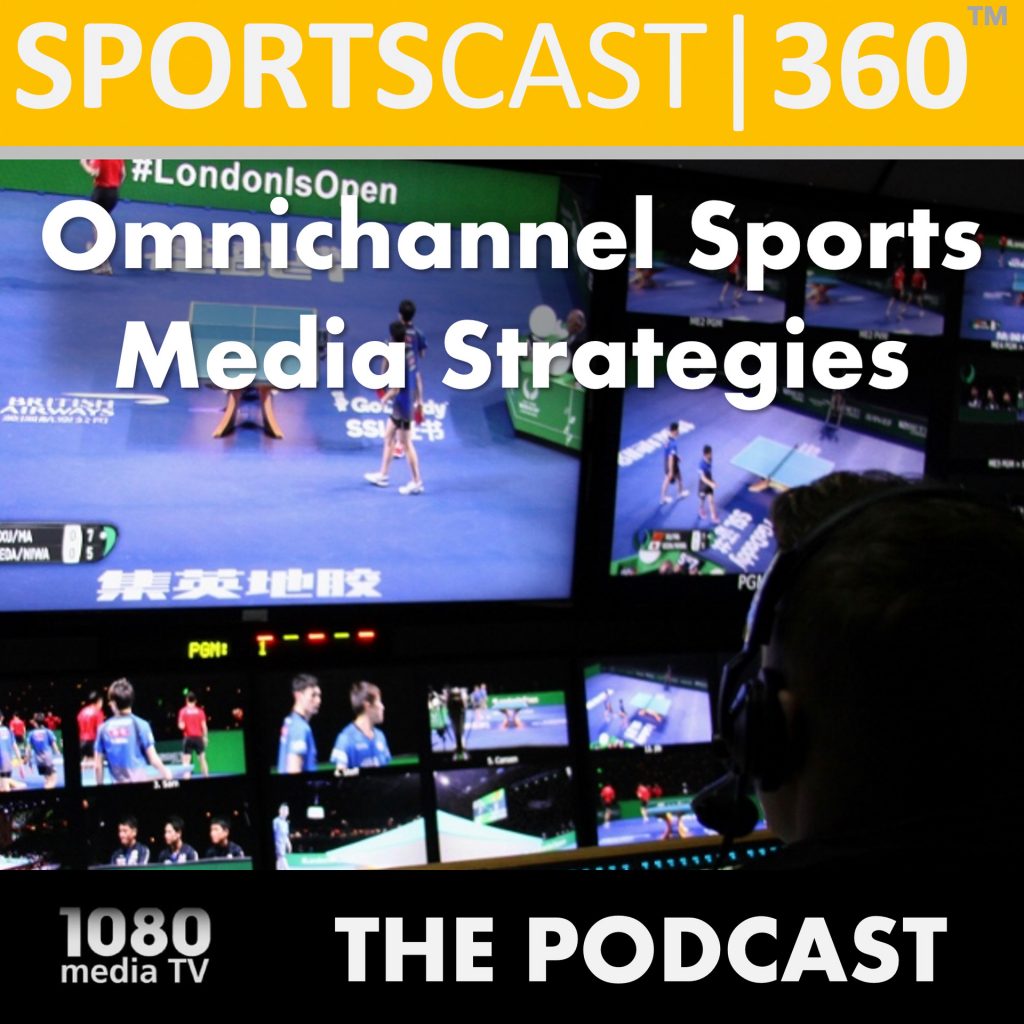
1080 Media TV has launched a new approach to help sports respond progressively through its new SPORTSCAST|360™ service which provides a flexible approach to content creation and repurposing. CEO Clifford Webb said, “The rapidly evolving multichannel world needs new strategies that engage fans and drive revenue growth across a wide spectrum of digital touch points. An omnichannel marketing approach was originally developed by online retailers to stimulate buying decisions through customer interactions on multiple media.”
The company says that many leading retail sports brands have been particularly effective in driving online sales in this way. It is now evolving beyond e-tailing and the pandemic has been something of a catalyst and accelerator in driving a wider ‘omnichannel’ approach to help sports manage the growth in digital media and platforms more effectively. The concept helps maximise reach, drive revenue, build brand value and develop fan and sponsor engagement.
“We’ve had to take a look at how we produce content and reuse and repurpose it.”
A podcast special report has been produced in conjunction with iSportConnect to examine the concept in detail. Chief Strategy Officer, Sandy Case, agreed that we’re living in a multichannel world: “There’s an omnichannel culture out there and it’s becoming apparent that there are now new revenue streams through new technology being created, that people didn’t know existed, so there are now more ways sports can make money.”
Executive Director of the World Match Racing Tour, James Pleasance, agreed: “While TV content is crucial, with the onset of all these new social media channels and the speed at which they’re developing, and the speed at which people are consuming content, we’ve had to take a look at how we produce content and reuse and repurpose it.”
This global sailing series was built on the same discipline as the America’s Cup using matched, single hull yachts, and it’s awarded over $23-million USD prize money since it was established twenty years ago. Yet sailing is seen as a ‘challenger sport’ and can take advantage of an omnichannel approach to build awareness and grow its audience and fan base. They have achieved over three million views of archive footage shared on social media during the pandemic.
“As media channels become more widespread and smarter, so have sponsors, who have explored how they can activate and maximise through those channels – and I think that’s why it’s essential to have these channels available for sponsors,” added Pleasance.
“Now through the explosion of social media we can be smart. Social was about reach, now it’s more about how fans are engaging, and how you engage comes down to how you target them and what content you use. It’s a challenge but also a huge opportunity.”
Host broadcaster and content producer for the World Match Racing Tour is 1080 Media TV and Pleasance admits he learns from their experience with other sports too, in addition to the likes of the NFL, F1 and major golf tournaments. 1080 Media TV’s CEO Clifford Webb agrees, “There are so many different channels and opportunities. We’re focussed on getting the message out to as wide an audience as possible, which requires constant production and editing of a variety of content on each day of an event. We can achieve that very effectively by tailoring content specifically to the audience and the channels we’re targeting, so you have to customise everything.”
Nicolas Marullo is President and CEO of Canadian based media tech company Cinco and heads up their innovation lab, and has been developing responses to develop new multichannel experiences: “We always say that content is King, but context is Queen. It’s important to create content that makes sense. There are now so many touch points – sports need to understand this too.
“Different channels or platforms will achieve different things, but it’s about the passion of the fans: They want to cheer with other fans, they want info from experts; they want to receive exclusive content, they want to have special access and special treatment. If you go back to the basics and capture the essence of why we love sports, and why social media is so important, and why digital is becoming a very important part of our lives; mix it together and do it in a meaningful way and the recipe will bring you success.”
iSportConnect Editor at Large, Jay Stuart, agrees, ‘’In the near future the fandom, the loyalty, the passion, may go to those sports that can deliver a good entertainment experience. I can envision a world where I don’t support that team anymore because they’re not giving me anything in terms of my digital consumption and where I want to be. It’s a challenge for sports and for rights owners. They can say, ‘we’ll always have fans’ but I look at it and say, no, you could be gone. I think that’s the reality that a lot of them have to face’’.
“A sponsor will tell you people are not fans of their product, they might consume their products, but they are fans of sports teams and players and sponsors want to be liked in the same way.”
“People who watch one sport, want to watch others. Omnichannel has to be different things for different fans. A lot of sports fans are omnisports fans, they’re promiscuous in their sports appetites.”
However Stuart recognises sports ultimately have the upper hand: “A sponsor will tell you people are not fans of their product, they might consume their products, but they are fans of sports teams and players and sponsors want to be liked in the same way. So sports is in a very special position and there are just more and more opportunities for them to benefit from this new omnichannel world.”
You can hear much more in the podcast, compiled and presented by media producer and consultant Jonathan Levy, who is also a former Global Communications and Partnerships Director with an international sport.
You can listen to the full podcast here:
1080 Media TV has produced The Omnichannel Playbook – a free guide which outlines a 5-point plan to: Grow fan and sponsor engagement; Build global reach; Develop live, highlights, hybrid events, social content and human stories; Create an interactive community; Drive revenue and build brand. It comprises 25 key considerations, case studies, background, statistics, a comprehensive media matrix and implementation tips. To request your free copy email info@1080media.org, or use the contact page of their website at www.1080media.org
After the high demand from broadcasters, fans, and sponsors WBSS AG is delighted to announce Season III of the World Boxing Super Series; one tournament, one weight class, and one winner to be the first woman to raise the Muhammad Ali Trophy.
Ali Trophy winners Aleksander Usyk, Callum Smith, Josh Taylor, Naoya Inoue, and Mairis Briedis forever testaments to what this sport can be when you match the best fighters in the ring. It catapults our champions into true greatness. It elevates the entire sport.
Women’s Super-Featherweight is the sixth edition and third season of WBSS since September 2017.
https://www.youtube.com/watch?v=CQ-DWUUb50o
Andreas Benz, CEO of WBSS AG:
“Boxing is and has always been much more than a sport. It is a metaphor for life. The fighters walk into the squared circle with big dreams of winning and glory and sometimes even, a better life. In no other sport is so much at stake.”
“In Season I and II we delivered the best tournaments in men’s boxing, but it was always our dream to not only deliver the best tournament in men’s boxing but to prepare a worthy stage for women’s boxing and support these fantastic fighters, too. Now it’s time to realise it!”
“It will be much more than the greatest women’s boxing tournament. We plan to strategically help to broaden women’s boxing, both at the grassroots and elite level, and develop a professional environment where talents and profiles can grow and legacies are born.”
“As always, the WBSS will do everything to deliver the best fights and productions possible and we are dedicated to entertaining boxing fans around the globe. We can’t wait to turn the lights back on!”
Kalle Sauerland, WBSS Chief Boxing Officer:
“It’s been something we have talked about since our inauguration and it gives me great, great pleasure – and us great pleasure at the World Boxing Super Series to announce Season III; the women, the super featherweights.”
“The sport is an amazing place. Competition is hotter than ever. The super featherweights we feel is a division that has such depth and also allows those in the divisions around it to take part. We feel that this is the time, the right time, women’s boxing has never been this good. We are looking forward to a spectacular season.”
“Women’s boxing goes back to a time where it was banned to times where it was non-existing is a male-dominated sport. It goes back to fighting for places on cards to get any sort of attention.
“I remember the first world title fight I promoted for Cecilia Brækhus two decades ago. It took place on an undercard. Cecilia went on to unify the sport and became a headliner in her own right, a national hero, a global ambassador for the sport.”
“Many other greats have also held the flag of female boxing. Going back to Regina Halmich, Jane Couch, Nicola Adams, Holly Holm, Katie Taylor. There are so many. But the opportunity the World Boxing Super Series brings for female boxing is second to none.”
“In short, the quest, another quest, for the Muhammad Ali Trophy has begun. The WBSS is back!”
Announcement on the Season III roster and schedule will be made in due course, in the meantime check the new WBSS webpage and social channels for updates.
Boxer reactions to the WBSS Season III news:
Jane Couch MBE, Britain’s first licensed female boxer and former five-time Champion: “I want to send a massive, massive shout-out to the World Boxing Super Series for doing great things for women’s boxing. Massive luck in Season III and good luck to all.“
Regina Halmich, Germany’ former Flyweight Champion and Hall of Fame member: “This is very good news for women’s boxing. It was about time that my sport gets more credit. I really believe this will be a great tournament. I’m looking forward to great fights and new superstars.
Callum Smith, Britain’s WBSS Season I Super-Middleweight Champion: “It’s good to see the women get a chance to lift the trophy this season. I want to wish everyone involved a massive ‘good luck’. I’m looking forward to watching a great tournament.”
The WBSS: The World Boxing Super Series (WBSS) is a first-of-its-kind boxing tournament organised by WBSS AG since 2017. Each weight class features eight boxers competing in a knockout competition with the champion taking the Muhammad Ali Trophy, The Greatest Prize in Boxing.
Muhammad Ali Trophy winners: Season I: Aleksandr Usyk (Cruiserweight), Callum Smith (Super-Middleweight) Season II: Josh Taylor (Super-Lightweight), Naoya Inoue (Bantamweight), Mairis Briedis (Cruiserweight)