Bundesliga International and Next Media Solutions JSC (Next Media) have renewed their partnership with a new five-year agreement, effective from the start of the 2023-24 season.
Vietnam’s sports marketing and media company, Next Media retains exclusive control over both the Bundesliga and Bundesliga 2 broadcast rights, as well as the German Supercup, relegation play-off matches and additional on-demand shoulder programming.
Having originally agreed a five-season deal in 2020, the previous deal was scheduled to conclude at the end of the 2024-25 season. However, after exceptional on-screen results in the last three seasons as well as a number of successful joint activations both in Vietnam and in Germany, a fitting mutual decision was made, meaning that the collaboration will run for an additional three years, concluding at the end of the 2027-28 season.
With an astounding 500% increase in viewership since the 2019-20 season, the partnership has proven to be an unparalleled success. This remarkable growth underscores the shared vision and commitment to delivering high-quality football content.
As part of the prolongation, Next Media will also work directly with VMG Media JSC (VMG), a market leader in livestreaming football and sports to fans throughout Vietnam. Both parties will work together with Bundesliga International to sublicense the rights to broadcasters, ensuring the best value and reach across Vietnam.
Furthermore, both sides are committed to continuing working together for the development of football at all levels throughout Vietnam. In March 2022, the DFL Deutsche Fußball Liga signed a Memorandum of Understanding (MoU) with the Vietnam Football Federation (VFF) and Vietnam Professional Football (VPF), centred around improving the technical and sporting expertise, advancing league and club structures, as well as developing the football fan bases and culture in Vietnam. Last November, Bundesliga International supported Next Media efforts to organise the friendly match between Borussia Dortmund against Vietnam National Team in Hanoi to great success, with the game broadcast nationwide by VTV to over 1 million TV households and over 3 million watching on Facebook and YouTube.
In addition, and in cooperation with Next Media, the organisers launched the Bundesliga Youth Incubator Project, a programme in which promising young talents from Vietnam’s national youth teams came to train for several weeks with the youth departments at Borussia Dortmund, Eintracht Frankfurt, 1. FC Köln and Borussia Mönchengladbach. The youth development project attracted strong media and public interest, with extensive nationwide media coverage generating over 15 million impressions. The success of the Youth Incubator Project has paved the way for future Bundesliga talent development programmes in Asia, including an expanded “Bundesliga Dream Vietnam” project for the upcoming 2023-24 season.
Bundesliga International Chief Marketing Officer Peer Naubert said: “When we sign agreements with our broadcasters, our intention is that it will be a long-term partnership based on mutual trust and respect. Prolonging our deal with Next Media is a fantastic reflection on both sides’ commitment to working together, not only on the broadcast product, but as equal partners in the development of football throughout Vietnam.
“When we began three years ago, we embarked on a strategic roadmap, which we have stuck to despite the global changes we faced. Since then, our steadfast commitment to this roadmap has remained unwavering, even in the face of global challenges. This remarkable journey has seen an impressive surge in viewership numbers and culminated in the resounding success of last year’s Youth Incubator Project. All signs point to continued success and we are excited for the next steps in our partnership.”
Nguyen Trung Kien, General Director of Next Media, said: “Following the success of the partnership, the level of cooperation between both parties will ascend to even greater heights. This partnership opens doors to innovative avenues beyond traditional broadcasting, marking a transformative phase in our joint pursuit of excellence.”
Visa, a global leader in digital payments has appointed tennis champion Iga Swiatek to its diverse and impressive roster of Team Visa athletes from around the globe, preparing to compete at The Olympic & Paralympic Games Paris 2024.
Team Visa helps athletes thrive personally and professionally, providing financial support, assistance with philanthropic endeavors, financial literacy tools, and mental health and wellness resources. An incredible addition to Team Visa, Swiatek is a powerful voice championing her local communities and inspiring tennis fans across the globe.
In 2020, at the impressive age of 19, Swiatek made history as the first-ever Polish tennis player to win a Grand Slam singles title and the youngest woman to reach the French Open final. Since then, she has continued to break records, becoming the first Polish tennis player to rank No. 1 in the world. She currently holds four Grand Slam titles, a historic milestone for her nation and age bracket.
“The world has borne witness to the exceptional talent that Swiatek showcased early in her career, and we are proud to welcome Swiatek to Team Visa and champion all that she stands for,” said Frank Cooper III, Chief Marketing Officer, Visa. “Swiatek is an example of what hard work and dedication can do to achieve your dreams, while inspiring the next generation.”
Since its inception in 2000, Team Visa has supported more than 600 athletes with women representing over 50% of the roster. Team Visa provides athletes from around the globe with tools, resources and support needed to achieve their goals on and off the court. Athletes are selected based on athletic achievements, personal journey, and social impact, aligned with Visa’s brand values and priorities including diversity, equity, inclusion and commitment to uplifting their communities.
“I started my career in tennis at a young age and even if I’m still learning, I’m trying to use my voice and become a role model for other young people,” said Iga Swiatek. “Joining Team Visa with so many incredible athletes will help me continue to advocate for what’s important to me, advancing the sport and social issues that matter most to me.”
Fulham Football Club has announced Ebury as the Club’s Official FX Transfer Partner for the following four seasons.
Ebury will become the preferred service for all Fulham FC and Jacksonville Jaguars UK FX transfers.
Ebury offers solutions and services to enable businesses to trade and grow internationally quickly, easily, and securely by removing global barriers. By combining expertise with state-of-the-art technology, Ebury delivers high-impact and diversified solutions across three key areas: payments and collections, business lending and FX risk management. With capabilities in 130+ currencies and a multilingual team across 32 offices in 21 countries, Ebury empowers thousands of organisations through simplified and hassle-free solutions to support their global growth ambitions.
The four-year partnership will allow Ebury to drive its brand awareness to a global audience through Fulham FC’s extensive media backdrops and the Club’s social channels.
During the term, Ebury will also collaborate with Fulham FC to create engaging content featuring the Men’s First Team players, as well as B2B testimonials and case studies.
Commenting on the partnership, Juan Lobato, Ebury CEO, said: “Today, we are delighted to announce our partnership with Fulham as their official FX transfer partner. This collaboration is a significant step forward for Ebury, as we have the privilege to support them both on and off the field. With Ebury as their official FX transfer partner, we are pleased to provide the necessary financial tools and expertise to help Fulham thrive in all aspects of their global operations. On behalf of our 1,300+ Ebury employees, I’m incredibly excited to announce our unwavering support for Fulham throughout the season.”
Jon Don-Carolis, Commercial Director, added: “It is with great excitement that we welcome such a forward-thinking partner to the Club in Ebury. Ebury’s efforts to help businesses through tech innovation will drive the success of this partnership as we showcase Ebury to our fanbase and partner portfolio.”
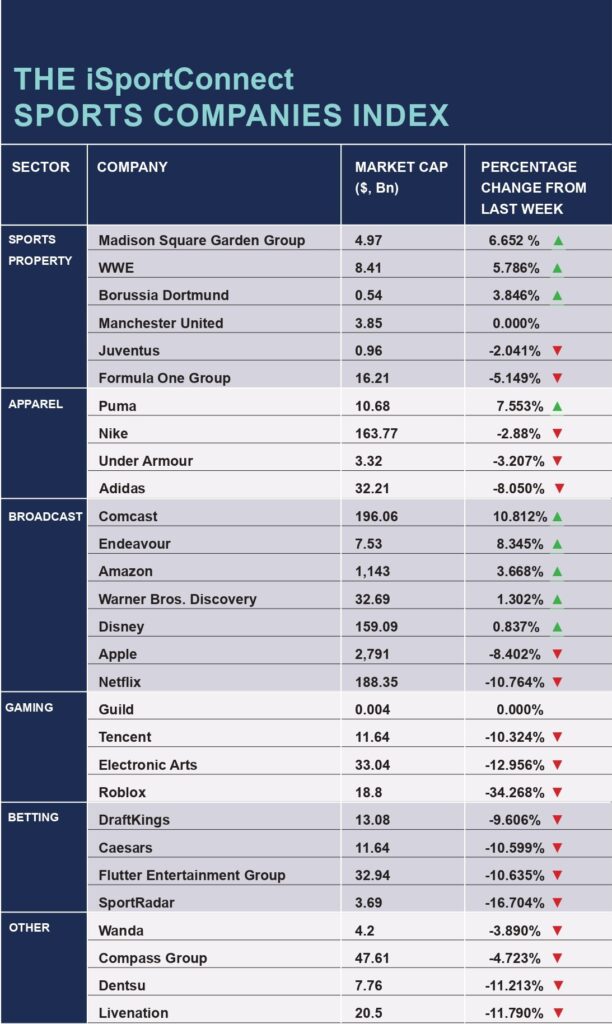
This month’s iSportConnect Business Index sees big wins among broadcasters and apparel business and some dramatic losses across the Betting and Gaming sectors. Twice CityAM Analyst of the Year, Ian Whittaker gives his views on what has happened over the last month.
The last four weeks has been dominated by the Q2 results season, which are now pretty much done, as well as the usual macroeconomic signals as investors try to navigate what can seem like conflicting sets of data. Apple shares took a hit as investors digested another quarterly revenue decline and what was seen as mixed guidance. Amazon, on the other hand, benefited from stronger than expected numbers.
The same could be seen across the index, with Comcast benefiting from a recovery in Theme Parks and FIlms, thus helping its results while Netflix was dragged down by continued concerns over long-term growth prospects. In Gaming, Roblox suffered a revenue miss which sent its shares tumbling and Electronic Arts, whilst posting decent Q1 numbers, gave fiscal Q2 guidance that was seen as disappointing.
Across the whole gaming space, concerns over mobile gaming continue to linger and that has impacted Tencent, which also was hit by poorly received results. Perhaps the most sub-sector specific newsflow was in Betting where the Penn-ESPN deal caused other names in the space to fall such as Draft Kings. Flutter, meanwhile was impacted by the lack of an expected upgrade to full year guidance at its numbers as well as weakness in its Australian business. Finally, in apparel, continued uncertainties over the pace of Chinese recovery, has impacted Adidas and Nike, although Puma has shrugged off the concerns
Overseeing the PGA Tour’s digital product development teams and broadcast technology groups, Gutterman regularly has his hands in pushing the Tour forward with new innovations. He was at the forefront of implementing Every Shot Live for the 2021 Players Championship, which livestreamed every shot from every player for the first time at a pro golf tournament. We caught up with him to know more about his journey and work.
Take us of through your journey in sports.
I first started working at sports back when I was working for an internet company, during the first wave of the internet. I was leading a project in 2000-2001 that involved moving Nascar.com, which is the racing NASCAR Racing League here in the States from ESPN & Starwave to Turner Sports at the time.
And that was the first time I’d worked on a sports property and basically ran a team. That was the beginning of what became Turner Sports, which is a huge sports brand here in the States. It has now rebranded as TNT. I worked with NASCAR for many years and did a bunch of interactive stuff, video gaming and other things after that project. And then I met a friend who worked at the PGA Tour who asked me to come down and take a look. So I came down and took a look and turned out I could play golf.
It was a very small team at the time, maybe 10 or 15 people. It was almost like a start-up so I came down here and started building out the teams. We started out very small and had very different ways of approaching sports. Here the Tour was done in joint ventures so when I first got here we were in two joint ventures and the challenge with being in any joint venture is that you’ve got two parties that have to make decisions about things. And when one of them is not aligned with what the goals are, it creates a lot of conflict.
Also, between 2005 and 2012, we came through the whole period of the iPhone being rolled out in the app stores then Android, social media and YouTube, all came up in that same period. So in 2012, we made the decision to take the digital business fully in-house and move away from joint ventures. That’s when we really started building out a team here. Our team if you count all the vendors and staff at that time, went very quickly from probably 20-30 people at that point in time to upwards to 60-70 people. The digital business became a key component of the broader business and became part of our rights deals and we went on to start a whole live-streaming division.
In your time with the PGA Tour, how has your role changed?
It really changed from being focused on the development of the products to being very hands-on with it. Even before sports, I came up as a coder, I understood the architect of systems so I was always very technically oriented. But my responsibilities have more or less evolved from being a technical architect and product manager to being more of a broader leadership position within the organisation. I probably work with more Tour departments than I ever have while spending time with our executive team more and more, helping them to understand what comes next and where should we go next. So a lot of my time is spent on shaping where we’re headed next. As these other big projects are going on, I’ll work with our teams and get them pointed in the right direction and part of the role is just to empower the teams here to make sure that they are working on whatever they think is a good idea, or an opportunity for the Tour, whether that’s a fan engagement tool, sponsorship or something for our players. That’s kind of my goal now, to make sure that everybody’s got what they need to go accomplish what they wanted.
Broadcast has changed a lot in the last few years with people wanting to feel as close to the action as possible. How are you guys trying to achieve that?
The most notable initiative is our Every Shot Live initiative, which we started back in 2020 at the Players Championship. This is the ultimate goal of us as a sport to be able to show every fan every shot. So doing Every Shot Live is a big initiative because you what people don’t realize is, we’re on 100-150 acres, there are 18 fields of play. There are often three groups on almost every hole. And so the complexity of getting all of that content off of the course is nothing like any other sport really has to do.
We typically have 24 groups going in the morning at an event and another 24 going in the afternoon, and then the first two days, so 48 groups to show all together. The amount of video has increased, the amount of live videos has increased, the amount of video on demand that we serve has increased in the way that we serve, it has diversified. You can get the simple video highlights on our platforms or you can go and get the story-based type of content that you see like in Instagram reels and others. So finding ways to get fans to see a shot, as we moved to in-app video and now there’s an auto-start video that starts when you open our app, you will be able to see the latest and greatest shots from those players. Our goal is to try and bring everybody closer to the action. We’ve also got the linear broadcast, which is going on during the day, we’ve got four streaming channels that happen with our streaming partners, and we’ve got two more par three streams that run all day with our betting partners.
What are some of the challenges that broadcasting Golf has in comparison to other sports?
With golf, you want to tell the storyline of what’s happening on the leaderboard that impacts the macro view of the competition usually in who is leading and who’s moving up the leaderboard. You have people that want to watch it in different ways so if their favourite player or players are all playing together in a group, you want to be able to see all of them in a group. I think our sport has so many different ways to watch it whether you’re streaming or you’re at an event. I think the complexities involved in golf has always been a challenge and kind of always will be. So finding a way to maintain that macro storyline is really important to us because that’s kind of the big key. Enabling people to watch. Even when Tiger plays, many people didn’t get to see his rounds when he was on Thursday or Friday mornings, or even earlier, Saturday or Sunday mornings. We don’t want our fans to miss that.
Has there been a change in the sort of the consumption habits of golf fans in the last few years? And if so, how do you see this evolving, like, move further moving forward?
You could watch golf three hours a day, four days a week in the time that Tiger started playing. Before Tiger started playing you only got to watch golf two days a week for essentially three hours a day, Saturdays and Sundays. When Tiger started playing, they moved it to four days a week. Then we started streaming from a single hole so that was new. And then in the late 90s, we learned about digital websites. And now you could engage with the PGA tour and see what’s going on seven days a week 24/7. So you had that platform to work on and see the diversity that ended up happening there. But then it exploded into 2007-08 when you got mobile apps and it could be shown on all of them, so now you can engage with the tour, you’ve got social media that pops out, you go quickly from two or three social media platforms to a half dozen that you need to deal with. So what’s ended up happening is kind of the decentralisation of consumption.
And really, you have this proliferation of the ways that when those tools become available to people. They use the internet, or the average person starting to say, “well, you know, what, I’m gonna get all my highlights from Twitter” While you had this decentralisation of consumption, which still continues, there’s a broader amount of content that you’ve now had to create. And so I think the challenge is that we learned very early in the social media days that you can’t just replicate the same piece of content on every platform. Different types of content do well on different platforms. So then you end up having to build teams that are dedicated to YouTube or to different social media.
I think between generative AI and personalization, you’re going to see an even more pronounced decentralization of consumption. Because I think what’s already happening now is the devices that you carry with you every day, right now your phone, is getting smart enough to know what you want when you want. So you’re interested in golf, so you can sign up for push notifications for your favourite players on our app, which push the alerts directly to your phone. Now you don’t have to go in and open an app to see where Rory McIlroy is on the day. You can just look at your phone, you’ll get an alert when it happens.
The next steps are things that are happening around live activities. Now I can say that, my favourite golfers are these three golfers and on my phone all day, while those three golfers are playing, I can just look at my phone and see how those three golfers are different. Or I can look at the live dynamic on the leaderboard or other things. So I think you’re going to see a kind of just detachment from the athlete.
With generative AI coming up the way it has with Siri and Google, Google Home and everything else it’s going to get more productive and smarter so that I could turn to Alexa or I can turn to Siri and just ask them things. It’s going to know the things I want. It’s going to project things on the screen for me, be that on my phone or set of glasses or something eventually down the road. I think now the particular challenge, is what does that world look like? What does that world look like when somebody’s not in the app? How does that impact the way that we give exposure to players that you may not already know? How do you see the whole leaderboard? Where do you access things? I don’t know yet how it’s going impact sponsorships and value but we have plenty of sponsors, so when you look at a screen, there’s a three-and-a-half-inch screen you’re can’t have a whole lot of sponsorship. And the same thing with generative AI when I ask a question of the PGA Tour, the chatbot or other. Over the next 3-5 years you are going to see this slow erosion which will accelerate as people are getting more and more into generative AI and more and more personalization. It will be interesting to see how sponsorship and personalisation work together.
18 holes Augusta or where?
I have had the opportunity to be in Augusta but not play golf. If I had a choice to play 18 holes anywhere right now, it’d be Cyprus on the west coast. It’s a beautiful private course that runs right along the Pacific just near Pebble Beach. And so that’s a place that I’ve never had the opportunity to be at or play so that’s definitely right up there and then of course 18 holes at TPC Sawgrass Stadium course, which is where I do get beaten up.
World Triathlon and the Professional Triathletes Organisation (PTO) have inked a new partnership that will recognise the PTO Tour as the official World Championship Tour of long distance triathlon, using the ‘made for TV’ 100km distance.
The ground-breaking agreement will see the two organisations working closely to create a compelling season-long narrative for the world’s leading triathletes, as the long distance equivalent of World Triathlon’s successful World Triathlon Championship Series, that will include championship racing opportunities for both Professionals and Age Groupers.
The key points of the new partnership include:
1) A points-based competition with Professional men’s and women’s World Championship titles awarded at the end of a season-long tour, as well as the planned creation of up to five Continental Championships at one-off races, including: the Americas, Europe, Africa, Asia and Oceania.
2) All events as non-drafting over the 100km distance (2km Swim, 80km Bike, 18km Run) and operating under World Triathlon rules.
3) Qualification for the Age Group Championships to follow the existing World Triathlon process of National Federations’ selection, with Age Groupers eligible to race in each of the six Championship events, including World and the five Continental Championships.[1]
4) World Triathlon working together with the PTO and its membership on a number of services, including Anti-Doping, Competition Jury appeals, Safeguarding and Manipulation of sport competition guidelines, Technical support with a Technical Delegate from World Triathlon at all events and an extensive Marketing and Commercial collaboration between both organisations.
Commenting on the partnership, World Triathlon President, Marisol Casado, said: “Today marks a significant milestone as World Triathlon proudly announces this ground-breaking agreement with the PTO. This collaboration signifies a powerful alliance that underscores our shared commitment to elevating the sport of triathlon to new heights. By joining forces, we harness the collective passion, expertise and dedication of both organisations to drive positive change and innovation within the triathlon community. Together, we have the opportunity to create a more inclusive, fair, competitive and sustainable landscape for athletes, fans and stakeholders alike. This partnership exemplifies the immense potential that emerges when organisations align their visions and resources, ultimately fostering a thriving environment for the sport we all cherish. As we embark on this journey together, we are resolute in our belief that by working hand in hand, we can steer triathlon towards a brighter, more exciting future.”
PTO Executive Chairman, Chris Kermode, who has previously held a number of leadership positions in tennis, rising to the role of Executive Chairman and President of the Association of Tennis Professionals (ATP), said: “When new formats and organisations emerge in sport, they often have the unintended impact of fragmenting the very sport they aim to promote. In contrast, by uniting together the professional athlete body of the PTO with the international federation of World Triathlon, this partnership has the opportunity to unite the sport under the common goal of growing triathlon – which is essential for the sport to become mainstream.”
PTO CEO, Sam Renouf, himself a former international triathlete and then senior executive at The Active Network, a global leader in growing sports participation businesses, added: “Given the importance of the Olympics and short course racing on the traditional federation funding model, long distance triathlon has largely been left to the ‘private sector’ of for-profit promoters; leading to a fragmented and uncoordinated calendar for both athletes and fans. In partnering together to recognise the PTO Tour as the official tour of long distance triathlon, the PTO and World Triathlon are both elevating long distance triathlon and bringing this part of the sport back into the fold of the World Triathlon family.”
“On the Age Group side, we jointly recognise the uniqueness in triathlon that athletes of any age can strive for and qualify to represent their country in an officially recognised World Championship. The inclusion of Age Group Championship racing throughout the PTO Tour will provide ‘bucket list’ racing opportunities for the global Age Group community, much as the World Marathon Majors have united the global running community.”
Current PTO Athlete Board member and PTO World #6, Paula Findlay, highlighted the importance of the agreement from an athlete perspective:
“As an athlete who’s represented their country at both the Olympics and World Triathlon Championship Series, if you compete and win at the pinnacle of your sport, you want that achievement to be recognised as it is at other distances in triathlon and in all other sports – by calling yourself a world champion. Through the eyes of the professional athletes who set up and co-own the PTO, it is a significant step forward.”
This partnership is not only focused on the launch a new tour of long distance in triathlon, but also on a series of services that World Triathlon and the PTO will be working on together to make the events fairer, more competitive and sustainable. This includes a newly expanded anti-doping program for long distance racing, further details of which will be announced soon.
The Competition Jury appeals will be delivered through the World Triathlon system, including going to the Court of Arbitration of Sport (CAS) when needed. World Triathlon will also provide an extensive athlete support system and will implement the guidelines on Safeguarding as well as technical support, including a World Triathlon Technical Delegate on each stop of the new tour. Plus marketing and commercial collaborations between the organisations.
Former PTO Athlete Board member and current IOC Athletes’ Commission member, Alistair Brownlee, who has competed on the PTO Tour over the last two seasons, underlined the importance of the partnership in bringing the sport together to move forward:
“I want to see more people watching top level long distance triathlon, being inspired by seeing the top athletes racing. It’s crucial that the PTO Tour succeeds and I’m convinced that the PTO Tour’s success is triathlon’s success. It’s tough to create something new but ultimately it will benefit every triathlete, so having the PTO join forces with World Triathlon to also add important support services and work more closely together keeps things moving in the right direction.”
Paul Smith has unveiled a new campaign featuring the Manchester United team, at the start of the new Premier League season, to mark their official partnership as official tailoring partner.
The partnership will see all United players, coaches and team training staff outfitted in Paul Smith’s Modern Working Wardrobe tailoring for matches, special events and official appearances.
The new campaign features several of first-team stars, including Christian Eriksen, Luke Shaw, Aaron Wan-Bissaka, Diogo Dalot and Facundo Pellistri.
To reflect the ever-evolving tailoring landscape, Paul Smith has fitted the players with a fresh take on the relaxed suit, namely the brand’s A Suit To Travel In – a lightweight, breathable suit designed for superior crease resistance and ease of movement.
Comprising a classic canvassed jacket in lightweight, breathable construction and a pair of drawstring tailored trousers to allow for freedom of movement, the suit retains Paul Smith’s signature sense of contemporary refinement while focusing on the comfort of the players. Each suit is styled with pieces from the Paul Smith Modern Working Wardrobe edit, including striped knitwear and more.
In recognition of the long-standing partnership and the new season starting, United have launched a limited-edition Paul Smith x United scarf on United Direct.
This season, as part of its ongoing commitment to the team and community, Paul Smith will once again collaborate with Manchester United Foundation, the club’s charitable arm, to offer and fit suits for young graduates of its traineeship programme who are just entering the workforce.
In this week’s Member Insight piece Olympic Games advisor Michael Pirrie says planning for the Paris Olympic Games remains on target, despite Russia’s brutal war which has divided the Olympic Movement over plans for neutral athletes from the warring nation to attend the French Games.
INTRODUCTION
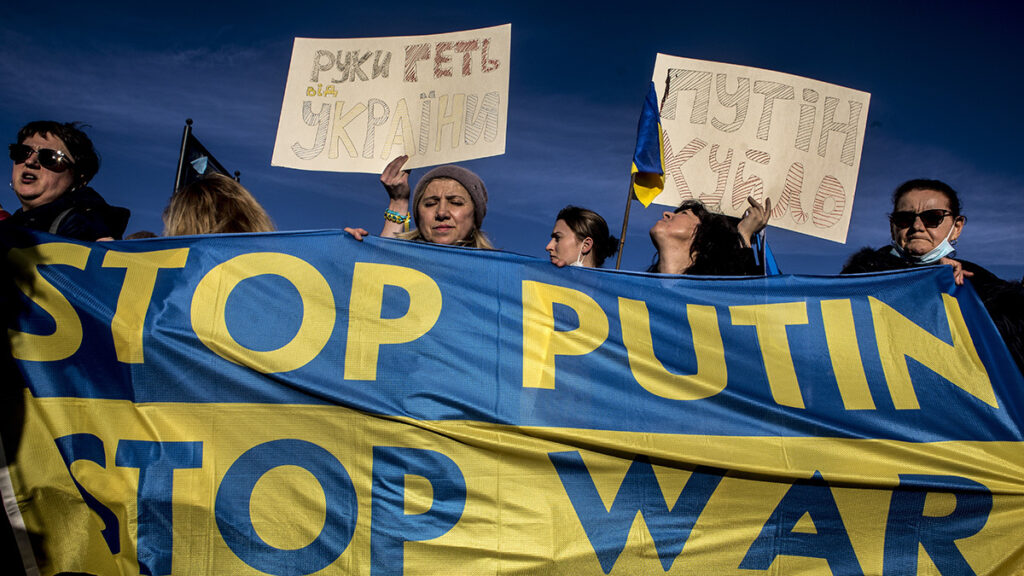
In the latest and most direct threat to the Paris Olympic Games, the Ukraine Government has declared it is ready for a possible boycott of the Paris Games if athletes from Russia and Belorussia participate.
The warning was carried on the Telegram channel of Ukraine’s Prime Minister, Denis Shmygal, and comes amid efforts by the IOC to establish a passageway for so called ‘neutral’ athletes from Russia and Belorussia to compete in Paris.
“States that stain themselves with the blood of Ukrainians cannot participate in the Olympic Games…we are ready to boycott the Olympic Games in Paris, if Russia and Belarus are allowed to participate in the competition,” according to the Prime Minister’s warning.
The president of the National Olympic Committee of Ukraine had previously indicated that Ukraine athletes would withdraw from Paris 2024 if Russia and Belorussia were permitted to compete under their national flags.
The ongoing murderous war in Ukraine has further darkened the mood in the international community towards Russia and participation in global events.
This has led to a rethinking of sports neutrality, and whether a case can be made for athletes from a nation that has threatened nuclear annihilation, and a leader wanted by the International Criminal Court for kidnapping children from Ukraine.
The new Olympic boycott warning highlights how central the war in Ukraine is becoming to Paris preparations.
The latest developments also highlight how the scope for negotiation over the war and the Games is narrowing, with concerns also that the presence of athletes from Russia at the Games would normalise war in sports settings.
For well over a century, the Olympic Games has been a constant presence in an ever changing world. Now that world is changing the Olympic Games.
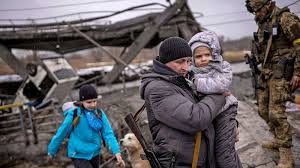
The fall-out from the first war in Europe this century continues to spread beyond Ukraine’s battlefields and gravesites, jolting the international economy, security arrangements, energy and food supplies and other key sectors.
Russia’s brutal war is now having its greatest impact on the Olympic Movement in the countdown to the Paris Games.
The Paris spectacle will be the first post pandemic Olympics following Beijing, and while winter and summer Games are seasonal opposites, the two are linked by the war, which began after Russia moved troops into invasion position during the Beijing Olympics.
OLYMPIC CRISIS
Russia’s on-going war in the countdown to the Paris Games has taken world sport into unchartered territory.
The military war has become battle of politics, morals and ethics for world sporting leaders and organisations as the international community wrestles with the horror of Russia’s invasion and possible presence at the Paris Games.
While the IOC has delayed its final decision, the ruling on Russia will carry enormous implications and shape the Paris Games and future of world sport.
The matter has divided Olympic nations, continents, sports leaders, international community, and governments, on which the Olympic Movement depends.
“This is the biggest external crisis the Olympic Movement has faced since the (1980s) boycotts,” according to one senior IOC member – those boycotts were triggered by the former Soviet Union’s invasion of Afghanistan in 1979
The battle over Russia’s Paris inclusion is also a battle between the old Olympic Movement of Europe – the cradle of Olympic sports and values, where opposition to Russia is most committed and concentrated – and the new Olympic movement.
This includes sports power brokers and regions seeking greater control of the Olympic movement and world sport, led out of Asia and China, strongly supportive of Russia’s presence in Paris.
While sport has long attempted to portray competition as separate from politics, Russia’s war has become a tipping point for international sport and society.
“Sport is not detached from this invasion and cannot remain passive to what is happening now,” the Norwegian Ski Federation said in a statement shortly after the outbreak of war.
“We share their suffering,” IOC President Thomas Bach said earlier in the conflict.
RUSSIA’S OLYMPIC TROJAN HORSE
The battle over the Paris Games has generated difficult questions about whether a world sporting event, dedicated to peace, can justify a relationship with a nation accused of some of the worst crimes against humanity – even if once removed through individual neutral athletes.
This has raised life and death dilemmas and scenarios not anticipated nor prepared for by sporting bodies.
The Paris pathway has also become a communications minefield for Olympic leaders, arguing for neutrality while also highlighting solidarity with Ukraine’s athletes, leaders, and international allies firmly opposed to Russia’s presence in Paris.
Strong doubts and suspicions remain about the credibility of the case for Russia’s Olympic return and fairness for Russia’s victims as the Paris countdown continues.
These include concerns Russia will use the cloak of neutrality as a Trojan Horse to get athletes back on the Olympic stage in Paris, while organising mass murder war operations just three flying hours away in Ukraine.
For many in the international community, ending the war is now more urgent than sports neutrality as more cemeteries and news bulletins are filled with victims of the war.
Finding a solution to the Paris Olympic Games crisis is complex and compromised by Russia’s corrupt political sports system.
Few governments have as close a relationship with their Olympic administrators, programs and athletes as the Russian Olympic Committee has with the Putin regime.
Russia’s Olympic narrative – that Ukraine is a special military operation forced on the Kremlin, and therefore sports involvement should continue as normal otherwise this would be a major blow to the Olympic ideals – has been widely discredited.
While a generation of young Ukrainians with sporting dreams and aspirations represent their nation in war zones instead of sports venues, Russia’s athletes lead privileged lives on standby for Olympic duties. Vulnerable and disadvantaged young Russian men lacking athletic talent in contrast are sent by the Kremlin to their early deaths in a war without purpose.
Meanwhile, one of Russia’s most celebrated athletes of recent times, Olympic gold medal-winning pole vaulter, Yelena Isinbaeva, who has ties to Putin and holds the honorary rank of major in the Russian army, is alleged to be living in a secure luxury home in Spain’s Canary Islands.
Although neutrality provides a pathway back to Olympic competition for Russia, there may be no way back for Ukraine’s athletes after Paris if Putin succeeds in his mission to conquer and destroy Ukraine.
THE DEATH OF SPORT
Ukraine’s playing fields have become killing fields, stained with the blood of athletes – Russian troops are estimated to have killed many Ukrainian athletes, according to multiple reports.
This death toll is more than the size of most national Olympic teams that will compete in Paris.
“The death and destruction we have seen in Ukraine over the past year, including the death of some 185 athletes, have only hardened my resolve on this matter,” Olympic champion and World Athletics president, Seb Coe, said earlier this year.
“The integrity of our major international competitions has already been substantially damaged by the actions of the Russian and Belarusian governments through the hardship inflicted on Ukrainian athletes and the destruction of Ukraine’s sports system.
“Russian and Belarusian athletes, many of whom have military affiliations, should not be the beneficiaries of these actions.”
Russia’s war has now killed more than 260 athletes and destroyed more than 360 sports facilities, according to recent Ukrainian government estimates.
The campaign for neutrality, led by the IOC president, was designed to create safe spaces for athletes to compete at major events in an era of rapid geopolitical change and uncertainty.
While controversial, the efforts have cut through, moving sport independence on to the international agenda, with the Group of Seven (G7) leaders issuing a statement earlier this year “fully respecting the autonomy of sporting organisations.”
The campaign has sparked a global conversation about the roles and responsibilities of sport in supporting the international community against Russia’s threats to human life and global stability.
While Putin had hoped opposition to his war would fade, the international community has remained firmly centred on sanctions to weaken Russia – from banking and finance to book publishing.
PUTIN’S OLYMPIC GOAL
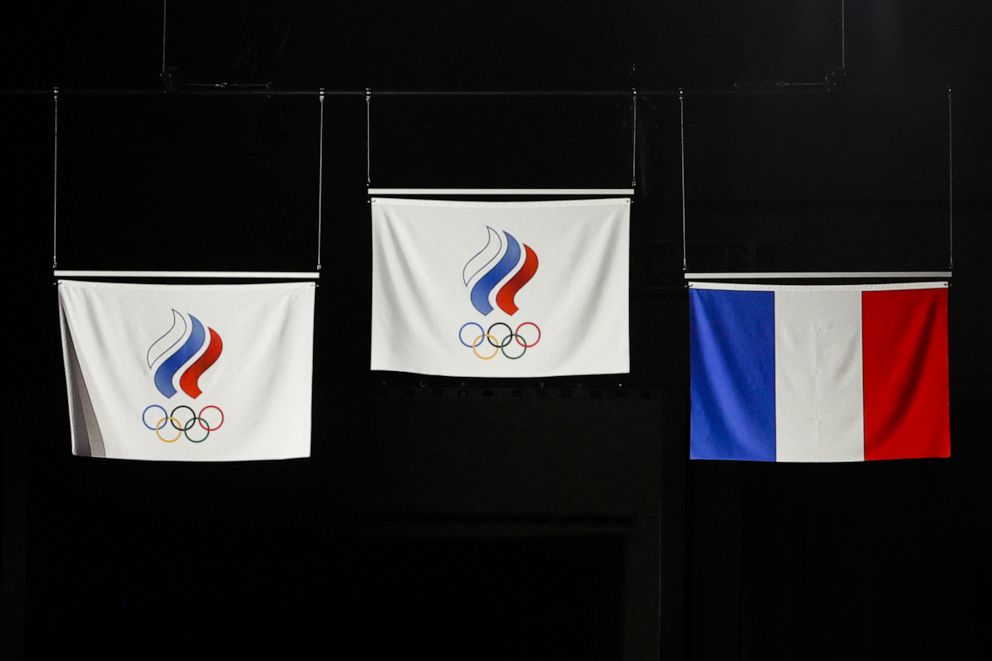
Sporting bans have also been important, helping to reduce the presence and visibility of Russian teams and flags on the world sports stage, a key target of the Kremlin’s domestic and international relations strategy.
Putin needs the Olympic spotlight more than ever, according to Russia watchers, as domestic support shows some stress, highlighted by the recent threatened coup.
Putin’s personal involvement in pushing for athletes from his nation to attend the Paris Games also highlights the importance of the Olympics to the Kremlin’s search for international relevance and recognition from the Games.
This has alarmed Ukraine’s leaders and international support base, fearful that a crucial weapon in the sanctions armoury will be lost if athletes from Russia are allowed to attend the Paris Games
“If Russia is not banned from the Olympics, this will be presented to the Russian people as a victory for Putin,” according to a former military officer of a western nation supporting Ukraine.
“Any victory, at any level with neutral athletes is a victory for Putin.”
MAKING HISTORY
To remain on the right side of history, sport must make a meaningful contribution to the international sanctions effort.
FIFA and World Athletics, the two biggest and most influential world and Olympic sporting federations continue to sideline Russia at their major events.
While World Athletics has excluded Russian teams from its world championships, FIFA blocked Russia from qualification for the World Cup in Qatar late last year and the Women’s World Cup currently underway in Australia and New Zealand – the world’s two biggest sporting events along with the Olympics and Paralympics.
Challenges to the bans by Russia’s governing bodies were rejected by the Court of Arbitration for Sport (CAS).
PARIS EMERGES FROM SHADOWS OF WAR
The tensions and uncertainty over Russia’s war and Games participation have not delayed progress on the Paris Games.
The host city is on schedule to follow London as the second city to host the Summer Olympic Games on three occasions.
Paris passion and pride are building, with a recent survey showing more than 70 per cent of French people support the Games, fuelling high demand for tickets, a key indicator for successful Games.
While preparations for venues, transport, accommodation, ceremonies and torch relay were on schedule, a final decision on the possible involvement of Russian athletes will be needed as soon as possible to finalise key Games services and operations.
This includes finalisation of places and locations for athletes in the all important competition and training schedules, Olympic Village and other key venues and programs.
The decision will also be essential for final security overly arrangements, with the presence of athletes from Russia regarded as a heightened security risk.
“The presence of athletes from Russia, even neutral athletes, would definitely increase the chance of civil unrest and protest activity,” according to a high-ranking security official involved in planning for the London Games.
CONCLUSION
While attempts to navigate a Paris pathway for neutral athletes continue, the horrors of the war have made it difficult to remain neutral.
Without concessions from Russia, which seem unlikely, a negotiated diplomatic settlement to the war does not currently appear to be on the horizon before the Paris Games.
The challenge for the IOC ultimately will be to find enough common ground for Ukraine and Russian leaders, athletes and the international community.
This will be necessary for the Olympics to proceed in a manner that protects athletes from all participating nations as well as the integrity of the Games experience for spectators, visitors, participants and the host city and nation.
USA Gymnastics (USAG) have onboarded global media and technology company, Comcast’s Xfinity brand serve as the organization’s official mobile, internet, and video provider.
Comcast will power the USA Gymnastics National Team as they prepare for the Olympic and Paralympic Games Paris 2024 while also championing the next generation of gymnasts nationwide.
“The Olympic Games Paris 2024 will be a truly unique celebration in one of the world’s most stunning cities and we look forward to once again bringing the thrill and excitement of the Games home. By highlighting these athletes’ remarkable stories of achievement, sportsmanship, and resilience, we hope to inspire the next generation,” said Matt Lederer, VP, Branded Partnerships & Amplification.
As part of the partnership, Comcast will support the growth of existing USAG programs serving disabled athletes, including HUGS, and will explore pilots for adaptive programs in the sport.
“We are so excited to welcome Comcast as a partner supporting the journeys of USA Gymnastics athletes,” USAG President and CEO Li Li Leung said. “The company’s commitment to innovation and to athletes in programs ranging from HUGS to the Olympic Team will serve the sport in a holistic way.”
The U.S. men’s and women’s artistic gymnastics national championships will be titled as the Xfinity U.S. Gymnastics Championships through 2024, with the 2023 Xfinity U.S. Gymnastics Championships set for August 24-26 in San Jose, California. Xfinity also will serve as presenting partner of USAG’s announcement of their National, World Championships, and Olympic Teams.
DAZN Group has launched in France with access to Ligue 1 Uber Eats matches via the Canal+ Ligue 1 channel after agreeing a strategic and exclusive distribution partnership with France’s major premium pay TV operator, Canal+.
DAZN’s launch in France is another step in the company’s growth strategy, providing access to one of the world’s biggest media markets, and an increasingly digitally connected set of consumers. France will be DAZN’s seventh key European market in which it has a significant domestic presence, and eleventh globally as it seeks to further grow its total user-base upwards from 60 million.
DAZN’s French subscribers will be able to access excellent content in the form of Ligue 1 football, the top two matches per week throughout the season on Canal+ Ligue 1, without having to subscribe to any other service. Additionally, as the NFL’s global partner, customers will have the option to add NFL Game Pass – the only way to access every single NFL game, including the play-offs and Super Bowl – to their subscription package.
ustomers will also be able to access DAZN via app purchases on mobiles, Smart TVs and other devices. The DAZN app will be available within the myCanal service over time, and DAZN will be announcing other local distribution deals in due course.
DAZN is also launching a linear channel, DAZN 1, which will be bundled with Canal+, reaching 1.2 million subscribers, and will provide access to quality content such as UEFA Women’s Champions League, the Belgian Juliper Pro League, and the best boxing and combat match ups. Canal+ will also deliver a significant marketing partnership to drive awareness of DAZN, its content, products and services.
DAZN Group CEO, Shay Segev, said, “DAZN is incredibly excited to launch in France, especially being able to bring Ligue 1 Uber Eats matches via Canal+ Ligue 1 directly to our customers. The French market is one we have been looking at for a while as we believe there is huge potential for DAZN’s content, products and services in such a well-developed media and digital economy.
“As well as delivering DAZN’s top-quality content, including the top two Ligue 1 matches every week, through our localised app, we will offer have a linear channel, DAZN 1, as part of our deal with Canal+. This is the beginning of a long-term relationship with French sports fans, as we look to build the ultimate sports entertainment platform, and secure more distribution deals.”