
The Houston Template: How FIFA World Cup 2026 Set a New Standard for Host City Legacy
August 21, 2026
According to final official reports, Houston’s World Cup operations drew more than 1,086,499 total participants across matches, fan festivals, and citywide celebration events. Houston Stadium hosted seven matches—producing 27 goals (tied for the most of any host city) and averaging 68,598 fans per match culminating in a Round of 16 fixture. The FIFA Fan Festival Houston and the Houston Dynamo Soccer Celebration drew 551,313 attendees, with 81% of ticket buyers traveling from outside the local area, representing all 50 U.S. states and over 200 nations.
Downtown Houston saw 1.47 million visits from 933,000 unique visitors, while businesses near the fan festival experienced year-over-year traffic growth ranging from 33% to 1,600%.
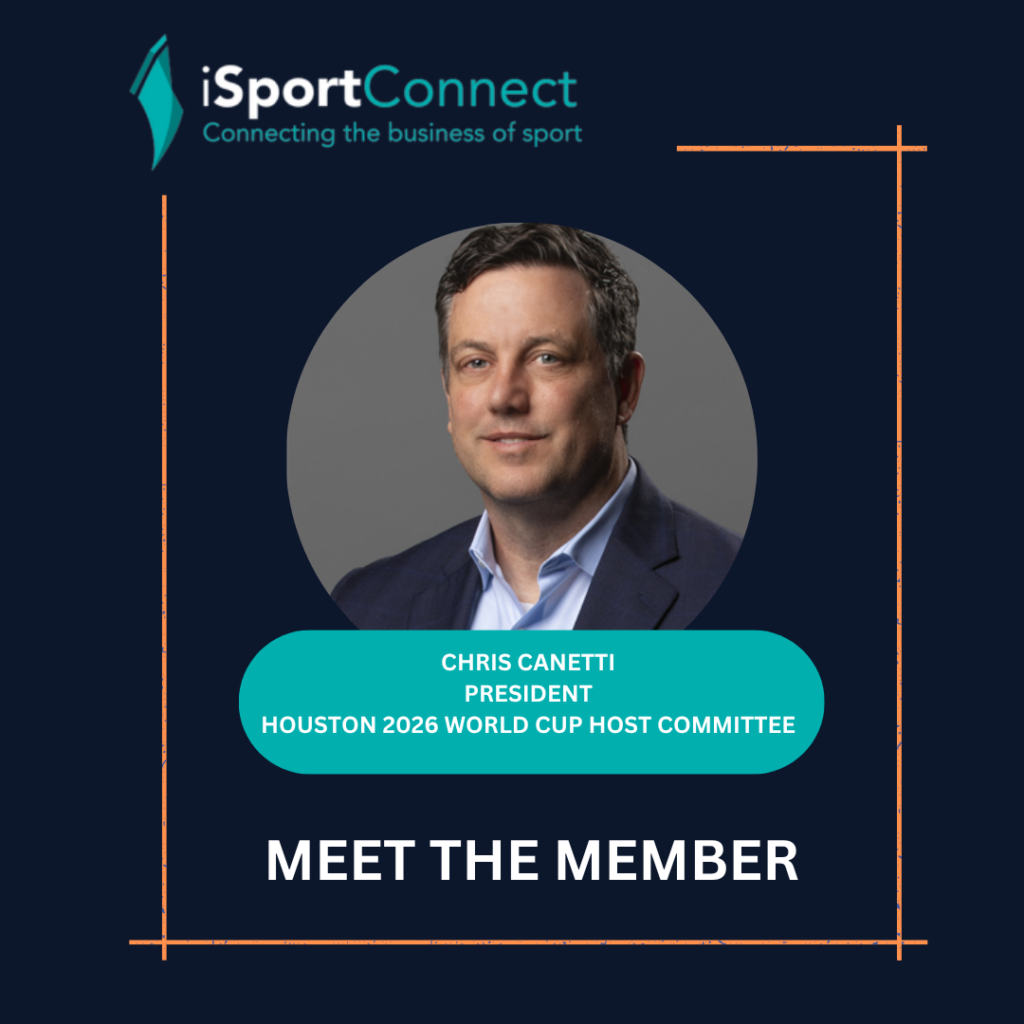
In this interview with iSportConnect’s Taruka Srivastav, Host Committee President Chris Canetti reflects on how Houston delivered one of the biggest event runs in the city’s history.
The first question is naturally about the impact of hosting a tournament of this magnitude. Looking at the official figures—over one million participants, packed stadiums, busy transit systems, and international visitors everywhere—the turnout was tremendous. From your perspective leading the Host Committee on the ground, how do you measure the impact that the FIFA World Cup 2026 has left on Houston and North America?
The impact of the FIFA World Cup 2026 was immense. As far as major sporting events go, there has never been an event on the planet that has had such a profound impact as this one has had—both on the United States and North America, and directly on the communities where the matches took place across the 16 host cities.
Impact can be measured in a lot of different ways. There’s a direct economic impact as a result of hosting the event here, and that was significant. There’s an impact in terms of global branding and recognition for our city, which was significant as well. And then you can measure impact when it comes to legacy. There are certainly dozens of legacy components coming out of this World Cup in Houston—things that are going to make a long-lasting impact on our community and our people long after the final whistle has blown. So that’s probably the most important thing.
When hosting a mega-event, there are always unexpected variables. Was there an element of the tournament’s scale or public reception that surprised you, or perhaps exceeded your initial expectations?
I’ve been asked that question a lot, and I never have a good answer for it, to be honest with you. I don’t think we got caught off guard or surprised by anything. We understood what we were getting into. We knew this was the world’s most significant and largest sporting event in history. We knew it was going to be epic and that all the numbers were going to be massive, and all of that came to fruition.
The only thing I would say is that while we knew it was going to be big, it was even bigger than we expected. So maybe that’s the surprise, right? We had this grand idea, and it not only lived up to that idea, but it went far beyond it. It’s been 32 years since the World Cup was held in the United States in 1994, which was a historic moment for soccer. But this tournament blew those numbers away in many different ways. That’s probably what was most surprising—just how big it ended up being at the end of the day.
What was the most challenging part of organizing and executing such an epic tournament?
I think the most challenging part is that you’re trying to organize something that nobody’s ever done before at this scale: 39 days, 48 nations, 104 matches, three host countries, and 16 host cities. You’re planning and managing something that is happening for the very first time.
Even with extensive experience in sports management or event operations, doing something at this scale was brand new. Everyone had to operate in a mode where you had a solid plan, but you also had to be very, very flexible. You had to understand that new or unexpected challenges were going to come at you, and you needed to adapt and address things as they arose. Being in that mindset and working under those conditions was the most challenging aspect. But here in Houston, we navigated that brilliantly. We planned for the things we could control, and we were fully prepared to deal with the unpredictable variables.
Houston hosted Portugal, featuring Cristiano Ronaldo, who scored his final two World Cup goals from open play right here on your pitch. When global icons like Ronaldo or Messi come to town, the fan frenzy and pressure are intense. What was the atmosphere like, and how did you manage the public safety and operational demands around the team?
It was exciting to have Portugal here on two occasions. When we saw the match schedule, we knew that was going to be massive for our city—not only because Portugal is a world football power, but because of Ronaldo.
The good news is that FIFA handles most of the team movement logistics, so that wasn’t solely on the Host Committee. But we definitely had to coordinate closely with local public safety regarding team movements. As you can imagine, the fans always find out where the team hotel is—I don’t know how, but they do every single time! The crowds outside the hotel, just trying to catch a glimpse of him getting on or off the bus, were enormous. But everybody was excited, happy, and behaving themselves.
You could feel that extra level of energy even at the stadium on matchdays—all the fans wearing his jersey, reacting every time he touched the ball. There was something truly special about it. To say we made history here with Ronaldo scoring a brace—his final two World Cup goals from the run of play on our grass in Houston—is something very special.
As an organizing committee, you serve as the central bridge between FIFA on one side and local government agencies on the other. Keeping everyone aligned can be difficult during a major tournament. How well do you feel that multi-agency collaboration was executed in Houston?
In Houston, I think we performed to perfection in that regard. Houston has hosted many major sporting events over the last 20 years—more major events than almost any other North American city since 2004. So we have an established template for success and proven best practices in place.
However, the World Cup is a completely different entity compared to Super Bowls, Final Fours, or Major League All-Star games. Nothing FIFA does looks like a domestic U.S. championship event. What we needed to do was take our local best practices and structures and mesh them seamlessly with how FIFA operates.
When people ask me for the recipe for success in hosting major sporting events, it’s simple: it’s about collaboration across multiple agencies in the host city—public safety, transportation, airport authorities, stadium operations, training facilities, and the fan festival. All of these moving parts need to be intimately coordinated. That collaborative effort—what we call “Team Houston”—is what allowed us to pull everything together and deliver a smooth event, resulting in very few public safety or medical issues and seamless operations across the board.
Sustainability and human rights are two key pillars that many organizations struggle to integrate meaningfully. How did Houston embed environmental sustainability and human rights protection into its operational planning?
We were motivated from day one to incorporate both into our overall planning. We were driven by legacy, and our three core legacy pillars were: Grow the game, defend human rights, and protect the environment.
On the sustainability side, we created a dedicated committee very early on, chaired by an expert in the field. She led a community-wide effort bringing together stakeholders to build a comprehensive environmental plan for Houston. Everything we did had a sustainability element threaded into it because we prioritized it early.
For human rights, it goes all the way back to our initial bid process. We wanted our legacy priorities aligned with FIFA and U.S. Soccer. We brought in a leading expert, Minal Patel Davis, to chair our Human Rights Sub-Committee. She worked with over 100 community stakeholders across various sectors to identify threats, assess opportunities, and build a human rights plan. FIFA strongly supported and praised our plan, and we executed it fully. Just like sustainability, we involved experts early and threaded human rights initiatives throughout our World Cup operations.
After such a massive event concludes, cities often experience a void once the excitement and adrenaline rush fade. How do you plan to carry this momentum forward, and what formal structures are in place to oversee the tournament’s long-term legacy?
It’s been about three weeks since the World Cup final, and everyone was buzzing across the country about how successful it was. Maintaining that momentum and telling our story is a major part of our responsibility right now.
The tournament’s impact is going to live on primarily through our established legacy components. One major initiative that has come out of this is called Impact Houston 2026. Impact Houston 2026 is an initiative that will oversee all of the Host Committee’s legacy commitments around growing the game, defending human rights, and protecting the environment. Through Impact Houston 2026, we will continue providing funding and support for programs tied to our World Cup legacy.
Additionally, the physical upgrades downtown—like the Main Street Promenade, the Cool & Connected Corridor enhancements, and public art installations—will continue to benefit residents and visitors. As Mayor John Whitmire noted, the tournament showcased Houston to the world, and these investments will keep paying off for years.
Funding is always a critical foundation for hosting mega-events. You worked with federal grants, state reimbursements, and over 20 corporate sponsors. What has the feedback been like from your corporate partners and financial investors?
We had three main funding streams: federal grants for safety and security, state government reimbursements, and private corporate sponsorships to cover the balance.
The feedback from our 20-plus corporate sponsors has been incredible. They’ve been on this three-year journey with us, having signed on early. We’ve received tremendous feedback—emails, comments, and messages expressing how proud they were to support this event. They recognize that their financial investments directly enabled the operations, safety, and community initiatives that created this massive impact. That positive experience bodes extremely well for future major events coming to Houston, as our partners will want to step back up and support us again.