
Corruption busters need to sharpen their words – Keir Radnedge
February 21, 2013
A strange competition has erupted over the past few weeks, almost as if the good guys are squabbling over which represents the greatest danger to the credibility of sport: matchfixing or doping.
Two weeks ago the European police agency, Europol, staged a bravura press conference pulling together the strands of the last few years’ investigations and sparking fearsome headlines about how football was going to hell in a handcart (if it had not gone already).
Europol, for those in the know, did not produce anything new but it did pull together all the strands and earned the sort of ‘shock and awe’ headlines which the drip, drip of individual court cases and suspensions had not achieved.
This followed the assault on sporting credibility which had been affected by the Lance Armstrong revelations and buttressed by the trial in Spain of the ‘Operacion Puerto’ doctor Eufemiano Fuentes (albeit the judge worked hard not to allow any wider information about sports doping slip out).
Next came a report from the Australian Crime Commission stating that scientists, coaches and support staff were involved in the provision of drugs across multiple sporting codes. No individuals were named but the ACC warned that drugs were supplied by organised crime syndicates.
Simultaneously John Fahey, Australian president of the World Anti-Doping Agency, became embroiled in a warring exchange with cycling federation president Pat McQuaid and then suggested that football was not doing enough to test for drugs.
This squared the circle since football, of course, is also the sport most endangered by matchfixing because of its domineering worldwide popularity.
Fahey is in the last of year of his six-year term at the head of WADA and speculation has already begun over the possible identity of a successor.
Simultaneously, within the IOC which dreamed up WADA in the first place, concern is growing that sports and the anti-doping establishment are becoming too antagonistic when they should be fighting shoulder-to-shoulders.
The International Olympic Committee is proposing an ‘anti-doping summit’ later in the year to try to smooth troubled waters.
WADA-watchers have been fascinated, suddenly, to note Fahey’s sudden predilection for speaking out in sharper terms that at any time in his previous five years.
His words have jarred with still-fresh memories of WADA standing up for legal niceties (over LaShawn Merritt and Dwain Chambers) rather than the expressed will of both the IOC and the British Olympic Association in striving to uphold intimidatory sanctions against dope cheats.
Up until the Armstrong dam burst, Fahey had been largely the soul of diplomacy – frustratingly so for journalists – and it had been secretary-general David Howman who had been the more outspoken (comparatively) of the two.
WADA has suffered, in part, from a lack of understanding. This writer took part in a recent radio discussion with a commentator and a former athlete both of whom thought WADA was a testing rather than supervisory authority.
Responsibility for such misunderstanding can hardly be laid at the door of WADA’s small and thinly-stretched staff. Rather, with doping as with matchfixing, it is sports which have not taken draconian enough measures to educate athletes.
At a variety of sports/politics conferences over recent years, the possible creation of a WADA-style authority to attack matchfixing has been shot down. Sports did not want yet another semi-govermental authority breathing down their necks.
However the common denominator in doping and matchfixing has been identified – by Europol, by ICSS expert Chris Eaton and by FIFA’s Ralf Mutschke – as organised international crime syndicates.
Howman, intriguingly, suggested to the media in London last week that perhaps the time had come for an all-embracing ‘super-WADA’ to co-ordinate the twin-pronged battle for the soul of credible sport.
Sport will demonstrate the depth of its concern by the time and consideration it affords to such a proposal.
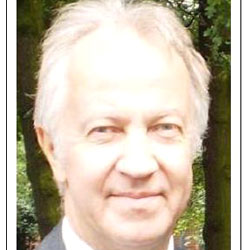
Keir Radnedge has been covering football worldwide for more than 40 years, writing 33 books, from tournament guides to comprehensive encyclopedias, aimed at all ages.
His journalism career included The Daily Mail for 20 years as well as The Guardian and other national newspapers and magazines in the UK and around the world. He is a former editor, and remains a lead columnist, with World Soccer, generally recognised as the premier English language magazine on global football.
In addition to his writing, Keir has been a regular analyst for BBC radio and television, Sky Sports, Sky News, Aljazeera and CNN.
Keir Radnedge’s Twitter: @KeirRadnedge
Keir Radnedge’s 
{jcomments on}