
The ICC Cricket World Cup – Populous’ Richard Breslin and Paul Henry
April 24, 2015
The ICC Cricket World Cup – a chance for any country interested in cricket to shine on the world stage and design for the Event efficiently for the long term good of the community.
Populous’ Richard Breslin and Paul Henry explain.
It is powerful opportunity for a country to hold an international event such as the recent ICC Cricket World Cup 2015 in Australia and New Zealand.
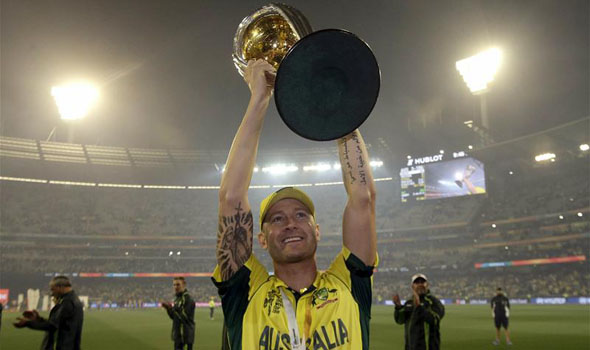
A record crowd of 93,013 watched the ICC CWC Final, a showdown between the co-hosts at the Melbourne Cricket Ground, a fitting finale to a tournament the ICC Chairman, Mr Narayanaswami Srinivasan, described as the “the most popular in history” .
The focus on Australia and New Zealand by the Indian Sub-Continent was immense during the competition with general admission tickets for the match between arch-rivals India and Pakistan in Adelaide selling out within 12 minutes of going on sale.
In India itself, the ICC CWC 2015 turned out to be the most watched event in the history of Indian television, with more than 600 million cumulative viewers.
Such a captive audience is a wonderful chance to show off the best of a country, or two in this case, to both the “live” audience at the matches and the ever growing “digital” audiences around the world, encouraging and developing both business and tourism links.
My colleague Paul Henry explains that the Event itself is also another opportunity for the host country to consider the facilities needed and find the balance between temporary and permanent infrastructure – to satisfy the Event, the budget and the long term needs of the community.
………..
Worldwide interest in Major Sporting Events such as the ICC Cricket World Cup continues to grow. Over the seven weeks of the 2015 tournament more than one million spectators passed through the turnstiles of 14 venues in Australia and New Zealand.
On social media, an unprecedented 36 million unique visitors were attracted to the ICC website – a 10-fold increase on any previous ICC event.
In such a highly developed market, most infrastructure for the 2015 ICC Cricket World Cup was permanent. But it doesn’t have to always be the case.
One interesting exception this year was Hagley Oval, in the heart of Hagley Park in Christchurch, New Zealand, a city recovering from the devastating earthquake of 2011. Skilful Overlay planning and temporary infrastructure transformed a treasured parkland into a temporary international arena in the heart of the city which could be returned to its natural grassy state afterwards.
Staging the high profile Cricket World Cup naturally drew the crowds and so the event also became an important step in helping the city’s regeneration after the earthquake, and gave Christchurch positive exposure to the world.
Even in some of the world’s most developed countries temporary infrastructure has proven the right solution for a major event. London and the 2012 Olympics truly challenged the concept of building permanence creating temporary installations in the centre of the city where permanent construction would never be allowed.
Sport was played with the historic city as the backdrop – beach volleyball in Horseguards Parade and equestrianism at Greenwich Park.
The crucial step was to consider legacy many years before the event took place and set up the right infrastructure to ensure all development was holistic and legacy was managed from the very beginning.