
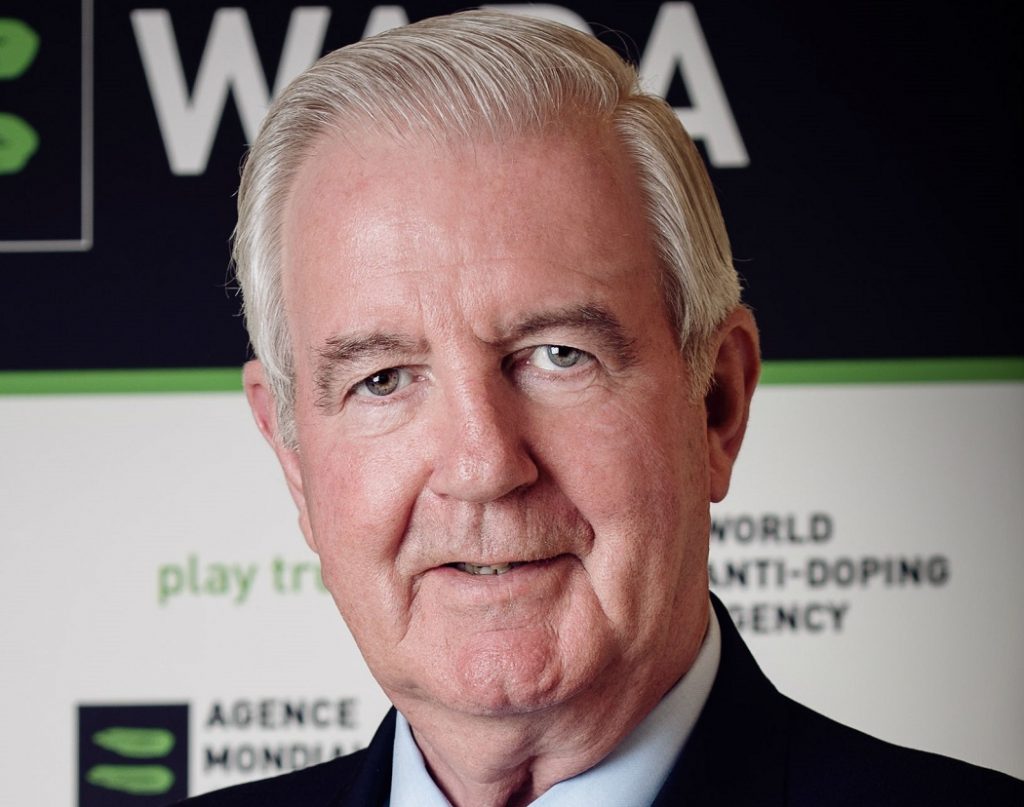
Reedie: “WADA Will Find The Reason For Russian Anti-Doping Inconsistencies”
September 23, 2019
World Anti-Doping Agency President Sir Craig Reedie said today that the discovery of inconsistencies in the historical data handed over by the Russian Anti-Doping Agency (RUSADA) was a disappointment, but not an embarrassment for his agency.
Reuters reports:
WADA said on Monday it had opened compliance proceedings against RUSADA after examining the 24 terabytes of historical testing data from a Moscow laboratory which it received in January.
“I think it’s disappointing but I don’t think it’s an embarrassment because the whole point of the exercise was to get access to the information so we could then put together cases that international federations could prosecute against athletes that have been cheating,” said Sir Craig.
He told the news agency: “We’ve done that, we have 47 cases underway at the moment and potentially an awful lot more. We’ve now found some inconsistencies, we’re going to deal with it, we’re going to deal with it properly.”
RUSADA has three weeks to answer 30 questions relating to the data and Alexander Ivlev, Chairman of RUSADA’s Supervisory Board, told Interfax news agency that it would.
Sir Craig, one of the first members of the iSportconnect community and the first ever guest speaker at an iSportconnect event, said WADA were taking great care to go through the process properly and that the new compliance proceedings were about discovering the reason behind the inconsistencies.
“We don’t know yet whether it’s tampering or manipulation or whatever else it might be,” he added.
“Since the rules state that if we assert non-compliance and the Russians don’t accept it, it will be decided by the Court of Arbitration for Sport (CAS), so you have to be very careful, you have to know exactly what happened and that’s the process we’re involved in.”
WADA came in for a lot of criticism when RUSADA was made compliant last September despite not having completed the roadmap laid out for reinstatement in the wake of the huge doping scandal that had rocked Russian sport.
Sir Craig still thinks it was the right decision.
“The alternative to not attempting to break the impasse was not acceptable, we had to do something,” he said.
“I think that was the correct decision because for us to prosecute cases, we need clear and detailed information.”
The first of the 47 cases are already being prosecuted and Sir Craig was not concerned that the inconsistencies in the tainted data might prove grounds for appeals from the athletes affected.
“We believe that the evidence packages which we’ve put together for the various international federations will stand up to any form of scrutiny,” he said.
Russia was excluded from the last Winter Olympics in Pyeongchang because of the doping issue and the removal of compliance from RUSADA could threaten the nation’s place at the 2020 Summer Games in Tokyo.
Sir Craig said any further action from WADA would depend on the answers provided by RUSADA but if the compliance issue did end up back at CAS, he thought the process could be completed in time to avoid tarnishing next year’s Olympics.
“If we get to that stage, I hope that this process will be completed as quickly as possible so it doesn’t affect what I think will be a supreme Games in Tokyo next August.”