
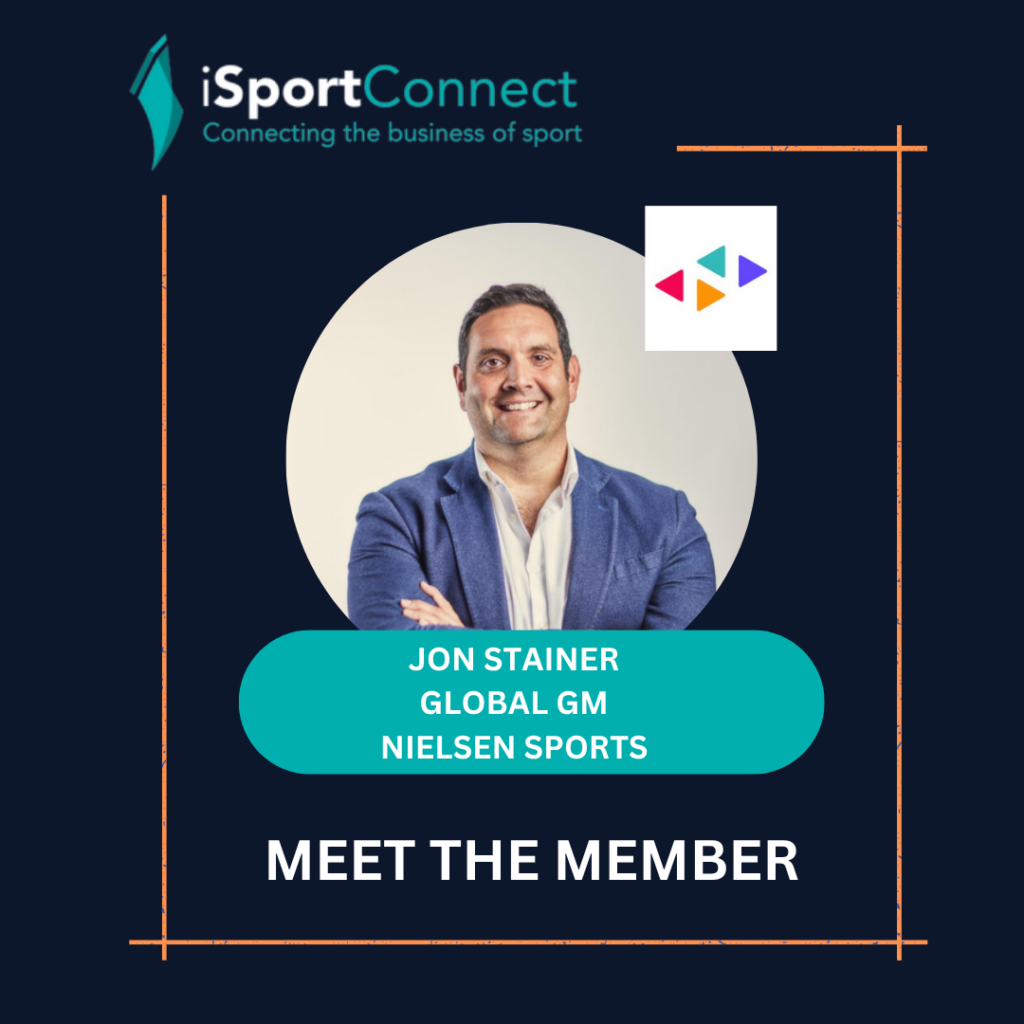
Nielsen’s Jon Stainer On How The 2026 FIFA World Cup Is Driving Growth Across Soccer, Women’s Sports And Fan Engagement
May 14, 2026
Ahead of the 2026 FIFA World Cup, a new report by Nielsen and FIFA, Get Ready with Media Intelligence: 2026 FIFA World Cup Edition, offers a detailed look at viewership trends, fan engagement patterns, and the local market impact of football in the United States. The report highlights how soccer is no longer just an emerging property in the US, but a mainstream commercial force driven by digital consumption, streaming innovation, and growing fan communities. In this interview, iSportConnect’s Taruka Srivastav spoke with Nielsen Sports Global GM Jon Stainer what the data reveals about the evolution of fandom, brand opportunities around the World Cup, measurement challenges in a fragmented media landscape, and the long-term commercial future of soccer and sports in the US.
Nielsen’s latest report shows US viewers spent nearly 80 billion minutes watching soccer in 2025. What does this tell us about soccer’s commercial maturity in the US, and are we finally seeing the sport move from a growth market to a mainstream media property?
The 80 billion minutes proves that soccer is no longer just a growth sport in the US — it has fundamentally arrived. There are now 62 million soccer fans in the country, making the United States the fourth-largest soccer fandom market globally, according to Nielsen Fan Insights, a global study tracking sports interest and engagement. Traditional broadcasters such as NBC and Peacock have been investing in soccer consistently over the last 10 to 15 years, while Apple has made a major commitment to Major League Soccer through its streaming deal. More recently, Netflix signed rights for the FIFA Women’s World Cup 2027 in the US and Canada, further demonstrating how soccer is becoming an increasingly mainstream pillar of the American consumer’s media diet.
With one-third of the general US population expecting their interest in soccer to increase over the next 18 months, how should brands rethink their investment strategies ahead of the World Cup to maximise long-term fan engagement?
Brands should think of soccer as an always-on opportunity rather than a short-term burst around a major event. Success lies in embedding themselves within the culture of soccer and its fan communities. Pepsi is an example of a brand that has executed this effectively, both in the US and globally, across men’s and women’s soccer. Another key opportunity lies in investing beyond live matches, including ancillary content such as creator-led programming, podcasts, and behind-the-scenes storytelling. Soccer should not be approached simply as a 30-second advertising buy, but as an ecosystem and culture that brands can authentically participate in.
Your data highlights that soccer fans are highly engaged across social media, podcasts and second screens. How is the definition of sports fandom evolving, and what does this mean for rights holders and sponsors trying to measure ROI?
Fandom is now a continuous omni-channel experience rather than something defined only by attending live events or watching television. Fans increasingly engage with sport while second-screening during matches, following social conversations, consuming highlights, and listening to podcasts. For rights holders and sponsors, the challenge is no longer just measuring viewership, but understanding where content appears, who is consuming it, and how integrations influence brand outcomes. Modern measurement must account for this broader behavioural ecosystem.
What are the biggest measurement challenges facing the sports industry today and how is Nielsen adapting?
The most significant challenge is building a forensic understanding of audiences and accurately deduplicating them. Fans now move fluidly across platforms — watching part of a game on linear television, streaming on mobile devices, and later consuming highlights on YouTube or social media. Nielsen is responding by unifying linear and digital measurement capabilities, combining large-scale big data from streaming platforms and set-top boxes with traditional person-level panel data to provide a more holistic view of the modern sports fan.
Beyond the World Cup, which sports or leagues do you believe are best positioned to benefit from the momentum soccer is creating in the US?
The immediate beneficiaries are likely to be organisations already operating within the soccer ecosystem, particularly Major League Soccer and the United Soccer League. Women’s sports also have a significant opportunity to benefit from this momentum, especially the National Women’s Soccer League. Soccer fanbases in the US are especially attractive commercially because they are young, culturally diverse, digitally native, and affluent — characteristics that align strongly with long-term sponsor priorities.
Looking ahead, what do you think will define success for sports organisations in the next five years?
Success will be defined by audience understanding. Audience scale is now table stakes; the real differentiator lies in understanding how those audiences engage, their level of avidity, and how they consume content across different channels. Organisations that successfully combine first-party data with robust measurement insights will be best positioned to unlock commercial growth and long-term value across the sports ecosystem.
A test run is being done during the IPL by Nielsen in an initiative called Nielsen One Ads. Is that true?
We are currently doing work directly on the IPL, particularly around Jio, with insights expected to emerge following the conclusion of the tournament. India also plays a critical strategic role for the company as a major engineering and analytics hub, primarily based out of Bengaluru. This team is helping drive advancements in AI, measurement systems, and analytics products across Nielsen’s global business, including its sports vertical.