
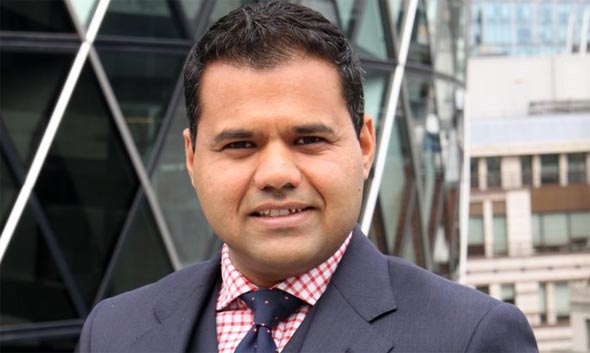
Money laundering in sport- Rajesh Agrawal
June 13, 2012
With ever-increasing profits being made from sports, it is no wonder that money laundering is occurring increasingly frequently, as money is an integral aspect of the world of sport and there is a lack of effective anti-money laundering regulation in the area.
‘Dirty’ funds can now be made appear legitimate by depositing cash into bank accounts, purchasing real estate or using shell companies and trusts.
In the sports industry money flows within a complex network of financial players, which includes clubs, players, corporate sponsors and individual investors, agents and real estate proprietors, creating an inducive environment for money laundering. As a FATF report showed, sports that vulnerable to money laundering activities are football, cricket, rugby, horseracing,motor racing, ice hockey, basketball and volleyball.
Typically money launderers transfer money abroad as it is extremely difficult to trace these funds and they can be disguised as payment for players being transferred between clubs. Large amounts of money are involved in the process, making it difficult to verify the final destination of the funds, or the transfer process involves many countries, with money often flowing in and out of tax havens and clubs’ contributions being transferred to companies in these tax havens where the real investors remain unknown.
The money transfer market’s vulnerability to money laundering is related to a lack of transparency to funding certain transfer transactions and the opportunity to transfer funds to an offshore account, with limited disclosure requirements regarding the ownership of these accounts.
A recent investigation about possible foreign exchange violation in cricket IPL (Indian Premier League) indicates that some players received more money than their contracted amount, which is a prime example showing the fragile ‘eggshell’ of the sports industry in terms of money laundering. But how can money laundering be more efficiently monitored or even prevented?
When players are transferred internationally, it is a primary responsibility of banks and financial institutions, such as money transfer companies or foreign exchange providers, to verify possible suspicious payments abroad that can cover, for instance, transfers of false players. If large amounts paid to clubs were delivered at the same time it would certainly capture the financial institutions’ and banks’ attention and lead to further questioning about the money’s origin.
At RationalFX, the following activities would be queried as an attempt to launder money:
-Unusual, large cash payments in circumstances where payment would normally be made by cheque or banker’s draft.
-Transactions carried out by a customer on behalf of third parties without there being an appropriate business relationship with such parties.
-The documents they have uploaded to verify their identity do not confirm the information that they provided about themselves.
-Money transfers being made to high-risk jurisdictions without a reasonable explanation, which are inconsistent with the customer’s usual overseas activities.
When it comes to international transfers in football, there have been regulations since 2009 that require an online registration within Transfer Money System. It is compulsory that both the buying and selling clubs enter details of transfers, including the contracts, currency of the payment, due date, payment schedule for each transfer, type of payment, payment obligation of third parties, bank details, player IDs, payments to agents, total fees and verifiable proof of payment.
While ‘the more information, the better’ approach is undeniably a key stage towards avoiding money laundering, this requirement only applies to football and it is by no means influential enough to prevent money laundering occurring.
At RationalFX we are obligated to check overseas money transfers and therefore are aware of the dangers and tricks of money laundering ‘experts’. As stated before, the clubs and associations do not work similarly as banks and financial institutions do not have the same opportunities to prevent money laundering.
Nonetheless, some of the rules which money transfer companies operate by could be used to prevent money laundering in the sports industry by:
– Appointing somebody within the club’s senior management to be responsible for anti-money laundering issues similar to Money Laundering Reporting Officers (MRLOs) that money transfer companies employ.
– Providing more information when payments are made when players are being transferred between clubs.
– Making staff aware of the money laundering legislation and training those that may be involved in transactions that could involve money laundering.
– Ensuring that the identity of those that the club is dealing with is known and carry out appropriate enquiries before entering into transactions with them.
– Monitoring customer activity so if changes occur you can evaluate why these may have happened. For example, a customer with a history of making payments through the electronic banking system suddenly starts paying in large sums of cash;
– Reporting any suspicious activity.
-Ensuring that there are internal controls on your business transactions so that only employees with the appropriate authority can bind the club.
Rajesh Agrawal is the Founder Chairman and CEO of RationalFX, a company he founded in 2005 that specialises in foreign exchange strategy. Agrawal is a fellow of the Royal Society for the encouragement of Arts, Manufactures and Commerce and an official Think Tank Member of the World Entrepreneurship Forum. Under Argawal, RationalFX became the first UK-based company to launch an online currency exchange system for private individuals on real-time prices. In August 2011 RationalFX signed a shirt sponsorship deal with Birmingham City FC for the 2011-12 season.
RationalFX is the official FX partner of iSportconnect.com
Rajesh’s:

{jcomments on}