
IOC Reinforces Integrity Efforts With Europol Agreement
October 29, 2019
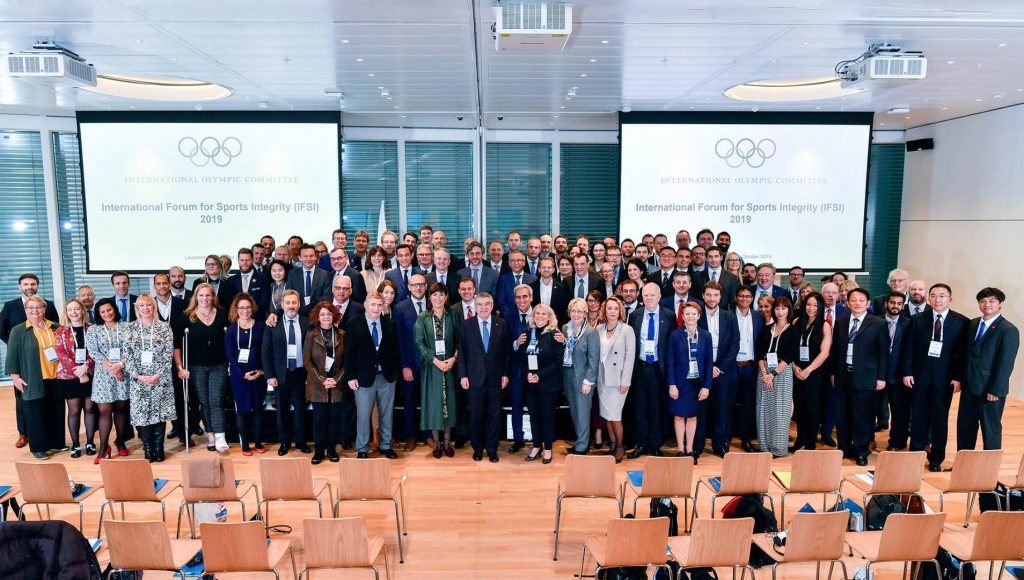
Europol, the European Union’s law enforcement agency, and the International Olympic Committee have signed a Memorandum of Understanding (MoU) to reinforce cooperation in the fight against corruption in sports. The agreement was signed during the annual International Forum for Sports Integrity, organised by the IOC in Lausanne, Switzerland (photo above).
Corruption in sports degrades the efforts of athletes and the support of the public. It also brings important profits to organised crime groups which they then use to grow their other criminal activities such as drug trafficking, document fraud, money laundering and economic and financial crimes.
To strengthen the global coalition against corruption in sports, in particular the manipulation of sport competitions, Europol reinforces its cooperation with the International Olympic Committee, one of the leading actors in the sport world. Europol and the IOC have already intensified their cooperation in the past three years. The IOC plays a significant role in protecting integrity in sport across all Olympic disciplines.
The new agreement will focus on the exchange of knowledge and expertise, capacity building and further collaboration between Europol and the IOC. Cooperation between public and private sector is a key element in the effective fight against these organised crime groups causing an important damage to the integrity of sports and to its core values.
On the signing of the Memorandum of Understanding, Europol’s Deputy Executive Director Will van Gemert said: “Corruption in sports is a global criminal phenomenon perpetrated by organised crime groups operating cross-border and often involved in other crimes. Working closely together in coalition with key partners like the IOC, is crucial in the fight against corruption in sports. Combating sports corruption means not only defending the integrity of sports, but also protecting the public from criminals who cause significant damage to the safety, security and wellbeing of the EU citizens.”
Thomas Bach, President of the IOC commented: “Signing an MOU with Europol today is another example of our deepening cooperation with law enforcement agencies and one more important milestone in the fight against manipulation of competition.”
At the Forum, a new publication, “IOC-UNODC Reporting Mechanisms in Sport: A Practical Guide for Development and Implementation”, was launched. The guide provides information on good practice for sports organisations with regard to receiving and handling reports of wrongdoing, including competition manipulation, harassment, doping and corruption.
President Bach praised the close cooperation with the many stakeholders. “In the spirit of this cooperation, we have taken many measures together since the launch of the IFSI in 2015,” he said. “The most obvious example is the Council of Europe Convention on the manipulation of sports competitions, which came into effect last month and is already being implemented in a large number of countries. This is an example of the IFSI in action.”
Ronan O’Laoire, the Global Coordinator for UNODC’s Global Programme for Safeguarding Sport from Corruption and Crime, pointed to the importance of developing effective reporting mechanisms in sport, “It is crucial for government agencies and sports organisations to identify and apprehend those responsible for wrongdoing in sport, including competition manipulation. Having effective reporting mechanisms in place to facilitate this is essential, and we believe that the Guide on Reporting Mechanisms in Sport, developed through our partnership with the IOC, sets out a highly effective basis to do just that,” he said.
President Bach also welcomed the launch of a Sports Investigators Network. “With this network of 200 trained investigators from International and National Federations, National Olympic Committees and sports disciplinary bodies, we can really go to the heart of the problem, which is having access to information as soon as possible and, in some cases, even before the problem occurs. Having this investigators’ unit in place will allow us to address issues from the roots,” Bach outlined.