
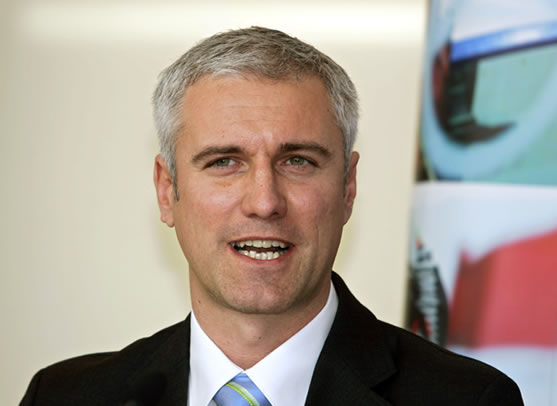
Five, three, one…. A brief look at the 2020 Candidate City decision- Paul Freudensprung
June 15, 2012

A month ago the IOC announced the decision of its Executive Board on which of the 5 Applicant cities passed to the Candidate Phase for the 2020 Olympic Games. The result is well known with Istanbul, Madrid and Tokyo making the cut and Baku and Doha sent back to the start.
The decision is based on the Evaluation Report of the IOC Working Group. Having a closer look at the technical assessment results published in the report it shows that there are 3 bands of performances. Both Madrid and Tokyo consistently achieve high scores for their proposals, only showing a higher risk level in one or the other area by dropping minimum assessment values. In a second band Istanbul and Doha can be found. Both scoring well on some areas, but with acceptable but midrange marks in most areas. Baku is clearly trailing the other cities in the technical evaluation.

The technical evaluation of Istanbul and Doha was actually quite similar, with Doha actually being assessed slightly higher on overall median score. Nevertheless Doha did not make it to the next round.

This shows that overall acceptable marks alone are not enough, if there are several issues in individual areas of evaluation that are deemed of specific concern, as was he case with Doha.
Another point also worth a consideration in the case of Baku is the working group report citing that ‘significant amount of construction required to host the Games was not consistent with the size and legacy needs of the city’.
What did the working group want to say? That 12 temporary venues out of 32 total are not enough, or that the city (and country) are simply to small for Olympic Games?
About Paul Freudensprung:
He has over 15 years of experience in the sport industry and specialises in directing and advising multi-stakeholder working groups at major events where different objectives and interests need to be aligned in order to develop effective event operations and functional venue infrastructure.
Paul has been involved in operations of 4 Olympic Games, 2 FIFA World Cups, and was the Games Plan Director of the 2014 Salzburg Olympic Winter Games Bid. In 2006 Paul set up his own consultancy company offering strategic solutions related to the development of integrated event operations programs, appraising contractual issues around venue agreements and supplier contracts and defining infrastructure development concepts and operational venue designs. He also teaches courses on event management for the MBA program at the European University in Barcelona.
Before joining the event management industry Paul spent 3 years conducting environmental and economic impact assessment of European transport infrastructure projects. Paul holds a Masters degree from the Faculty of Economics of the University of Sydney and a Masters degree from the Institute of Geography of the University of Vienna.
Paul Freudensprung’s 
{jcomments on}