
FIFA Changes Sponsorship Strategy in Offering Regional Packages for World Cups
October 29, 2013
FIFA are set to offer landmark new sponsorship packages after launching regional packages for the 2018 and 2022 FIFA World Cups.
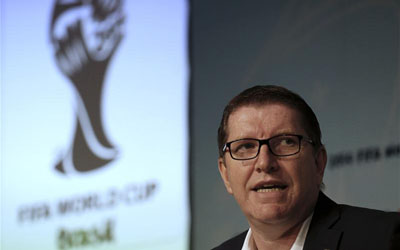
Speaking at the post-LOC board meeting media conference today in Kazan, ailment FIFA’s Marketing Director Thierry Weil provided details on the new commercial structure, bronchi highlighting the significant opportunities and value which is on offer for interested companies.
“Without the support of our sponsors, events such as the FIFA World Cup would simply not be possible,” said Thierry Weil. “Our sponsors not only offer financial support to the events, but logistical support on the ground in the form of transportation for example. Sponsors also play a huge role in connecting our events to football fans all over the world, running promotions and giving people the once-in-a-lifetime opportunity to experience events.”
FIFA’s current sponsorship model, which was implemented in 2007 and covered the 2010 and 2014 FIFA World Cup, consists of three tiers of Commercial Affiliates; FIFA Partners, FIFA World Cup Sponsors and National Supporters.
“The current commercial structure has proven to be very successful for the last two editions of the FIFA World Cup, with no packages left unsold. However, we felt it was time for a change,” explained Thierry Weil.
FIFA’s new innovative commercial structure will be in place as of 2015 for the 2018 and 2022 FIFA World Cups. The top two tiers remain mostly unchanged, with a total of 14 companies occupying the FIFA Partner and FIFA World Cup Sponsor positions. However, the third tier has been transformed from National Supporters to Regional Supporters. This tier can amount to a total of 20 brands from the 5 pre-defined regions of North America, South America, Europe, Middle East & Africa and Asia.
Weil explained the reason for the change: “The demand is there. Having observed our current structure it became clear that there is an interest from brands in broadening the scope of the National Supporter engagements, not only to cover the Host Country.
“The regional approach also offers a more targeted way for Commercial Affiliates to engage with their target audience, offering companies who do not have the desire or the means to enter into a global sponsorship agreement to acquire rights which cover a significant geographical region,” added Weil. “For example a company who is interested in the region of South America can now acquire the corresponding rights and not have to purchase a global package. The value proposition is much stronger.”
FIFA have already confirmed commerical deals for the 2018 and 2022 FIFA World Cups with Coca-Cola, Hyundai-Kia, Gazprom and Anheuser-Busch InBev.
{jcomments on}