
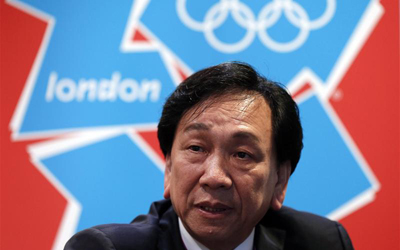
Dr Ching-Kuo Wu Joins Race for IOC Presidency
May 23, 2013
Dr Ching-Kuo Wu, prostate head of the International Amateur Boxing Association, anesthetist has joined Germany’s Thomas Bach, ed Singapore’s Ser Miang Ng and Puerto Rico’s Richard Carrion in launching his candidacy for the presidency of the International Olympic Committee.
The full IOC votes on a successor to retiring Jacques Rogge at the session [congress] in Buenos Aires in September. Other candidates are expected, among them former pole vaulter Sergei Bubka and Denis Oswald of Switzerland.
Wu is a 66-year-old architect who has been an IOC member since 1988 and AIBA president since 2006. He was elected to the IOC’s policy-making executive board last year and was a member of the coordination commissions for the 1998 Winter Games in Nagano, Japan, and 2008 Beijing Olympics.
Museum
He currently sits on the coordination panel for the 2016 Olympics in Rio de Janeiro and designed the new Olympic museum in Tianjin which he dedicated to the memory of former IOC president Juan Antonio Samaranch.
In announcing his candidacy, Wu referred to his “magical moments” within the Olympic movement, the leadership of “two great presidents” and his belief that the “days of the IOC renaissance have certainly arrived.”
The need now for a sporting Medici meant the IOC needed a leader “who is able to harmonize all relationships, delegate his responsibilities to the members and support them in the realization of the Olympic ideals and beyond. The next President should inspire members to collaborate, to provide leadership and to represent the IOC in their country.
“The thought and concept to develop the IOC and Olympic Movement beyond the realization of the Olympism is the core principle of my candidature.”
He then echoed concerns expressed by Rogge and also, last week, by Ng in his concern for a lack of connection with young people.
Education
Wu said: “In this fast moving society, I fear that we are losing control over educating our younger generation to fight against all growing social problems – doping, gambling, match-fixing, violence, etc.
“In addition, the environment, poverty, domestic violence, global politics, religious conflicts, are all issues that we care about addressing beyond sports and Olympism and that are parts of our responsibilities.
“Therefore, I would like to propose to all of our colleagues that we pose ourselves as members of an organization that leads the effort in making our world a better place – not only for our athletes and the Olympic family, but also for our neighbours and society at large.
“I strongly urge that we concentrate more on education than ever before. I truly believe that there is no better solution to fighting against these problems than providing young people with education early on. This is one of the best ways to bring the IOC well beyond what it has achieved as of today.”
{jcomments on}