Who’s hot in Sports Tech? Who is doing deals, launching new products and generally doing some of the best work in the sector? That’s what the Index attempts to dig into. Whether established players or the up-and-coming stars, we go a little deeper for you…
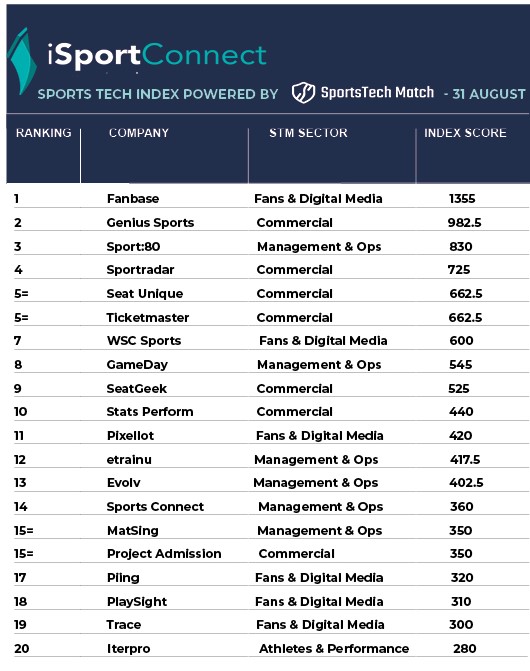
Edition number seven of the sports tech index sees Fanbase (fan engagement platform) hold on to the #1 spot for the third consecutive week following another six new client announcements (including four British Basketball League clubs) in the month of August.
Genius Sports (sports data) achieve their highest position so far at #2 as a result of fresh announcements of an expanded partnership with British tabloid newspaper, The Sun, and a new partnership with the Pro Pickleball Tour. They are followed in the top 5 by Sport:80 (NGB and sports membership management) at #3, Sportradar (sports data) at #4 and both Ticketmaster (ticketing) and Seat Unique (ticketing) who ranked fifth equal.
Appearing in our top 20 for the first time are Piing (massive multiplayer games) at #17 and Iterpro (all-in-one sports data management platform) at #20, who both announced new deals in August which, on top of sustained activity over the past 12 months, was enough to get them into our top 20.
Want to know more?
Subscribe to the SportsTech Match monthly newsletter for an overview of the activity that generated points towards the index this month (via the footer on the website).
The iSportConnect Sports Tech Index is designed to help rights owners and investors quickly assess who is “hot” from a product and new business perspective and provides sports tech vendors with an incentive to focus their PR announcements on what matters to the market. It follows a simple scoring system (see below).
The iSportConnect Sports Tech Index is published on a monthly basis on iSportConnect.com.
Clickhere to read more about how the Index is calculated.
Girls Down Under are on Top of the World: How the FIFA 2023 Women’s World Cup Changed the Laws of Gravity for Women’s Sport. Major international events advisor, Michael Pirrie, outlines the lessons and legacies from the ‘Best Ever World Cup.’
INTRODUCTION
It began with dawn raids on a luxury five-star Swiss hotel and ended eight years later with a football showdown in a sporting galaxy far, far away.
The FIFA Women’s World Cup travelled to novel territories in Australia and New Zealand to create a new future for the world game and for FIFA.
By the time Spain’s football conquistador, Olga Carmona, launched a strike deep into the net’s bottom left corner, like a guided missile, it would soon be tournament over and mission accomplished.
The great Spanish sporting nation had won its inaugural women’s world cup (only the second after Germany to win the men’s event as well); and FIFA had turned a deeply flawed organisation into a more positive global presence, heralding an unlikely renaissance.
The Swiss hotel raids netted 14 FIFA officials on corruption charges, paving the way for a string of far-reaching reforms that culminated in the Spain-England final, bringing the curtains down on the first World Cup selected under Gianni Infantino’s changes.
The planning and administration improvements surrounding the tournament have helped to correct important governance issues involving the world game and its flagship events.
These were plunged into darkness and uncertainty when the lights almost went out at FIFA headquarters in 2015, following the hotel raids, arrests and charges.
“They (FIFA officials) were expected to uphold the rules that keep soccer honest. Instead, they corrupted the business of worldwide soccer to serve their interests and enrich themselves,” US Attorney General at the time, Loretta Lynch, said at a news conference in New York.
The turnaround from the police raids and corruption probes has been almost unparalleled in modern sport, culminating in the success of this world cup.
If the Argentina-France final rescued the Qatar World Cup from international condemnation over scandalous human rights violations and venue construction deaths, this tournament also helped to push FIFA forward from the sins of the past.
While the final of the Qatar cup was epic, the Women’s Cup in Australia and New Zealand was epic from start to finish.
By the time the football kicked off a long list of firsts had already been ticked off – biggest tournament, most tickets sold and first dual host nations.
BEST EVER CUP
The success of this cup, in locations and conditions distant from football’s epicentres of Europe and South America, was almost as unexpected as it was unprecedented.
The Cup witnessed the birth of a new football nation in real time as Australia’s national Matildas team progressed deep into the tournament, racking up record broadcast, digital and attendance numbers.
The Australia-New Zealand double act also worked for FIFA in other ways, opening another gateway into Asia, the world’s most populous continent where Cup success has been harder to find than Olympic gold medals.
The success of the mega event followed initial doubts the tournament would survive the move from France in 2019 to Australia and New Zealand, soccer minnows, located on the planet’s football perimeters in faraway Oceania.
The factors behind the Cup’s success are now being studied by major events organisers, governments, multinational companies and sport governing bodies as statistical data emerges.
Modifications to FIFA’s host nomination process were the game changer; fundamental to the choice of Australia and New Zealand as presenters of the tournament, widely acclaimed as best Women’s World Cup since the first in China in 1991.
Even the most optimistic supporters of women’s sport could not have predicted the scale of interest and engagement in women’s football coming from tournament.
– In Australia 9 in 10 households watching TV during the national Matildas team semi final against England tuned into the game.
– Aggregate national tournament viewership topped 24 million
– Almost 2 million fans attended matches, 500,000 over initial projections
– Stadium occupancy was over 84 % across Australia and New Zealand
– Australia’s seven tournament matches attracted 403,136 fans with an average of 57,591 for each match and reaching 99.2% of capacity at each venue
– Optus Sport, the tournament host broadcaster, saw social media views of Cup content of over 75 million
– FIFA’s digital platforms experienced a 130% increase in visitors compared to the 2019 Cup, with over 3 billion content views.
Discoveries in medicine and science – from black box flight recorders, ultra-sound imaging and clinical applications of antibiotics to space-shuttle heat shield technology, wi-fi and other breakthroughs – have helped to highlight Australia as a clever country.
Australia, however, is rarely happier than when competing in or hosting a major international sporting event.
The nation was doubly joyful therefore at staging and appearing in one of the world’s biggest sporting events at a home World Cup.
There was perhaps even triple joy – and much relief as well – at FIFA’s declaration of the Cup as ‘Biggest and Best Ever.’
This matched the famous declaration by the former late IOC President, Juan Antonio Samaranch, that the Sydney 2000 Olympic Games, also was the best ever.
CRITICAL SUCCESS FACTORS
The Cup’s success was ultimately due to an irresistible combination of a global sporting event hosted by two nations captivated by sport with popular and competitive teams
The tournament also reflected the prominent roles of women in the political, sporting and social history of the host nations.
While New Zealand (1893) and Australia (1902) were the first countries in the world to grant women the right to vote, women have represented Australia at the Olympics since 1912.
That trail blazing tradition continued at the Cup.
Morocco defender, Nouhaila Benzina, created tournament history when she became the first senior level player to wear a hijab during a FIFA Women’s World Cup game. Korea’s Casey Phair became the youngest at just 16.
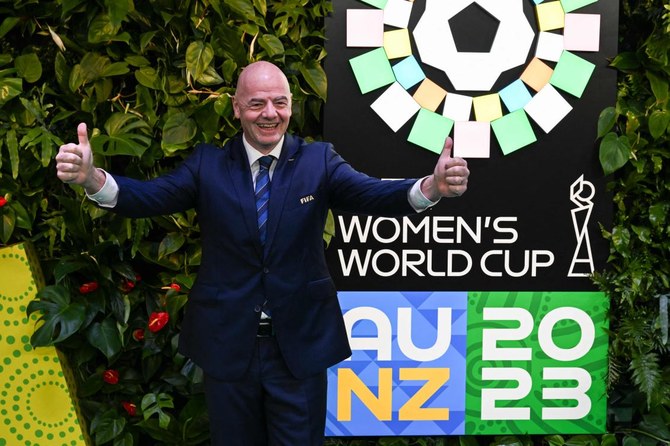
“This FIFA Women’s World Cup has been truly transformational, not only in Australia and New Zealand, but all over the world…,” FIFA President Gianni Infantino said in wrap up comments.
Australia is now one of the few nations to have successfully hosted both mega events.
WOMEN’S SPORT TRANSFORMED
The Cup demonstrates women’s football as a major force in sport and wider society, no longer looming on the horizon.
The tournament smashed through sport’s glass ceiling and competition from overlapping major international events, including the Fukuoka World Aquatics Championships, Ashes Test Cricket series, and other prominent fixtures.
The Cup’s success reflects what happens when you bring the world’s best footballers and teams together and give them the right venues and environment to perform in.
“This has probably been the most amazing four weeks of our careers,” Australia’s captain and Chelsea striker, Sam Kerr, said, reflecting on the team’s performances.
It may have also been among the four most amazing weeks in recent times for the co-hosts as well.
FOOTBALL FANTASY
While life in Australia and New Zealand has returned to a more normal routine, the Cup created a sense of wonderment that transfixed vast sections of the host populations and beyond.
The euphoria reached Australia’s political capital, in Canberra, where Prime Minister Anthony Albanese even floated the prospect of a public holiday if the Matildas won through.
Well prepared and operated venues and diverse local social and cultural conditions provided a rich environment for teams, fans, and visitors.
The multicultural communities of New Zealand and Australia – where immigrants from every nation in the world have settled – filled venues with their love of sport, especially soccer.
This produced an electrifying international competition setting for teams and players from all backgrounds, generating compelling football, including 164 record goals.
Almost 25,000 fans gathered for a group stage match between Columbia and Korea at midday on a Tuesday.
Stadiums, fan zones and public spaces were filled with a party atmosphere that radiated out from the venues across host cities, nations, and global celebration sites on giant screens, on-line video and social platforms and communities.
The final was staged at the home of Australia’s biggest sporting events, the main Sydney 2000 Olympic Games site, at Stadium Australia, attracting over 75,000 fans.
The final was also the fifth time the stadium reached full capacity during the tournament, and set an audience record for football in Spain, with nearly 8.9 million unique viewers.
“Incredible,’ was how 23-year-old Spanish captain Carmona described the occasion.
“When you go to bed this is what you dream about constantly.”
WINNING FEELING
The Matildas run was perhaps the single most important factor in the tournament’s overwhelming success, confirming the importance of host nation performance as paramount in major global events.
The pathways and planning for the Australian team’s success were as important as preparations for marketing, ticketing and sponsorship.
Australia is only the second nation to host a world cup and finish in the top four after the USA.
The Matildas progress and Australia’s joyful embrace of the team’s triumphs and set backs against football’s traditional super power nations was pivotal to driving national and international engagement.
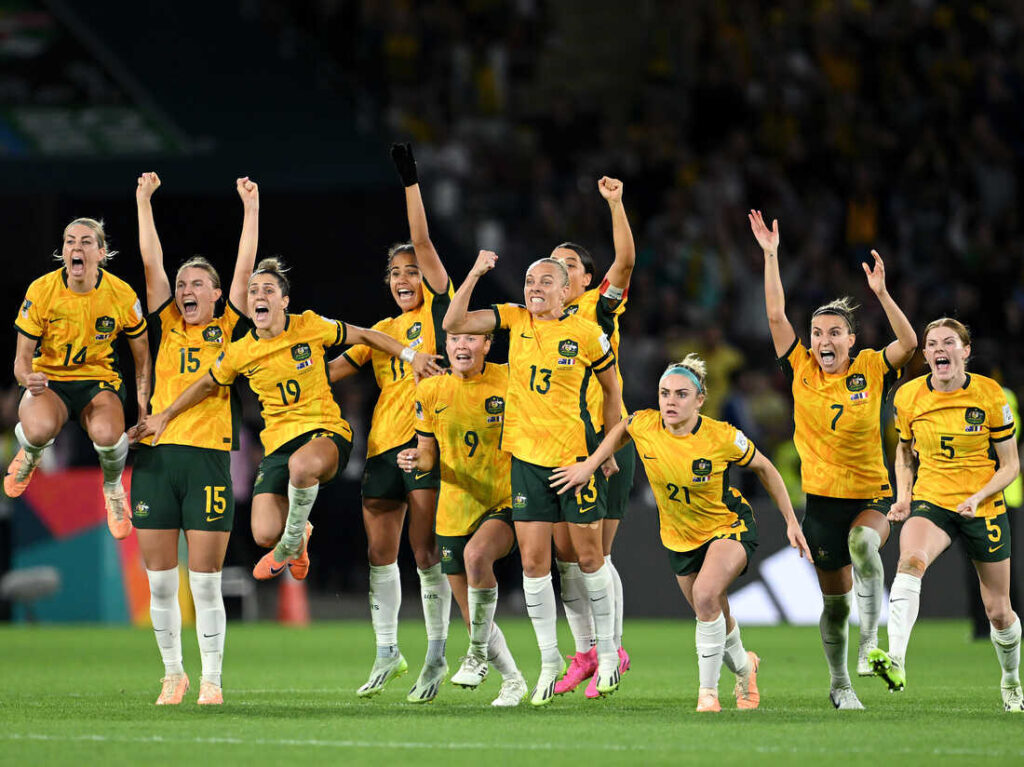
This reached fever pitch during the Matildas 10 kick penalty climax against France, producing one of the most gripping moments in recent world sport, which almost brought Australia and the Cup to a standstill.
Video of tense, anguished and cheering passengers, following the drama mid-air in their jet, is believed to have been viewed 24 million times on social within just hours of the spectacle.
The success and positive impact of the Matildas and the tournament was also vital to the Australian government’s decision to allocate $A200 million at the end of the Cup to women’s sport.
NEW CUP MODEL
The Cup changed the narrative for major international sporting events, organisers and host governments, often forced to defend budget blow outs and little return on investments.
The use of existing facilities and support services in Australia and New Zealand eliminated the need for expensive additional stadiums.
This slashed costs and removed the risk of new, highly priced infrastructure becoming dormant and dusty post tournament, without the tournament upsetting local communities seeking new schools and hospitals instead of ghost sports sites.
CONCLUSION – EVERYTHING HAS CHANGED
This Cup accelerated the development and revealed the enormous potential of women’s football like never before.
This has helped to restore credibility in FIFA’s signature event.
The Cup had a broader fan base than previous women’s sporting events and was more in tune with women’s lives on and off the pitch.
The Cup was a sporting, social and digital phenomenon, soaring more rapidly on the sports hits chart than a Taylor Swift download.
The Cup was poetic and powerful, and like Swift’s music, it was also ‘Fearless.’ The resale platform for Cup tickets was even said to be in as much demand as Swift’s concerts later this year.
Commercial innovations were successfully introduced, enabling the Cup to break even for the first time, separately selling broadcast and sponsorship rights to the tournament instead of packaging the deals as part of the men’s World Cup. This generated more than $570 million.
“We didn’t lose any money and we generated the second highest income of any sport besides, of course, the men’s World Cup, at the global stage,” said Infantino, adding “there are not many competitions, even in men’s football, that generate more than half a billion dollars.”
The Cup also broke down geographic and time zone barriers, setting new viewing records in key markets around the world and around the clock.
Two of the four women’s teams matches began overnight or early morning but averaged 3.8 million viewers, up 2 per cent for the first four matches in 2019.
The television broadcast figures for the Matlidas round of 16 match against Denmark were extraordinary, out rating Australia’s two biggest men’s sporting events, including the grand final of the Australian Rules Football league, one of the biggest domestic competitions in the world.
If sport floats hope, this Cup soared to new heights as the ultimate expression of femme football, and more Cup teams (32) gathered on the world stage than ever before.
While the FIFA president said pre-tournament that “the future is women,” the Cup also highlighted key restrictions that still hold women back. These include, again, the enormous disparities in wages and returns, highlighted by the $US 440 million prize pool for the men’s World Cup in Qatar last year, compared to just $US 110 million for this women’s Cup.
The safety of girls and women in sports settings so they can fulfil their dreams and potential, remains more urgent than ever.
The removal of Luis Rubiales seems inevitable as the Spanish inquisition and international outrage continue as part of the process to remove sexism and men behaving badly.
The fallout from the Rubiales storm will not overshadow the accomplishments of Spain’s Cup winning team, nor other national teams who participated in the Cup as some fear.
The global show of solidarity for Jennifer Hermoso and her team is also a reflection of how the World Cup class of 2023 has made football and society a better place, and they will be remembered in a league of their own.
The National Association for Stock Car Auto Racing, LLC and Sportradar announced a four-year extension of their long-term media data rights partnership, which now includes official betting data.
This expanded agreement will result in Sportradar fueling not only NASCAR’s digital media partners with live timing and scoring data, but also driving the continued growth of betting on the sport.
As an official data partner of NASCAR, Sportradar provides the fast, accurate and reliable data the media and betting industries rely on across the sanctioning body’s three national series: the NASCAR Cup Series™, NASCAR Xfinity Series™ and NASCAR Craftsman Truck Series™, totaling 97 races annually.
NASCAR made its foray into legal sports gambling in September 2020 when it became the first league to partner with the American Gaming Association (AGA). Since then, sports betting on NASCAR has increased exponentially as betting operators saw a 51.5% increase in the total amount of money wagered on NASCAR in 2022 compared to the previous year. NASCAR’s authorized gaming operators include BetMGM, FanDuel, and Penn Entertainment.
“As the sports industry’s leading technology company and a trusted partner of sportsbooks and media companies, Sportradar is uniquely positioned to support NASCAR in capturing commercial opportunities,” said Eric Conrad, EVP, Strategic Partnerships & Content, Sportradar. “Our ability to leverage these rights in the marketplace will ultimately enrich the NASCAR experience for fans.”
“Our partnership with Sportradar is foundational to our sports betting strategy from ensuring the integrity of our product to quickly providing authorized gaming operators and media partners with accurate, reliable data,” said Joe Solosky, NASCAR managing director, sports betting. “Adding official betting data to the partnership will continue to catalyze NASCAR’s rapid growth in the sports betting space and allow fans to further engage with the sport.”
As one of Sportradar’s earliest U.S. league partners, this deal builds upon a longstanding multi-faceted relationship. Since 2015, NASCAR and Sportradar have agreed to several contract extensions related to media data rights. Additionally, in April 2022 the two organizations entered into a separate multi-year integrity services agreement.
The eagerly awaited return of SportAccord will take place in Birmingham, England, from April 7-11, 2024, bringing together more than 1,500 delegates from around the world.
The re-launch in the city that hosted the 2022 Commonwealth Games puts the most important event of the year back at the centre of the international sports business calendar.
SportAccord 2024 will be held at the award-winning International Convention Centre in central Birmingham.
Reflecting the enormous changes in recent years, especially in technology, it seems that the relaunched SportAccord has the aim of reaching beyond its traditional identity as the annual gathering of the Olympic Movement and host cities, to embrace the world of commercial sport and related businesses more fully as a true global summit.
SportAccord has been called the ‘Davos of Sport’ and the new direction would better enable the event to live up to that nickname with a more inclusive conference and exhibition programme alongside the dozens of formal meetings scheduled by the international federations, the associations of the Summer and Winter Olympic IFs and others.
SportAccord is almost certainly the only entity that can make it happen.
Because of its official status within the Olympic Movement, it has a unique position in global sport. And that uniqueness is tangible and practical. No other event can build on a foundation of being guaranteed to bring together the presidents and top executives from about 120 IFs and Olympic decision-makers every year.
And while SportAccord over the years has welcomed speakers from professional sports and brands and agencies and service providers, there is an ambition to make the rights owners and partners of commercial sport an integral part of the conference and exhibition to facilitate collaboration and shared learning.
“Today’s challenges are basically the same for the federations entrusted with sports governance and the most commercially minded leagues and events,” said iSportconnect CEO Sandy Case. “They need to find new and better ways to future-proof their businesses, deliver value for the brands that invest in them and be sustainable. SportAccord is the only event that can address the wide range of needs of all of sport at the same time in the same place.”
Ivo Ferriani, President of SportAccord, said: “We are thrilled Birmingham is Host City for the next edition of SportAccord World Sport & Business Summit in 2024. I can think of no better place than the West Midlands to build on the momentum of the brilliant Birmingham Commonwealth Games by hosting SportAccord.
“A city of inventions, iconic landmarks and firsts, Birmingham’s rich tapestry of history, heritage and culture will provide a unique delegate experience.
“With superb facilities, as well as accommodation all highly accessible within a square mile sports leaders and decision makers can focus on what really matters in this new era for sport – unique networking and valuable insights from a dynamic line-up of world-class speakers.
“We look forward to bringing the magic of SportAccord to Birmingham in 2024.”
The 2024 edition in Birmingham will be the 17th SportAccord. Since its creation in 2003 the summit has been held in Madrid (Spain), Berlin (Germany), Seoul (South Korea), Beijing (China), Athens (Greece), Denver (USA), Dubai (UAE), Quebec City (Canada), Saint Petersburg (Russia), Belek (Turkey), Sochi (Russia), Aarhus (Denmark), Bangkok (Thailand) and Gold Coast (Australia). The Olympic Capital of Lausanne in Switzerland has twice been the host city.
SportAccord 2024 in Birmingham will be the second time the event has taken place in the UK. London welcomed the event in 2011 ahead of hosting the 2012 Summer Olympics.
In this week’s View From Africa piece Cynthia Mumbo, CEO of SportsConnect Africa, puts a spotlight on the work being done by non-profit organisation Giants of Africa.
Giants of Africa is an admirable non-profit organization that utilizes basketball to empower the youth of Africa through education, leadership, and teamwork. It was established by NBA Executive Masai Ujiri in 2003 and has been conducting basketball camps throughout the continent every summer for young girls and boys aged 15 to 19. Additionally, the organization constructs basketball courts and implements outreach programs to create more opportunities for African youth.
In 2023, GOA celebrated its 20th anniversary with a festival in Kigali, Rwanda. The festival brought together hundreds of youth from over a dozen African countries for a week-long celebration of basketball, education, culture, and entertainment. The youth participated in basketball clinics, leadership workshops, and cultural events. They also had the opportunity to meet and learn from NBA players and coaches.
The Giants of Africa Festival was a great success. It demonstrated the unifying and inspiring potential of basketball among young people from all over Africa. Additionally, it emphasized the significant efforts of GOA in empowering African youth through sports.
Giants of Africa not only holds basketball camps but also builds courts in underserved communities, facilitates outreach initiatives promoting health and education, and has created a scholarship program for African youth to attend college.
Giants of Africa has positively impacted over 40,000 African youth in 17 countries, helping to develop some of the continent’s top basketball players like Pascal Siakam, Serge Ibaka, and Bam Adebayo.
Giants of Africa has not only had a significant influence on basketball but also on the communities it serves. The basketball courts provided by the organization have become a popular spot for young people to gather, and its outreach programs have contributed to improving health and education in underserved areas.
Giants of Africa is an inspiring model of how sports can make a positive impact on the world. The organization offers African youth a chance to enhance their abilities and talents, along with the essential life skills required for a successful future.
Here are some of the specific impacts that Giants of Africa is having in Africa:
Empowering youth: Giants of Africa is empowering African youth by providing them with opportunities to play basketball, learn life skills, and develop their leadership potential. The organization’s basketball camps and outreach initiatives are helping to create a more positive and productive environment for young people in Africa.
Increasing access to basketball: Giants of Africa is increasing access to basketball in Africa by building basketball courts and providing basketball equipment. This is helping to promote physical activity and healthy living among young people in Africa.
Promoting education: Giants of Africa is promoting education in Africa by providing scholarships to African youth who want to attend college. This is helping to create a more educated workforce in Africa, which will lead to economic development.
Improving health and well-being: Giants of Africa is improving health and well-being in Africa by promoting healthy living habits and providing access to healthcare services. This is helping to reduce the incidence of chronic diseases and improve the quality of life for people in Africa.
Job creation: Giants of Africa has built basketball courts in underserved communities, which has created jobs for local construction workers. The organization has also provided scholarships to help African youth attend college, which has led to more young people entering the workforce with the skills and knowledge they need to get good jobs. According to estimates, Giants of Africa has created over 5,000 jobs in Africa over the past 20 years.
Giants of Africa is a valuable asset to Africa. The organization is making a positive difference in the lives of young people and communities across the continent.
The BCCI had issued an Invitation to Tender Title Sponsor Rights For BCCI Events (ITT). Pursuant to the tender process, the BCCI has announced that IDFC First Bank Limited was the successful bidder with respect to the ITT process (subject to definitive documentation and other formalities being completed).
During this association, IDFC First will be the Title Sponsor for all international matches (both women and men), domestic cricket matches like Irani Trophy, Duleep Trophy, and Ranji Trophy organized by the BCCI as also all junior cricket (Under 19 and Under 23) matches, held in India.
This sponsorship and the activations around the Title Sponsor are aimed at enhancing IDFC First’s connect with cricket lovers across the country and beyond. With this association BCCI & IDFC First will mutually strive to extend unmatched experiences and engagement with the cricket fans.
The collaboration will kick off with the 3-match ODI series against Australia, scheduled to begin next month. This tournament will mark the beginning of an era where IDFC First and BCCI come together to create unparalleled experiences for cricket enthusiasts.
Mr. Roger Binny, President, Board of Control for Cricket in India (BCCI) said: “We are pleased to welcome IDFC First as the title sponsor for all our home matches. Their commitment and vision resonate with cricket’s spirit, and we look forward to a successful collaboration that benefits the game and its dedicated fans.”
Mr. Jay Shah, Honorary Secretary, BCCI said: “A new chapter begins in India cricket as IDFC First takes the centre stage as the title sponsor for BCCI’s home matches. Together, we are excited to co-create an unforgettable journey for fans, players, and all stakeholders involved. We have found a partner who shares our passion for excellence and innovation. With their support as the title sponsor, we are set to redefine cricket experiences and further enhance the growth of our great game.”
Mr. Rajeev Shukla, BCCI Vice-President, said: “The BCCI welcomes IDFC First on board and we are extremely excited to announce our title sponsorship of BCCI’s international and domestic home matches. Cricket is not just a sport; it is a phenomenon that unites millions across the nation. This partnership allows us to contribute to the growth of both cricket and the banking industry.”
Mr Ashish Shelar, BCCI Treasurer, said: “We are thrilled to welcome IDFC First as the exclusive title sponsor for our prestigious events. This collaboration marks a significant milestone for BCCI, and together, we will elevate the experience for cricket fans worldwide. We look forward to creating memorable moments for fans together.”
Mr Devajit Saikia, BCCI Joint Secretary, said: “The title sponsorship adds a new dimension to our events, enabling us to reach new heights in terms of engagement and impact. We’re delighted to have them on board as we continue to showcase the best of cricket to the world. Cricket is a sport that unites people across borders, and our partnership with IDFC First embodies this spirit.”
Mr. Madhivanan Balakrishnan, ED & COO, IDFC FIRST Bank said, “This partnership between IDFC FIRST Bank and the BCCI brings together two strong brands with a shared commitment to provide exemplary experiences to billions of fans. We are delighted to be the Title Sponsor for all international cricket matches played in India and all domestic tournaments, for the next 3 years. As a firm believer in the unifying power of sports, this collaboration perfectly aligns with our ambition to connect with Indians across the length and breadth of the country. This partnership is an important milestone in IDFC FIRST Bank’s journey towards creating a world class bank.”
Magnifi.ai will be organising a virtual webinar on ‘How AI Can Boost Fan Engagement in Sports Video’ where we explore how sports properties and broadcasters can monetize content using customized and AI-driven video experiences.
The speakers include:
Kelvin Watt, Managing Director, Capitalize Media Limited & SuperSport Schools Adam Kemp, Director of Sales, IMG Arena Daniel Evans, Senior Vice President of Sales, Magnifi Jay Stuart, Content Director, iSportConnect (Moderator)
During the webinar, the thought leaders will discuss: – How technology has evolved over the years – and the needs of the sports fan with it – How teams, leagues, and broadcasters are adapting to the needs of consumers – What challenges do these organizations face from a content production standpoint – How AI helps solve these challenges and what the future holds for AI in sports media
Date and Time: Thursday, 31 August, 3 PM UK Time/7:30 PM IST/10 AM ET
The XXII FIBA Congress has elected Sheikh Saud Ali Al Thani as new President and also elected new members of the Central Board for the upcoming 2023-2027 cycle in Manila.
Sheikh Saud Ali Al Thani, who succeeds Hamane Niang in becoming the new President of FIBA, was elected unanimously by all in attendance. Sheikh Saud Ali Al Thani has been FIBA Vice President for the previous cycle, which began in 2019, and President of FIBA Asia since 2002, having formerly been President of the Qatar Basketball Federation and a Vice President of the Qatar Olympic Committee.
Sheikh Saud Ali Al Thani said upon his election: “It is a great honor to take over this responsibility: for me, for my country of Qatar, and for our continent of Asia. I now represent the interests of all 212 National Federations across all five Regions.
“Basketball is a global sport and this is our most important strength. I can only make one promise today and that is that I will work hard with the leaders of FIBA and the entire Central Board for the good of basketball and for the good of FIBA.”
Mr. Ingo Weiss from Germany was re-elected for his third term as FIBA Treasurer.
The following are the members of the Central Board for the term of 2023 to 2027:
Ms. Carol Callan from USA Mr. Yamil Alejandro Bukele Perez of El Salvador Mr. Usie Richards of Virgin Islands Ms. Yuko Mitsuya of Japan Mr. Yao Ming of China Ms. Carmen Tocala of Romania Mr. Matej Erjavec of Slovenia Mr. Asterios Zois of Greece Mr. Tor Christian Bakken of Norway Ms. Jubilee Kuartei of Palau Mr. Burton Ross Shipley of New Zealand Ms. Pascale Mugwaneza of Rwanda Mr. Jean-Michel Ramaroson of Madagascar
These Central Board members, along with the newly elected President and Treasurer, will join FIBA Secretary General Andreas Zagklis as well as the Presidents of FIBA’s five Regions for the term of 2023-2027: Mr. Anibal Manave of Africa, Mr. Fabian Borro of the Americas, Dr. K Govindraj of Asia, Mr. Jorge Garbajosa of Europe and Mr. David Reid of Oceania.
The Central Board will appoint to the Central Board a representative of the National Basketball Association (NBA) of the USA and a representative of the players. In addition, the Central Board may co-opt additional members (with full voting rights) for the vision, skill and special expertise that they will bring.
The newly-formed Central Board will meet for the first time on Saturday, September 9, in Manila, on the occasion of the Finals weekend of the FIBA Basketball World Cup 2023.
Ahead of the FIBA Basketball World Cup 2023 which starts tomorrow i.e. August 25 till September 10 in the Philippines, Japan, and Indonesia, Taruka Srivastav of iSportConnect spoke with Andreas Zagklis, Secretary General, FIBA to know more. Excerpts:
What are the logistical challenges that you faced in hosting FIBA world cup this time? From a commercial standpoint, how successful the FIBA World Cup is expected to be?
In terms of logistics, the focus is on players’ experience and on fans’ experience. For both these groups which are extremely important to us, the logistics are simpler than they were four years ago. 16 teams so half of the teams will not move, they will stay in Manila. And for the rest of the teams, there is only one transfer or the top of them into Manila. So, despite the fact that we are playing in three countries, we have minimized the transfers for the players and that will be chartered flights with very convenient times and extremely smooth from departure from hotel to take in in your new hotel process. We have made a big investment into the players experience programs. We have former players acting as players experience liaisons to be able to anticipate the needs of our players as well as make their experience the best possible.
From the business perspective, I think the first thing you see is the numbers. And in sheer numbers, this is a record World Cup in the number of partners, sponsorship partners, marketing partners, and FIBA for the first time has completely sold out its 10 global sponsorship packages. And we have overall, together with the local partners, no less than 24 partners, the global and the LOC partners across the three countries. So it is, in commercial terms, the most successful World Cup we’ve ever had already. I will not connect the fact that the previous one was in Asia, because China is a different market than Japan, Philippines, and Indonesia. And I do believe that the world of sport works in cycles. Our partners appreciated a lot what we had in the portfolio of FIBA events in this cycle with three top destinations Jakarta, Okinawa and in Manila at the end of these four years.
Will it be the highest generating world cup in terms of revenue compared to the previous World Cup?
To comment on this, we need to also see the final ticketing revenue, which we don’t have today. But I can tell you that the plan of FIBA 10 years ago to bring the two main pillars of our competition calendar the World Cup and the Olympics, and continue investing in the World Cup has been good and the fact is we’re going to FIFA Congress next week, closing a four-year period with COVID and a war in Europe that has global effects. And we are presenting to our members an almost break-even four-year Profit and Loss. As you can imagine, the efforts around our Continentals last year and the World Cup this year, have given us the opportunity to recover from 20 The annual study released that was 2020 for all international sports federations with profits in 2021 and 2022. I think this time next year or perhaps earlier on spring next year, we’ll be in a position to say how we scored in terms of exact numbers in the FIBA Basketball World Cup 2023. I think it’s undeniable that the number of sponsors that we have in this World Cup is leading to the conclusion that commercially it is the most successful World Cup.
Any new sports tech innovations we will get to see at the world cup?
You will see a level of TV production like never before in the FIBA competition and I would dare say in most other competitions in the world. Like in China, we made several steps further we will keep what really worked in China and we will have cameras installed in some places in the venue that we had never before. And types of cameras, I think we can already say that we expect to have referee body cameras, we expect to have some special cameras on the backstop on the basket. And I can tell you the TV production will include more than 30 cameras in the venue.
We expect to have some stats right that we had never seen before for our fans to enjoy on the live stream of the game, on the broadcast of the game with shooting charts and player usage rates and what some people call advanced that this is but we are, as we know, a sport that loves stats. It all goes around the experience of the players and of the fans. I was asked a few days ago will we see the glass floor? And my answer is not yet. Not in this event. It was very successful last month in Madrid. It opened a totally new era for equipment in our sport. And we will see it again soon in another FIBA event. And of course, why not one day also in our flagship event.
Your opinion on how UK Basketball can really grow as it still remains behind many countries in Europe which feels like an anomaly. I know 777 have invested (not huge but a little) but where would you like to see the BBL in 5 years?
FIBA has worked very hard already before the London Olympics, bringing the Federation all together for the creation of the British Basketball Federation. And we are continuously very close to our member Federation, we have had several changes in leadership over the last few years but now we have a new, stable and very competent leadership with Chris Grant. We have spoken a lot about the national teams, they put a lot of effort. We all know that the women were one win away from making it to the Tokyo Olympics, the men are consistently playing in our top competitions, the Euro baskets. And I do believe there is great potential in that respect, when it comes to putting all the stakeholders together and having great national team performances. The national team success is what opens the door to the commercial success of the leagues and the other stakeholders.
With respect to the league, I think like in all countries, we need a balanced relationship between the league and the BBF. I acknowledge that there is an interest in further growing. I particularly like the fact that there are investments going both into the men’s and into the women’s side of the game. And I do believe that with the level of popularity of basketball in the communities in the UK, there is totally untapped potential on the side of the extreme, which we saw in Birmingham during the Commonwealth Games. All the sessions were sold out. And I cannot hide from you that the FIBA 3×3 expansion into the UK is also one of our objectives for the next four years.
In this week’s View From Middle East article Felicien Dillard, Partner and Head of Active Places at Portas Consulting looks at the unprecedented investment being made in the sports infrastructure in the Middle East.
We are seeing an unprecedented and extended period for major investments in sport infrastructure around the GCC countries led by Saudi Arabia, the UAE, and Qatar in particular.
It began in 2010 with Qatar’s world cup bid and the necessity for stadiums, public transport, and tourist accommodation. After overcoming the challenges of completing the infrastructure on time and successfully hosting the World Cup, Qatar is facing a similar challenge to many ‘post-major-event’ nations: how to utilize the newly developed sport infrastructure in the decades to come. The current pipeline of legacy events (including the 2023 AFC Asian Cup and the 2030 Asian Games) has anchored Qatar’s event calendar and shows a willingness to be an established fixture in sporting events globally. The country’s sport infrastructure will continue to be activated as the event calendar grows.
Today Saudi Arabia is leading the way in developing sport infrastructure and this is expected to continue for the coming decade, in time for the 2027 AFC Asian Cup and 2034 Asian Games, two major milestones in the calendar. Where Saudi Arabia’s approach to sports infrastructure differs from the historical approach and that of neighbouring countries stems from the inclusion of Sport as a distinct and core element in the Saudi Vision 2030. Sports has therefore become a strategic consideration in all the major infrastructure projects the country embarks on, rather than an isolated sector or selectively attached to a major event milestone. This is best illustrated by the inclusion of Sport in the planning and designs for Saudi Arabia’s mega and giga projects such as NEOM, Qiddiya, Al Ulla, Jeddah Downtown, King Salman Park, Diriyah, and others. The inclusion of sport and sport facilities from the inception of these projects gives them a chance to be built for daily community as well as major event use, and for their designs to integrate with the overall project and their future diversity of users. The legacy planning (sizing, users, commercialization, operations) considerations for the Saudi sport infrastructure inherently become the shared design rationale alongside major event functionality.
The Saudi approach to sports infrastructure also differs from its neighbours with for example the major upgrade and refurbishment program of Saudi stadiums initiated to meet the 2027 AFC Asian Cup hosting requirements (four stadiums are undergoing major refurbishments in Riyadh and Dammam). Enhancing existing assets allows for risk reduction in the national stadium development program and keeps many fans, teams, and communities anchored in their existing stadiums.
The UAE has so far taken a more gradual and selective approach to developing sports infrastructure. Abu Dhabi is filling the ‘opportunity-gap’ by selecting sports to invest in, such as the first indoor Velodrome in the region and the world’s largest wave pool, both under development on Hudayriyat Island. These will be landmarks in an ambitious destination that combines sport and leisure for tourists and residents. With the 2018 Special Olympic World Games and the two seasons of UFC fight Island in 2020 and 2021 Abu Dhabi has been developing as a global destination for major sporting events, which will only increase the need for adapted sports facilities.
The evolving mentalities around sports infrastructure since the last construction boom in sport cities and stadiums of the 1970s has been an increasing interest in developing multi-use sports facilities that are capable of hosting major events, cater to a growing need for performance athlete training, and enable year-round community use. Government institutions initiating these project are demanding more from the developers and designers by setting briefs for new sport facilities that give more balanced consideration to
Content
Operations
Commercialisation, and
Design.
As the GCC takes an increasingly established role in the global events calendar by regularly hosting global sport competitions, building domestic athlete development programs, and investing in local sports participation programs, the sports infrastructure is also undergoing a sustained period of transformation. While mega projects attract most of the headlines, there is a broader trend underway where municipalities, private developers, and investors are also fueling the development of infrastructure.