The View From The US: U.S. Open Finalists’ Prize Grows as Early Round Cash Plateaus

In this week’s View From The US article, Sportico’s Data Reporter Lev Akabas spotlights on the rollercoaster the US Open prize money structure is.

After years of offering larger prize money increases to early round losers, the U.S. Open is putting more money toward the brightest stars this year.

The 2023 tournament has the largest purse in its history at $65 million, an 8% increase over last year for an event that has long paid the most of tennis’ four Grand Slams. 

But not all prize money increases are created equal. The winner’s payout jumped from $2.6 million in 2022 to $3 million in 2023, a 15.4% raise. The runner-up distribution increased by the same percentage, while the compensation for players reaching the semifinals is up 9.9%. In contrast, the winnings for the other 124 players in the singles main draws is just 2% higher than last year, and the money given to players who lost in the qualifying rounds was bumped up just 3%.

The significantly larger increase in prize money for players at the higher end of the earnings spectrum is notable given that it’s the exact opposite of the U.S. Open’s approach in recent years. From 2019 to 2021, compensation went up 29% for first-round losers and 66% for qualifying-round losers, while the winner’s prize dropped from a record $3.85 million in 2019 all the way down to $2.5 million in 2021 after COVID. 

Member Insights: “Sport’s growing social and political presence in turbulent times”

Sport is changing and holding up a mirror to our world as a catalyst for reflection and change in profoundly uncertain times. Michael Pirrie looks at sport’s growing social and political presence in turbulent times.

Sport has become increasingly important post pandemic in our personal and national lives, and life of the planet.

More people seem to be spending more on sports tickets and merchandise, and more time on-line and on screens and at sporting events.

Like a giant television monitor, sport is also providing a spotlight into areas of society that need attention beyond playing fields and facilities.

Major international sporting occasions have  become global gatherings and meeting places to consider post pandemic issues impacting on society and on the future of sporting events themselves.

These include Russia’s genocidal war on Ukraine, climate change, disability sport and inclusion, major event costs and gender relations. 

The infamous Rubiales kiss has sparked an unprecedented restraining order and revolution in sport. 

The impact of the unwanted kiss has been felt around the world, sparking a global conversation about the safety and protection of women and young girls in sport.

This has also involved the recent sentencing in France of a tennis coach to 18 years in prison for the rapes of minors between 12 and 17 years of age. One victim admitted: “I thought several times about committing suicide.”   

Sport is moving in new directions post pandemic. 

While Russia’s brutal invasion of Ukraine has scorched the international landscape, sporting federations, event organisers and governing bodies have taken decisive, unprecedented action.

Bans on Russian and Belarusian athletes at some of this year’s biggest major events, including the FIFA Women’s World Cup and World Athletics Championships, have provided important support for the international community and sanctions strategy.

The sports bans have helped isolate Russia on the world sports stage, which Putin craves to project his nation’s image and power.

While the Kremlin continues to pressure the IOC to allow its athletes to compete at the Paris Olympic Games, despite enormous international opposition, a final decision is anxiously awaited.  

Sport has become woven increasingly into the social, political and diplomatic fabric of global society since the turn of the century and 9/11 terrorist attacks.

I vividly remember the late, visionary UK Secretary of State and Olympics Minister, Dame Tessa Jowell, telling me how she convinced Chancellor Gordon Brown to back the London 2012 Olympics by explaining how the Games would help the Blair Government to deliver on key election manifesto promises.

Tessa highlighted how the London Games and its legacies would help progess key priorities on the government’s national agenda.   

“…things like affordable housing, better health, regional development, better inclusion, urban regeneration, and employment…” she said.

Sport is also helping to spotlight some of the great tragedies of these turbulent times. 

News of the deaths of some of Libya’s elite footballers in the recent cataclysmic floods helped to highlight the biblical scale of the catastrophe, enormous suffering, and urgency of aid.  

Sport captures and holds our imagination, pushing the boundaries of possibility, like space exploration, in new directions.

Like Sir Roger Bannister did with the first sub four-minute mile that shattered a supposedly unbreakable time barrier – sport’s original moon landing, long regarded as improbable if not impossible.

Sport also continues to grip our imagination in turbulent times – like training in a freezer for a polar run, as imagined by an ultramarathoner.

Assistant Professor Donna Urquhart, from Australia, is preparing to set a Guinness World Record for longest polar ultramarathon. 

To acclimatise to the Antarctic conditions, the coldest place on earth, she trains on a treadmill inside a portable cold storage container designed for frozen food and vaccines. 

Sport’s impact on wider society in these uncertain times is still involves events and developments linked to playing fields and competition but is not left there.

Sport’s influence can extend from the personal to the political and could even shape the future direction of a powerful sporting nation. 

This could include changing of a constitution. 

A coalition of Australia’s leading sporting bodies, codes and champions have united in support of amending the constitution to better meet the needs and priorities of First Nations people.

These include several of Australia’s most beloved world and Olympic champions, such as 400 metres gold medal sprinter Cathy Freeman, and former Wimbledon champion Ash Barty.

A video to promote the change, which must pass a national referendum, includes some of Australia’s most cherished sporting moments, including the America’s Cup win and Freeman’s famous victory at the Sydney 2000 Olympic Games, the most watched event in the country’s television history.    

The change will enable the establishment of a voice to parliament to advise on disadvantages faced by Aboriginal and Torres Strait Islander communities.

The coalition of support for change at this constitutional level from leading indigenous and non-indigenous athletes and national sporting bodies is unique.

It includes Tennis Australia, Football Australia, Netball Australia, Motorsport Australia, the Australian Olympic Committee and the Brisbane 2032 Olympic Games Organising Committee. 

In a telling sign of the times, rallies against the Indigenous Voice to parliament are reportedly being planned around the country this weekend by a pro-Putin-Kremlin activist living in the Russian consulate in Sydney.   

As well as uniting communities in troubling times, sport can also be used to conceal harrowing political, social and cultural crimes and conditions. 

Multi-award winning US sports journalist Christine Brennan, said comments by former LIV Golf CEO Greg Norman constituted “one of the most reprehensible sentences ever heard in the world of sports.” 

Brennan was referring to Norman’s comment that “We’ve all made mistakes,” in relation to a question about the brutal murder of Washington Post columnist and Saudi critic, Jamal Khashoggi, by agents of the Saudi regime, LIV’s financial backers. 

The Saudi funded breakaway golf tournament was widely condemned as an attempt to cleanse its blood stained history of human rights violations by sport washing. 

Sport’s influence has been increasing as sport grows.

With an estimated 33% of the world’s population reported as regularly participating in some type of sports activity, the world is increasingly engaged with sport.

As sport becomes more integrated into the community and across society, its influence is also increasing. 

The sport industry’s revenue in 2022 was estimated at nearly $487 billion, while growth projections indicate the global sports market may be worth over $623 billion by 2027. 

Football prevails at the apex of the sport pyramid.  Few can rival football as the Everest summit of sport.

Football remains the world’s dominant spectator sport and the most played sport, from grassroots up. 

In the last global census undertaken by FIFA, it was estimated that there were about 265 million people who play the sport along with approximately 5 million referees.

Badminton, Field Hockey, Volleyball, Basketball, Tennis, Cricket, Table Tennis, Baseball and Golf, usually round out the most recent surveys of the world’s top 10 most participated sports. 

While sport is expanding in social and political influence, moments of hope and of personal and national belief will remain sport cornerstones.

Moments like Jonny Wilkinson’s perfect drop goal that won the 2003 Rugby World Cup for England.

Moments like the Fijian men’s national rugby team catching a small seafood cargo delivery plane to the Tokyo Olympic Games during Covid to successfully defend its gold medal.    

Sport can’t solve the world’s troubles, but it can point to what’s important – the humanity and spirit of sport.   

Like a young boy who gave a detailed kick by kick verbal description of a football game to his friend, who was blind due to brain cancer, after commentary on the radio the boy was using to visualise the game suddenly broke down during a vital end of season match.

Or the heart break of a father mourning the loss of two young sons in a house fire, grief stricken that he had not been able to take the boys to their first football match.     

Five V Capital makes significant investment in EngageRM to power their US growth

Leading Australian private equity firm Five V Capital has made a significant investment in EngageRM’s Series A capital raise.

The past 12 months have represented a significant period of growth for EngageRM, particularly in the US. EngageRM has welcomed multiple clients across North America. 

This recent growth expands its established global client base, including the Los Angeles Lakers and Los Angeles Clippers in the US, with Co-op Live a major venue partner in the UK. 

EngageRM has raised upwards of $6 million, including additional funds from sport-focused fund XT Ventures, existing investor Gandel Invest and others. The funds will be deployed to expand global sales operations and further develop the EngageRM platform. 

“We are fortunate to have an exceptional investor base, that has been considerably boosted with the addition of Five V Capital”, said Ned Coten, EngageRM CEO. 

“Together we will accelerate EngageRM’s growth in North America, increase our Go-To-Market capabilities and enhance the scalability of our platform. Importantly, Five V have already demonstrated significant industry and business expertise which will empower all areas of our business.” 

Chris Gillings, Venture Capital Lead from Five V, will join the EngageRM Board and work closely with the team to increase global reach. 

“EngageRM aligns with Five V’s focus on partnering with driven businesses and teams to build scalable and sustainable long-term value”, said Gillings. 

“It is a privilege to be supporting a global industry leader in the sports technology space, and we are excited to partner with the EngageRM Board, management and team to grow their platform internationally.” 

Arsenal partners Dubai-based luxury real estate developer, Sobha Realty

Arsenal has announced a new global partnership with Dubai-based luxury real estate developer, Sobha Realty.

Ravi Menon, Co-chairman of Sobha Realty, Francis Alfred, Managing Director of Sobha Realty and Juliet Slot, Chief Commercial Officer of Arsenal F.C, were joined by Arsenal legend Sol Campbell to sign the multi-year agreement that will see Sobha Realty become the club’s Official Global Real Estate Partner.

As part of this partnership, Sobha Realty’s presence will be at all men’s and women’s domestic games played at Emirates Stadium. It will also see Arsenal and Sobha Realty collaborate on initiatives to develop the sport industry in Dubai and beyond. This includes hosting football experiences, including youth football clinics, tournaments, and seminars.

The luxury developer will also gain naming rights to The WM Club – a premium match-day hospitality suite at Emirates Stadium – which will now be known as ‘The WM Club, Presented by Sobha Realty.

Arsenal and Sobha Realty look forward to collaborating on projects to demonstrate their collective pursuit of progress over the coming years.

Juliet Slot said, “I am delighted to be in Dubai to sign this agreement and officially announce our new partnership with Sobha Realty. It is important that our partners share our vision, and Sobha Realty’s strong heritage in the region and its unwavering commitment to always moving forward match our own ambitions as a club.

“This is our first Official Global Real Estate Partner, a further sign of our commercial strength, and ability to continue attracting new partners from a diverse field of industries and backgrounds. We look forward to working with Sobha Realty in the years ahead and supporting its growth as a brand across the world.” 

Ravi Menon stated, “Sobha Realty is delighted to be embarking on this exciting journey as Arsenal Official Global Real Estate Partner. Our collaboration with the globally recognised football institution is a coming together of shared values of both organizations as the‘ art of the detail’ meets the ‘art of football’.

“It demonstrates our unwavering commitment to the highest standards, driving sustainable economic growth, and access to international markets and talent. Having reached a significant milestone with this collaboration, we look forward to a successful and lasting future with Arsenal.”

Francis Alfred said, “It is a momentous occasion for Sobha Realty to join hands with The Arsenal as their Official Global Real Estate Partner. Our collaboration is a crucial step towards promoting excellence and growth in both, real estate and sport.

“We have seen a heightened interest in Dubai Real Estate from UK consumers and with this partnership with Arsenal, we look forward to strengthening our brand in the UK & surrounding markets. We are very excited for this partnership and we hope to reach new heights and present a promising opportunity for Dubai’s talented football community.”

Magnifi inks partnership with video solutions provider Accedo

Magnifi by VideoVerse, an AI-driven video technology company has announced partnerships with global video solutions provider Accedo.

Accedo Launcher is a Google certification-ready, specialist product framework that enables global TV operators to replace the standard Android TV Operator Tier Launcher with a consistent set-top box Android TV experience that is customized to their brand.


This integration of Magnifi by Videoverse into Accedo Launcher seamlessly connects Magnifi’s AI-powered processes with Accedo’s customers’ sports video content. Magnifi by Videoverse enables content owners and right-holders to extract automated AI-powered highlights and key moments from sports events for delivery to end users. As an AI-powered tool, it is both efficient and cost-effective, and being cloud-native, it enables seamless integration into video workflows. 

Bleuenn Le Goffic, VP Strategy and Business Development, Accedo, commented: “There is a growing demand from sports fans for real-time access to short-form videos showing highlights and key moments from sports events. This integration will enable Accedo Launcher customers to improve engagement by meeting that demand, in a cost-effective way. As more TV operators and broadcasters move to cloud-based workflows, seamless integration has become a critical requirement, and this partnership delivers on that front too.”   

Meghna Krishna, CRO, Magnifi by VideoVerse, added: “This collaboration between Accedo and Magnifi will not only enhance users’ workflow efficiency but will also improve sports fans’ engagement while delivering the required content. With our AI-powered platform, we’re committed to empowering customers to meet the evolving demands of sports fans by providing real-time highlights and short videos”. 

Manchester City names Joie as the Official Stadium Naming Partner of the Academy Stadium

Manchester City has announced baby gear brand, Joie as the Official Stadium Naming Partner of the Academy Stadium, making it the first club in the Women’s Super League to  secure a commercial agreement for its stadium naming rights. 

The whole Manchester City Women’s team, including captain Steph Houghton, Chloe Kelly and Demi Stokes, marked this huge milestone as they cut a giant orange Joie bow that  wrapped the newly-named stadium. Gavin Makel, Managing Director of Manchester City  Women, and David Welsh, Senior Managing Director of Joie, were also in attendance.  

This marks the next phase of the multi-year partnership between, Joie and Manchester City as, together, they pledge to introduce and improve family friendly services at the stadium building on City’s commitment to delivering the best possible matchday experience for fans  of all ages across all stadium facilities.  

Opened in 2014 as part of the Club’s continued investment into East Manchester and the Etihad Campus, the 7,000 capacity stadium is the only purpose-built stadium in the Women’s  Super League and is the home of Manchester City Women. In addition, many of City’s Elite  Development Squad and youth team matches also take place in the stadium.  

Gavin Makel, Managing Director, Manchester City Women, said: “Today is a really significant  moment for Manchester City, as we welcome Joie as Official Stadium Naming Partner. Not  only is this 

a huge moment for Manchester City Women but also for the wider club as the stadium  changes name for the first time since its opening in 2014.  

“A Women’s team partner since March this year, Joie shares our commitment to family  values and high standards and we’re delighted the brand has chosen to extend its current  relationship.  

“It is a further reflection of the importance, growth and commercial appeal of Manchester  City Women and the wider women’s game and we are excited to work together with Joie to  maximise opportunities for families at our matches.” 

David Welsh, Senior Managing Director, Joie, said: “Joie is a family-first brand committed to  making childhood and family days out as joyful as possible. 

“We believe that football offers an unforgettable experience for families and by partnering  with Manchester City Women and becoming the Official Stadium Naming Partner, we aim to  make it truly accessible for all – whether that’s families with babies or parents of older  children who will love playing in the Fan Zone. 

“We’re incredibly proud of the steps we are making to help provide an all-inclusive  experience and are committed to further developing our offer and ensuring that the Joie  Stadium is one of the most family-friendly in the Women’s Super League.” 

“Premiership Rugby Has a Clear Game Plan”

iSportConnect’s Jay Stuart spoke with Simon Massie-Taylor, the Premiership Rugby CEO to know more about the plans of the organisation to boost Rugby’s popularity.

It can sound trite and wishful to say that a crisis sometimes makes things better than they were before, but in the case of the English Rugby Premiership that really might be the case. The rude shock of three out of 13 clubs (including one the best-known in Wasps) going bust in recent months has resulted in sharper strategic vision and one immediate and important positive ¬ a stronger connection between the league and the England team, which has always dominated audiences and commercial value. 

Premiership Rugby enjoys a bit of serendipity in this regard because the 2023-24 season overlaps with the Rugby World Cup and the link between England and the league that the national team players come from will be hammered home during the big tournament (you could start to hear it in the commentary during England’s win over Argentina last Saturday). 

Next season the 10-team Premiership is expecting to benefit from not having that overlap any longer, meaning the league will not have to compete with international matches at the gate or on TV, but the promotional support from the RFU will be if anything stronger.

Making the England relationship that much smoother is the experience that Simon Massie-Taylor, the Premiership CEO, brings from his previous role as the RFU’s head of commercial.

It might be argued that the seeds of the financial problems that we’ve seen date back to when rugby went professional in 1995, but covid was what really brought things to a head. “There was a lot of optimism pre-covid,” he said. “CVC had come in as an investor in us and The United Ruby Championship (the Gaelic equivalent) as well as the Six Nations, there were long-term deals in place and rugby was growing globally. Covid was crushing. At the RFU if you lost a single game, it was a catastrophe, and our clubs lost their entire schedules.”

That said, the underlying problems at Wasps, Worcester Warriors and London Irish went deeper. “No one at the league was aware of the extent of the problems,” Massie-Taylor said. “That’s why we have made financial transparency a cornerstone as we move forward. Financial discipline and transparency are absolute necessities.”

Faced with managing the insolvency of three clubs with historic brands, the league raised additional funds from CVC and the RFU and the investors in the clubs. The top priority now is attracting new investors to rugby. Massie-Taylor said: “We need to be less reliant on the current owners of the clubs and also bring through a new breed of investors – including strategic sports investors who might have other experience in sports.”

Basic ingredients for attracting investment are having a good growth story and a clear plan aligning rugby’s stakeholder and, most important, the promise of financial stability. Premiership Rugby will soon have an independent Financial Monitoring Panel (FMP). There are TV deals in place with TNT Sports and ITV (the main network will carry seven live games this season), and Gallagher remains the blue-chip title sponsor.

Player salaries have raised eyebrows in the past, despite the existence of a salary cap. The cap was reduced when covid hit but will go up next season. The guiding principle going ahead will be to link the cap to revenue.

The Premiership is moving from the concept of a closed league and embracing relegation and promotion. This coheres with having the RFU, which is responsible for smaller clubs (England has about 2,000) as well as the biggest professional ones, sharing the driver’s seat as part of the new Professional Game Partnership from the 2024-25 season.

“As a league we believe in the jeopardy and drama of promotion and relegation – but there may need for more stability before we get there,” Massie-Taylor said. There also needs to be the correct structures for teams to go between, so there will be a Premiership 1 and Premiership 2. “The idea is to have a strong and sustainable group of clubs. We know that our fans and broadcasters also love the drama and some of the fairytale stories, like Exeter Chiefs, who are Premiership and European Champions having risen through the leagues. I guess this is sort of our equivalent of longshot outsider Leicester City winning the Premier League.”

A structure offering the possibility of promotion also provides a way to re-integrate Wasps, Worcester Warriors and London Irish when they return to health. They can be parked in the second-tier RFU Championship with a path for moving back into the top tier.


All-access Premiership Rugby docuseries to launch exclusively on Prime Video

The existing gap between the first and second leagues is substantial. While attendance in the Premiership averaged over 13,000 per game last season (Leicester averaged over 22,000), the figure in the second division was closer to 2,000, and it does not have a TV deal. A first step in closing the gap is a new Premiership Rugby Cup this season, in which teams from both divisions will compete.

“We are not operating a franchise system,” Massie-Taylor said. “But we want to behave like one. That means having strong centralized direction for the league.”

Fan data is playing an increasingly important role everywhere and the Premiership is working to build data insights to share with the clubs that will help them in selling to their own regional sponsors to strengthen their finances. “We need to be growing a strong second tier of sponsors for the league and helping the clubs as well.”

Ultimately, the Premiership is aiming to move from being a strictly B2B business selling its rights to having more of a B2C relationship with fans. 

The players play a key role in growing fan engagement and broadening the rugby audience. The Premiership is rolling a new social media tool from Greenfly that will enable each player to access content from games to enhance his own online stories. “The players have been through a lot, and we want to provide them with the tools that will benefit them,” Massie-Taylor said. “We want to enable them to be themselves. There are some great personalities, and these guys are accessible We are hoping that they will help build a narrative for the league. It’s about growing together. They have skin in the game. Everyone is an ambassador.”

A new high-profile opportunity to get to know Premiership Rugby players will kick off on Amazon Prime next month. The two-part series Mud, Sweat & Tears: Premiership Rugby showcases the characters throughout the league. On the pitch, it focuses mainly on the four clubs in the semi-finals and battling in the final, but it also goes behind the scenes to tell the dramatic story of the league’s highs and lows last season in an authentic manner.

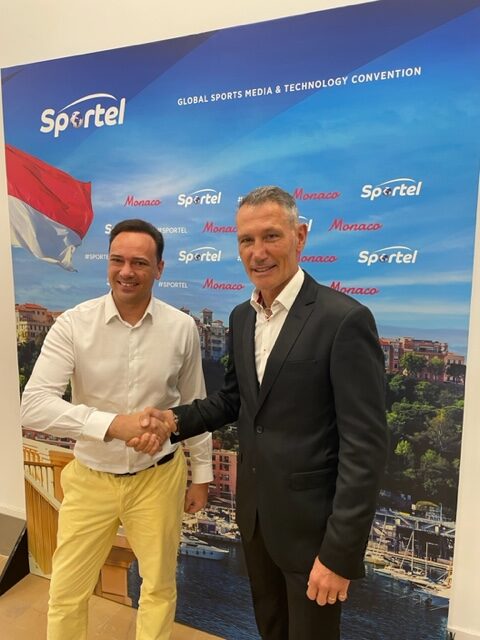
SPORTEL Heads to Buenos Aires

SPORTEL will break new ground in 2024 with its first-ever event in Buenos Aires. The spring event dedicated to the Americas has been held on the fringe of Latin America in Miami numerous times and has also taken place in Rio de Janeiro. Now it will be held in a Spanish-speaking capital for the first time. The SPORTEL Rendez-Vous Buenos Aires is scheduled for May 14-15, 2024.

“Developing the Americas market as a whole is one of our priorities,” said Laurent Puons, CEO of Monaco Mediax. “South America only represents 5% of the participants at our flagship autumn event in Monte Carlo. The capacity for growth is exponential.” 

For the new event in Argentina SPORTEL is joining forces with J & S EG, represented by Jorge Strika and Sebastian Ibarrondo, together with Lions Sports & Media, represented by Daniel Tamborini and Martin Rey, and Bamboo Business, represented by Marta Ortega. 

This year’s SPORTEL Monaco will be held October 23-25, at the Grimaldi Forum as usual.

The second SPORTEL Rendez-Vous Bali takes place February 22-23, 2024.  The event is organized in partnership with Transvision and in collaboration with Java Festival Production and Cubmu. The event gives companies from Europe and the Americas an ideal opportunity to reconnect with the key decision makers from Indonesia, Asia and Oceania. More than 55% of the first edition’s participants from the APAC market.

“AI in Sport? It’s only going to get bigger, faster and (hopefully) better”

The time has come to embrace AI in sport – whether we like it or not. David Granger, content director at Cinch looks at where we’re heading and where things can occasionally go wrong.

The Emirates Stadium is wrapped in flags, images and banners celebrating Arsenal’s former players and past glories, but eyes were firmly on the future this month as it hosted an event examining the state of artificial intelligence. And where we’re going. 

Generative AI for the Creative Industries had among its delegates, representatives from our hosts Arsenal, Scuderia Ferrari, Manchester City and Wimbledon to learn more about what AI is currently doing and how it’s going to affect sport in the future.

Because we’re currently in a period of early adoption and – as we had with the internet, with ecommerce and with social media – there  are going to be mistakes made, errors and failures which seem almost comic to the outsider. 

One blunder which made the headlines was the headlines created by an AI-generated sports reporter. 

It seems like a decent idea – report the facts of a match, but do it using artificial intelligence, cut out the writer’s fee, the travel time and expense and the cost of a half-time hotdog. In the US, Gannett newspapers had been using an AI service, according to the Washington Post, which created high school sports reports. 

The concept went viral though when some of the reports didn’t exactly pass muster. An example? Well, it’s been deleted now, but this is one heck of a report: 

“The Worthington Christian defeated the Westerville North 2-1 in an Ohio boys soccer game on Saturday.” 

So, it’s not all plain sailing for the early adopters.

However, the next phase is when the lessons from these early adopters are noted and learned and the next phase – I’m going to call it as the early adapters’ phase – get hold of the technology. And this is already happening. 

For the sceptics, however, we can already see examples where AI is advancing the fan experience (FC Barcelona’s chatbot), virtual training, augmented reality at baseball stadiums, virtual training for cyclists, Manchester City’s virtual fan experience or the NFL’s augmented reality. It’s affecting how we train for, prepare, participate in and spectate sport. And things are only just getting started.

From the conference speakers, there are several areas which need to be addressed by every organisation: 

Acceptance – from the chief executive to the junior ticket office operator, like social before it, AI needs to be understood and accepted

Integration – making sure AI is used to make our lives easier

Governance – ensuring no sensitive team, federation or athlete is uploaded into prompts

This week also saw the launch of the 2024 Sports Technology Awards – if ever there was a content which celebrated the advent of AI, it’s this one. Take a look at last  year’s winners and the majority are either explicit in their use of artificial intelligence or it’s used in their offering.

AI is not going away – quite the opposite. Whether we like it or not – and it certainly has its detractors – like social and websites before it, what once seemed far-off, foreign and futuristic, is very quickly going to be the mainstream.

Can the new WWE+UFC venture by Endeavor avoid a TKO (technical knockout)?

TKO (Technical Knock Out) a knockout declared by the referee who judges one fighter unable to continue. Carlo De Marchis pens down this month’s business index.

Let’s talk about TKO, the new publicly traded combat sports and entertainment powerhouse.

Facts and forecasts

Endeavor owns 51% of the newly formed TKO putting together WWE and UFC. They bought UFC for $4 billion in 2016, WWE is publicly traded at $8.37 billion. The new outfit generated over $2.4 billion in revenue in 2022 with a 10% annual growth rate since 2019, according to Endeavor. Expected annual operating synergies of $50-$100 million, not unrealistic as UFC did $70 million savings in two years under Endeavor.

People and places

Ari Emmanuel, mighty CEO of both TKO and Endeavor, same as Mark Shapiro COO for both. Dana White is UFC CEO, and Nick Khan ex-CEO is now WWE President. Controversial enough Vince McMahion is Chairman, not sure it’s a great idea based on the many conduct issues.

Merging companies and cultures is not easy, especially as they start from different places with different vibes – Las Vegas for UFC and Stamford, Connecticut for WWE.

Product and growth

This deal creates the new super-destination of combat sports with a combined content IP, production strength, audience footprint and marketing power that is enviable.

Creating mega platforms around content and media seems to be a trend but also the recipe for sustainable business in this space, so TKO seems well positioned in that regard.

WWE and UFC media rights, soon to be renewed, are a clear avenue for growth, if we assume the joint proposition will be even more appealing to media companies, as well as expanding the footprint even more internationally.

The obvious challenge is about merging (to whatever extent) and like any operation of this size – and we have seen many recently – the risks are well known.