UPCX booked as the official blockchain payment for the World Aquatics Championships

UPCX-Platforms , the developer of an open-source payment system built on a high-speed blockchain optimised for financial services will be supporting World Aquatics events, including the World Aquatics Championships – Doha 2024 and the World Aquatics Swimming World Cup 2024.

The World Aquatics Championships will take place in the Qatari capital city from 2-18 February 2024 and will feature six aquatic sports – swimming, water polo, diving, artistic swimming, open water swimming and high diving.

The World Aquatics Swimming World Cup 2024 tour will take place in three Asian cities over three consecutive weeks in October and November 2024. The events will feature three days of action-packed racing in the short course (25m) pool in Shanghai (CHN), Incheon (KOR), and Singapore (SGP).

As the international governing body overseeing six aquatic sports, World Aquatics’ agreement with UPCX will bring awareness to UPCX’s blockchain-driven payment platform.

During the World Aquatics Championships and Swimming World Cup, the UPCX logo will feature prominently on athlete race bibs as well as across a range of digital content.

UPCX is dedicated to improving financial solutions and payments using blockchain technology, with a focus on ensuring a readily accessible approach for consumers.

“We are excited to have UPCX join us for the World Aquatics Championships in Doha this February. World Aquatics and our athletes have proven ourselves to be innovators. We are always looking towards the latest technologies to improve performance and engagement with our audiences,” Nowicki said. “This collaboration is entirely consistent with the way we embrace innovation and we look forward to exploring new domains with UPCX.”

Through their partnership with the World Aquatics Championships – Doha 2024, UPCX anticipates enhanced global brand recognition.

Yutaka Imaizumi, Chief Marketing Officer of UPCX-Platforms PTE. LTD., said: “We are honoured to support the World Aquatics Championships – Doha 2024 and to bring awareness of UPCX to a global audience. Services utilising blockchain have no borders, and from the beginning, UPCX has set a global strategy to develop its business targeting users worldwide.

“We hope that this event will provide an opportunity for many people to become familiar with UPCX,” Imaizumi continued.

Chris Roberts, the new IBA CEO, talks about the boxing Federation’s plans

Last year International Olympic Committee withdrew the recognition of International Boxing Association (IBA) at Olympic events. However, the IBA is still very positive and is accelerating its growth globally. iSportConnect’s Taruka Srivastav spoke with IBA CEO Chris Roberts in Dubai to delve into their future plans.

Chris, tell us about the discussions which took place at the IBA Global Boxing Forum and Congress in Dubai.

We encompassed everything that we possibly could to make the IBA Global Boxing Forum and Ordinary Congress an exceptional worthwhile weekend for everybody who travelled there to take part in these milestone events. We brought all of our National Federations members into the debate, and it was a good opportunity to inform everybody about what we’re doing within IBA currently, what happened in 2023 and the plan for 2024. The event calendar for 2024 will include many Champions’ Nights, an increase from 10 editions last year. Serpukhov, Russia is stated to host the first of these on 3 February. 

What is more, the IBA calendar is busy with three major events where World Championships prize money was doubled both for men’s and women’s elite events. 

The IBA Women’s World Boxing Championships 2024 is to take place in Astana, Kazakhstan, with a number of experienced National Federations in talks over the IBA Men’s World Boxing Championships. In addition, Poreč, Croatia is to host IBA Youth Men’s and Women’s World Boxing Championships in late October – early November. 

The year 2023 ended on a positive note as some countries have joined back like the USA with its newly established boxing entity, as US Boxing Federation led by Roy Jones Jr, and Switzerland with its governing body SwissBoxing. Oceania gained two new members as the Norfolk Island Boxing Association and Tuvalu Amateur Boxing Association were also accepted to become permanent members of the IBA . We were clearly conscious about our National Federations and where they’re going and what they’re doing. Because every National Federation is important to us and we try to reach out as far as we can to, to develop boxing in all corners of the world.

Will we see more National Federations join IBA this year?

We have opened up the doors for new National Federations to come in which will bring in a new entity to increase the worldwide representation and allow boxers from these countries to compete in the IBA events. We’ll continue to do that for the sake of our athletes, first and foremost. 

We saw the German, Czech and the Dutch National Federations’ memberships being terminated by the Congress as well. Tell us about it. 

Our focus is to support our people and try to actively encourage them to create conditions for the athletes. We have other organisations within those countries that are willing to step forward and be part of the IBA. 

Athletes in those countries deserver to be looked after and managed accordingly. We actively encourage recently terminated federations to look at opportunities to explore and to develop new organisations to become part of the IBA family – we support and actively encourage new members.

Chris, you have recently joined the IBA as Secretary General & CEO, so how are you managing everything? Like what’s the strategy and approach?

I like to break things down. The greatest thing for me is the team behind me. We’ve got a great President; and his vision is absolutely brilliant. 

It’s been challenging and very exciting to lead the team into big events, help the organization excel and take care of our athletes and coaches. 

We are working on a brand-new organisational strategy and calendar to ensure that best practices are in place and boxing continues to develop worldwide. 

Will we see IBA gain more commercial global sponsors?

We have got some interested parties, and we will be finalising and extremely large sponsor soon. We’ve had a good number of interested parties that want to come on board to support what we’re doing; the concept of our new calendar and the Champions Night product has brough a whole new exciting dynamic to the World of Boxing

Portas Active Cities Index reveals relative performance of cities across policy and events

In this week’s View From Middle East piece Patrick Raupach, Partner and Head of Public Sector at Portas Consulting, explores the transformative endeavours within the Active Cities Index framework as cities strive to revolutionize their sports delivery landscape.

Stockholm leads the way in the Active Cities Index!

Globally, our great major cities are the beating heart of sporting life. Equally, whether it is hosting the Olympics or investing in community clubs, sport is a key ingredient to a vibrant and vital city and a crucial part of the future health of the global population. 

What is the Active Cities Index?

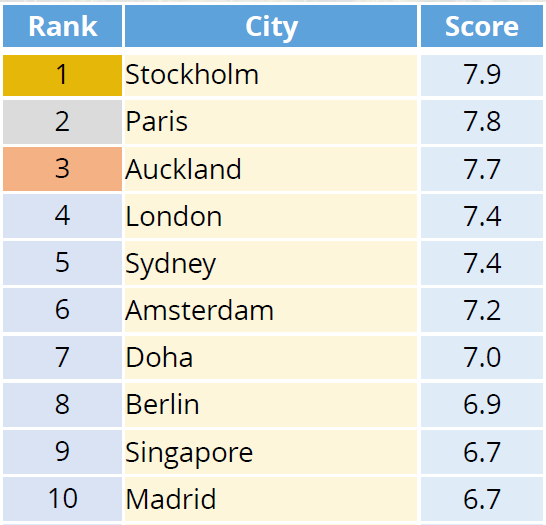
The inaugural Portas Active Cities Index reveals relative performance of cities across infrastructure, events and policy. This study provided an objective assessment of sports delivery in a landscape of sparse data. 

Th Active Cities Index aims to help cities harness the power of sport. Taking an innovative and holistic lens that looks beyond traditional event dollars, but considers policy, delivery and infrastructure; we go beyond quantity to assess quality and fit; and throughout, we have taken a data-driven approach to provide the cities with a baseline for action. 

Why do we need it?

In the dynamic urban landscape, a transformative trend has emerged – the “sportification of cities.” With the World Health Organisation underscoring the alarming prevalence of noncommunicable diseases (NCDs), cities are strategically embracing sports as a catalyst for change. This movement goes beyond flashy stadiums, integrating sports seamlessly into urban planning and fostering vibrant cultures. Recognizing the multifaceted benefits of sports – from economic growth to improved public health – cities prioritize sports infrastructure development to address NCD risk factors like physical inactivity.

Yet, as cities actively compete for residents, tourists, and investments, a critical challenge surfaces – the lack of robust data for evidence-based sports delivery decisions. This is where the Active Cities Index steps in as a groundbreaking solution. In a world where policy-makers often grapple with a dearth of comparable benchmarks, the index establishes a universal measurement framework, offering an objective ranking and creating a platform for sharing best practices. It is an empirical, data-driven tool empowering cities to gauge their sporting position globally, fostering a dynamic dialogue, and facilitating invaluable exchanges of insights. As cities vie for prominence in the sporting arena, the Active Cities Index emerges as a key differentiator, not only shaping their appeal but also contributing to a sense of identity, pride, and social cohesion. In essence, it becomes the guiding compass for cities aiming to optimize sports delivery and create inclusive, dynamic spaces for residents and visitors alike.

What were the scores?

The Active Cities Index employs a comprehensive Measurement Framework comprising three key components to assess the sporting landscape of 25 selected cities. The first component focuses on Infrastructure, evaluating sports facility provision to enhance access and encourage sports participation. The second component, Events, assesses a city’s capacity to host events, recognizing their pivotal role in driving mass participation, elite performance, and economic benefits. Lastly, the third component, Policy, delves into the lifecycle of sports strategy, emphasizing the significance of effective planning and implementation for successful sports delivery. The selection of these 25 cities was meticulous, considering factors such as size, a history of hosting major events, and geographical spread across the world, ensuring a diverse representation in the initial Active Cities Index. 

TOP 10 CITIES 

Stockholm earns the top spot in the inaugural Portas Active Cities Index, emerging as a notable outlier in infrastructure. 

Securing the second position is Paris, strategically prioritizing sports delivery, particularly as the city gears up for the 2024 Olympics.

Auckland closely follows in third place, emphasizing mass participation as a key focal point, showcasing a distinct commitment to diverse sporting outcomes.
 

What’s next?

Going forward, Portas consulting is uniquely placed to grow the index by continuing to expand the results to cover additional cities and additional components of sports delivery, such as participation rates. We look forward to working with all the cities to build out this index over the coming years. We hope the Portas Active Cities Index provides cities with a platform for learning, sharing, and friendly competition to make every city a great global sporting city. You can read the full report and methodology HERE

ABOUT PORTAS

Portas is the leading global strategy consultancy dedicated to sport and physical activity. Our mission is to help our clients harness the power of sport and physical activity for the benefit of all. Find out more at portasconsulting.com

Member Insights: Predictions of trend in the sports biz for 2024

The new year always heralds a flurry of articles predicting the likely trends for the sports industry over the coming year. In this Member Insight piece Richard Brinkman summarises some the key trends from these articles and observes that a simplicity of approach might be the best way to manage the wide range of challenges and vast array of opportunity that the sports biz appears to face

Beyond a number of consistent and obvious comments around in women’s sports and an impact from a European summer Olympics there were some interesting observations across a range of different topics. One of the most interesting things being the sheer range and breadth of themes that different commentators offered up as being business critical across the coming year.

Below I have tried to summarise and collate the top 10 key sports business topics that I observed in the articles I read:

  1. Impact of technology on the sports business – this can be applied a range of channels such as distribution of content/amplification, player performance, fan experience and revenue generation.

  1. Esports – is its influence growing and can its way of working with its core audience give a glimpse to the future of traditional sports business models.

  1. Athlete branding and Personal brand endorsements – is this really anything new and does it represent a new more cost-effective route to cut-through. Or is it high-risk and merely setting the athlete up for distraction and criticism?

  1. Globalisation of Sports leagues – how can sports best structure their competitions to appeal to international markets? Super Leagues, LIV and franchise cricket – market driven disruption or ego-driven greed?

  1. Sustainability – are eco-friendly practices practical in an ever-more globalised industry and do the audience actually care as much as sponsor brands do?

  1. Financial challenges – post COVID-19 and in a new era of more expensive borrowing how can the short-term initiatives that will drive long-term growth be financed?

  1. Innovations in fan engagement – what is the return on improved fan engagement and how best to leverage certain techniques amongst discreet fan segments.

  1. Role of Data analytics – the continuing battle to use data better in sports marketing and fan engagement strategies whilst analytics continue to revolutionise player performance and business decision-making.

  1. Legal, ethical and governance issues – how are decisions reached and who is enacting them given that they can literally make or break not just livelihoods but also entities that have a social value to many that far outweighs any sport’s financial value.

  1. Diversity & Inclusion – Social responsibility vs strategic business imperatives. Widening fan appeal and audiences, increasing financial success and driving positive societal impact without losing or diluting what a sport already has.

This is by no means an exhaustive list of all I read about! However, it nonetheless covers a lot of ground. There is an awful lot for the leaders of any organisation within the sport business to potentially think about. Indeed, I am sure that, at times, devising the optimal route forward can seem quite bewildering! 

However, help is at hand! And it was all across our (UK) screens in early January. Courtesy of Matchroom the PDC World Championship darts and Masters Snooker events (both at Alexandra Palace) remind us that when operating in a maelstrom the best tactic is to keep it simple. There is a purity, rawness and straight-forward quality to their approach that, whilst warts and all and certainly not to everyone’s taste, is very winning.

This simplicity of approach is, of course, anything but simple and obvious. However, it is built around firm foundations and a consistent approach that can be replicated by any sports organisation.

The first building block is to double-down on a strong and clear “reason why”. In Matchroom’s case this is to make the sport and event they are delivering as entertaining and popular as it can possibly be without losing sight of its heritage. 

They then have clear, defined and measurable goals as to how they are going to best do that. These will be different for snooker and darts but it will be a consistent approach with the same end in mind.

In defining these goals strong consultation involving others (such as players, venue, sponsors, broadcasters etc) will have taken place, as will as a good deal of thinking around possibilities and priorities, in order to produce a plan that all stakeholders have strong levels of self-belief in. Each stakeholder is then empowered with the personal responsibility to enact their element of the plan but in such a way that all stakeholders appear ultimately to be pulling in the same direction.

In so many sports the governing bodies do not start with a strong and clear “reason why” – their well-intended purpose becomes too stretched and/or worthy, akin to trying to be all things to all people. This will clearly dilute and muddy goals and lead to a situation where too many different stakeholders do not have belief in the plan, do not “buy in” and have competing priorities. Often poor governance (which means that the correct people are not involved in the right way from the outset) is to blame for this.

So, given the time of year, if I were to recommend one resolution to all sports organisations it would be to keep it as simple as possible. Of course, be mindful of the context, possibilities, challenges and opportunities open to you but when it comes to building a plan follow a as simple a path as possible.

Paris will sail through choppy Olympic weather in style

You don’t hear much being said yet about the year’s biggest sports event. There is a long way to go until the Olympic Summer Games start in Paris on July 11. iSportConnect’s Jay Stuart pens down his thoughts.

I can’t help feeling that some of the buzz might still be missing a few months down the line. There are several obvious reasons why Paris may need to work harder to gain traction with the public. One is the after-effect of Covid. The impact of the pandemic on the Olympics was disastrous. The sacrosanct four-year Olympic cycle was thrown out of kilter. Tokyo had to be delayed by a year. And there were still Covid restrictions in effect when the Games finally took place. The Summer Olympics in Japan had been the most hotly anticipated in decades. Sadly, what should have been among the most memorable of Games have already been largely forgotten. Coming only three years later instead of the usual four, Paris needs to remind people what an Olympic fortnight feels like.

Another challenge is the conflict raging around the world. The war between Russia and Ukraine and the violent mess in the Middle East overshadow any good vibes from the Olympics. When people are killing each other it’s hard to care as much about who can run faster or jump higher, much less win a competition in break dancing (a new sport on the programme in Paris).

Moreover, as much as the IOC likes to talk about how the Olympics bring more countries together than the UN and the Games are a force for peace ¬ and, yes, it’s an achievement getting athletes from the two Koreas marching side by side in the Opening Ceremony ¬ when the shooting starts, the whole brotherhood of man thing looks like a bit of a sham. 

Paris may aim to steer well clear of politics. But decisions on which athletes can participate and under what conditions are made by the IOC, not the organisers. The politics will be there this time, possibly on the boil.

The possibility of domestic unrest in France or terror threats might put Paris more at risk of disruption than, say, Los Angeles in 2028, but I’m not going to get into that at all. It’s probably bad luck to mention it, sorry.

The biggest challenge facing the 2024 host city is not a new one. It’s about relevance. Why should people watch the Games? And I put it that way because the whole business model depends on audience numbers, whether on broadcast TV or streaming. Everybody talks about the value of data, but at the end of the day for most of the TOP sponsors what really matters is the audience figures. 

Let’s be honest, the appeal of the Games, especially for young people, isn’t what it used to be. From personal experience I know that many kids are hardly aware of the Games when they are going on and don’t watch them at all. And I would hate to have any money riding on the ability of the man or woman in the street to name even a single athlete who will take part in Paris. 

That said, the Games are still the biggest and most expensive event in the world by a long way and that counts for a great deal indeed, especially with non-fans who are not interested in sports and don’t pay attention to other events. The gigantism that has put hosting the Olympics out of reach for all but a few cities is actually a saving grace. Big and expensive has its own fascination. Lots of people will always watch a luxury yacht sail by. 

And you can be sure that Paris will be the prettiest yacht they have ever seen. 

Do people care about canoeing or archery or modern pentathlon (if even know what that is)? Do they care about medals anymore? 

I’m not sure it matters at all.

All that really matters is that they are entertained. And my prediction is that Paris 2024 will be great entertainment for a global audience ¬ because Paris as the host city will be the real star of the show. 

Beach volleyball at the foot of the Eiffel Tower? 3 x 3 basketball in the Place de la Concorde? Equestrian events at Versailles? 

Nothing else on the sporting calendar can offer anything so visually and culturally appealing. 

And only the Olympics can galvanize a great city to such an extent. That’s why the Games remain in a class by themselves.

Hexagon Cup scores ITV’s first padel deal

The Hexagon Cup, the innovative new padel tournament has secured ITV as its UK broadcast rights holder as it prepares for its first event, starting at the end of this month in Madrid.


A major coup for the tournament in its inaugural year, the deal will see the Semi-Finals (Saturday 3 Feb) and the Finals (Sunday 4th Feb) live streamed on ITVX, with a highlights programme shown on ITV4.

The partnership marks the first time ITV has ever broadcast a live padel tournament and confirms the growing interest the sport is attracting, in the UK, and across the world.

The Hexagon Cup has gained widespread acclaim for its innovative and equality-based team format, top-tier padel players, and celebrity teams including the prestigious names of the Team AD/vantage by legendary tennis player Andy Murray, ElevenEleven Team USA, owned by U.S actress Eva Longoria, Rafa Nadal Academy powered by Richard Mille team, and RL9 by the Barcelona FC footballer Robert Lewandowski. 


Tim Godfrey, Strategic Advisor, Hexagon Cup, says: “This partnership with ITV marks a major win, not only for the Hexagon Cup which now has a leading, free-to-air home in the UK, but also for British padel fans who are picking up a passion for the playing the sport, and can now watch the best players in the world, live and free.”

The championship’s global TV coverage will be produced by London based sports innovation specialists Aurora Media Worldwide.

Niall Sloane, Director of Sport, ITV, added: “We are looking forward to ITV X showcasing this exciting new sport which has caught the attention of so many fans.”

Hexagon Cup Team Owner Andy Murray, who has already made an investment in padel in the UK with Game4Padel, is partnering with Arran Yentob and Dani Vallverdu, founders of AD Global Sports as Co-Owners. AD Global Sports was set up to invest in the development of sports in the UK and globally.

The partnership reunites Dani Vallverdú with Andy Murray, whom he coached from 2010 to 2014, during which time Murray won his first Olympic gold medal at London 2012, and two Grand Slams at the 2012 US Open and the 2013 Wimbledon Championships.

‍Team AD/vantage Co-Owner Arran Yentob commented: “Padel is gaining more and more traction and attention in the UK. Having ITV confirmed as the Hexagon Cup’s UK broadcast channel is great news for all fans and we hope will create more excitement and engagement in the sport itself and hopefully support for team AD/Vantage!


Born under the motto “For the Fans. For the Players. For the Game”, the Hexagon Cup features six teams, each featuring a male, female and Next Gen pair who compete for an impressive prize pool of one million euros.

For its first event, the Hexagon Cup will take over the country’s historic Madrid Arena from January 31 to February 4. During the tournament itself, the six teams are divided into two qualifying groups and compete in a series of exciting head-to-head matchups. Only the top two teams from each group will advance to the finals, where the inaugural Hexagon Cup champions will be crowned.

IOC includes AB InBev as the worldwide Olympic partner

The International Olympic Committee (IOC) announced that AB InBev, the world’s leading brewer, will become a Worldwide Olympic Partner (TOP Partner) through to 2028.

Corona Cero zero-alcohol beer will be the global beer sponsor of the Olympic Games, highlighting the IOC and AB InBev’s commitment to responsible consumption and building a better world. Together, they will reach billions of Olympic fans around the world with messages of connection, moderation and celebration.

IOC President Thomas Bach said: “The IOC is delighted to announce its new partnership with the world’s leading brewer, AB InBev. Our organisations share a vision of supporting sport and athletes. As a global brand, Corona Cero will engage fans around the world in celebrating the magic of the Olympic Games and cheering for the athletes’ sporting achievements. In line with Olympic Agenda 2020+5, both of our organisations are actively contributing to the UN Sustainable Development Goals. As the IOC redistributes 90 per cent of all its revenue to support sport around the world, ultimately the revenue from this agreement will support every Olympic team and their athletes. Together, we look forward to creating a future with more cheers!”

AB InBev CEO Michel Doukeris said: “Beer and sports are better together, so we are proud to be the first beer sponsor for the Olympics at the Worldwide Olympic Partner level. Beer is the beverage of moderation and choice, and so it’s only fitting to lead with our fast-growing zero-alcohol beer, Corona Cero, for this occasion. This partnership illustrates the opportunity for our category to positively impact and engage with billions of fans around the world, ushering in a new era of Olympic spirit and cheers while supporting favourite countries and athletes as they go for gold. We look forward to partnering with the IOC, and activating at the 2024, 2026 and 2028 Games.”


With centuries of brewing history, AB InBev has seen countless new friendships, connections and experiences built on a shared love of sport and beer. Sport is a strong force for positive change, and AB InBev brands are pleased to be a part of that legacy with decades of historic, award-winning and responsible sports marketing. AB InBev is committed to accelerating continued progress towards responsible alcohol consumption and moderation worldwide and will work to further that effort by featuring Corona Cero, its fast-growing zero-alcohol beer brand, as the leading global Worldwide Olympic Partner brand.

Both AB InBev and the IOC are committed to creating a better world for the athletes, fans and consumers around the world by actively contributing to the UN Sustainable Development Goals. Sustainability is important to the AB InBev business because brewing great beer depends on a healthy, natural environment and thriving communities.

AB InBev Chief Marketing Officer Marcel Marcondes said: “As we continue to invest to grow the category, we are excited to bring our beer brands to the Olympics and be a Worldwide Partner for these amazing events. Corona is one of our fastest-growing global brands, reaching consumers across 180 countries, and through this partnership, we expect Corona Cero to accelerate no-alcohol beer growth and moderation for fans all over the world. In the United States, we will support the Olympics through the Olympic and Paralympic Games LA 2028 with Michelob ULTRA, a superior light beer that celebrates an active lifestyle.”

Jiri Kejval, Chair of the IOC Revenues and Commercial Partnerships Commission, said: “AB InBev manages some of the world’s most recognised brands. The company will be a natural addition to the TOP programme, which brings together some of the world’s leading companies with a shared vision of supporting sport to build a better world.”

The agreement also includes marketing rights for the International Paralympic Committee (IPC) and the Paralympic Games through the IOC-IPC long-term collaboration agreement.

Extreme E to be discontinued as the focus shifts to Extreme H

Extreme E will be discontinued post the finale in the US as the focus of the owners will shift to developing the world’s first hydrogen off-road series.

Extreme H track testing is well underway. The new race car, powered by hydrogen and at the forefront of sustainable technology and innovation, at full speed will be unveiled later this year and finally Extreme H will launch in 2025.

In his column on Extreme E website, Managing Director Ali Russell said: “There is so much to be excited about in 2024 for our championship. Not only will our new Extreme E season get underway in February, but plans for the launch of Extreme H – a world-first in motorsport – are now well underway.

There were plenty of milestones for us last year regarding Extreme H, which made it a hugely successful one – we signed a non-binding Memorandum of Understanding with the Fédération Internationale de l’Automobile (FIA), setting out a framework to create the first-ever hydrogen off-road racing world championship, and then followed that up with the launch of a pioneering hydrogen technical working group, where we will collaborate closely with the FIA and Formula One.”

iSportConnect Sports Tech Index powered by SportsTech Match – 2023 Wrap-Up

Who’s hot in Sports Tech? Who is doing deals, launching new products and generally doing some of the best work in the sector? That’s what the Index attempts to dig into. Whether established players or the up-and-coming stars, we go a little deeper for you…

Following ten editions of our sports tech index we round off the year and take a breath to recognise the sports tech companies that finished 2023 on top.

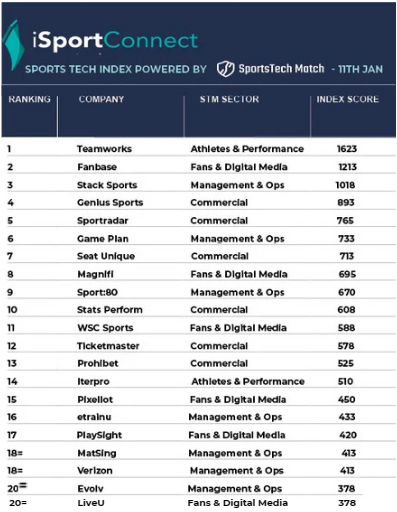
2023 saw almost 40 different companies feature in our 12-monthly rolling ranking of the top 20 most active sports tech companies and four contested the number one spot. Seat Unique (ticketing) topped our first ranking of the year in early 2023 and was followed by Sport:80 (membership management platform), Fanbase (fan engagement platform) and Teamworks (communication and collaboration platform) at the top respectively.

In our final index of 2023, which includes activity reported up to the end of December, LiveU (IP video transmission and live streaming) are the only company to make a first-time appearance on our list (at #20).

Our top five at the end of 2023 (drum roll please), in reverse order, sees Sportradar (sports data and betting) at #5 (boosted by recent deals with ATP and Sportsnet (Canada)), Genius Sports at #4 (helped by a recent FIBA partnership expansion), Stack Sports (SaaS platform offerings for the sports industry) at #3, Fanbase at #2 (consolidating their position with two new partnership announcements in December) and Teamworks at #1.

Congratulations to all companies who have appeared in our index over the year and a special congratulations goes to Teamworks who have consistently announced new partnerships as well as high-scoring partnership expansions / renewals throughout the last 12 months.

Due to popular demand, the Sports Tech Index will continue and move from a monthly to a quarterly cycle in 2024.

Want to know more?

Subscribe to the SportsTech Match monthly newsletter for an overview of the activity that generated points towards the index this month (via the footer on the website).

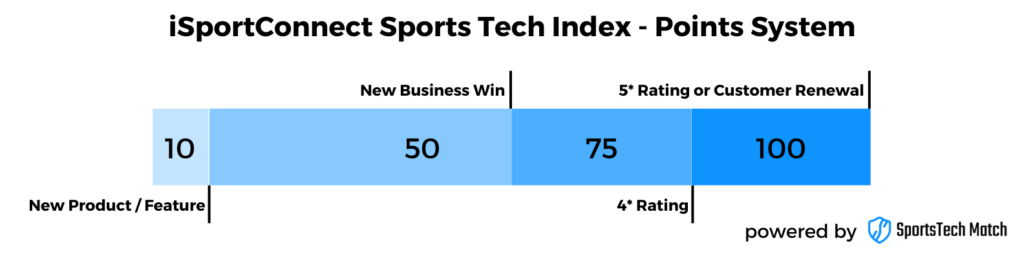
The iSportConnect Sports Tech Index is designed to help rights owners and investors quickly assess who is “hot” from a product and new business perspective and provides sports tech vendors with an incentive to focus their PR announcements on what matters to the market. It follows a simple scoring system (see below).

The iSportConnect Sports Tech Index was published on a monthly basis throughout 2023 on iSportConnect.com. Click here to read more about how the Index is calculated.

How Southampton FC is differentiating itself in a competitive market

Sport Republic, a London-based investment firm, completed the takeover of Southampton in January 2022, buying Gao Jisheng’s controlling 80 per cent stake in the club and since then the club has adopted a refreshing marketing and branding strategy. Despite being relegated from the Premier League after 11 years, Southampton FC have continued to do well off the field. iSportConnect’s Taruka Srivastav spoke with Southampton FC’s Chief Commercial Officer Charlie Boss to know more.

Charlie, you joined Southampton FC recently. Tell us about your current role and your previous experiences.

I formally joined the club in April last year, which was almost exactly two weeks before the club got relegated from the Premier League. In many ways, this has been a real opportunity for the club to make some changes that will help us accelerate and get ready for the future. Before joining the club, I spent two years working for the Jockey Club, which is the largest commercial operator in British horse racing. Before that, I spent nearly a decade working for Disney on the ESPN brand. 

I always knew I would end up back in sport because there is just something so special about being at a live sporting event and feeling like you had a tiny part to play in it. In November, we had a women’s game with our team playing Arsenal in the Conti-Cup. We had 13,000 fans there, which is a new record for Southampton FC Women. It was just spectacular to see those fans cheering a women’s team that wasn’t even professional five years ago, taking on Arsenal and taking them right away to injury time. 

What is the marketing and branding strategy of the club and women’s team?

Southampton FC has a unique reputation, both across the UK and internationally as one of the leading football clubs for developing talent. Our academy has produced some of the most amazing players like Gareth Bale, and more recently players like James Ward-Prowse. And because of the quality of our academy, many UK fans have always had a soft spot for the club. 

We recently filmed a docuseries with CBBC called The Football Academy which followed the boys’ and girls’ teams at our youth academy as well as the parents and coaches in the U8s to U15s over a season. Netflix had F1’s Drive to Survive and with this, new audiences came through, so with CBBC we saw a real opportunity. We’re now on to our second season. It’s an amazing show and something I’m really proud of. 

From a marketing and branding perspective, we want to position ourselves as the leaders in the family space. For the last 10 years, at our men’s games the average age of our audience has been getting younger. And the women’s side helps bring this full circle. At our match against Arsenal Women, which had a record crowd number of 13,000 fans present in the stadium, it was mostly families. 

To be a leading family club, you just can’t have a great men’s team, but also a great women’s team. We try to treat the two as equitable as possible. For example, they both train at our Staplewood training ground, and they both play their games at St. Mary’s Stadium, which is really unusual, but it’s part of our intent to give both teams the platform to engage our fans and to engage new families.

What kind of brands do you currently have on your roster?

Our sponsorships are really interesting. Most clubs have the same front of shirt sponsor for both the men’s and women’s team. We have Sportsbet.io, who are the front-of-shirt sponsors for our men’s team while we have Starling Bank for our women’s team. This was a deliberate decision, because although Sportsbet.io is committed to both teams and are involved in both teams, there was an opportunity to bring a new brand into the women’s team that really wants to focus on the women’s game.

Starling Bank became the first organisation to sponsor our women’s team independently of the men’s. The three-year deal includes a number of initiatives launched by Starling and the club to create more grassroots football opportunities for women and girls. Our programme, Coaches of Tomorrow has been really successful and has seen 45 women from the region train to become FA accredited coaches.

So, Southampton FC wants to be like Richmond FC in Ted Lasso?

I do think there is that element of cultural change around the globalisation of football. We’ve got Ted Lasso and its American audience and then we have got the Wrexham documentary and that wider audience. Although Southampton FC isn’t yet a global brand, like the fictional Richmond AFC or Wrexham, I do think that we can speak to a global audience of children. There are so many kids around the world who are passionate about football and because of our Premier League history, and hopefully our Premier League future, I think we’ve got an amazing opportunity to engage them.

As a club, you just cannot partner with anybody, you have to ensure that your values align with the brand’s value. So what are these important things that you look for before you know, committing to a partnership?

We follow what we call the shared values model. Before we embark on any partnership, we sit down with a brand, and we align on what is the common belief which will make this partnership work for everyone. 

For example, with Sportsbet.io we will figure out what is it we’re going to try and do.  What are we going to try and communicate to our fan base and how are we going to do it. 

With relegation from the Premier League, we really wanted to bring more local businesses into the fold and create that bridge into the community that perhaps had been eroded after so long in the Premier League, where the platform is this global media platform. We have brought back one of my favourite sponsors, Draper Tools. A local business, that are quite famous because they were front of shirt sponsors back in the 1980’s. This season they’ve been able come back into the club, to be back-shirt-sponsor of the men’s team as well as the Women’s First Team back-of-shorts.

They are so engaged as a sponsor because what we’re both trying to do is celebrate this shared rich history we have. As an example of that, the chief executive will send messages to his staff coming into the office on days where they’re all wearing Southampton shirts, and it feels like something they really deeply care about. 

Being connected at that level, sharing the same interest, and sharing the same celebrations and losses together is something which is born out of love and passion rather than a very commercial partnership. Commercial aspects are important, but the passion is what puts these brands on your agenda.

We’ve also been working closely with our fan advisory board and in the last ten months or so we’ve really tried to bring them closer into our decision making, because ultimately, they can help us bridge the communication to fans. As an example of that, when were relegated, we were thinking through what our season ticket pricing should look like and how we do that in a way to bring as many fans back into the stadium as possible. They helped us not just around what the pricing should look like, but how we communicate that to fans, and the result of that is we’ve sold more season tickets in the championship than we did last year in the Premier League, which I think is pretty astonishing.

Is Southampton FC looking to do more with smaller startups and how would you get more of them involved, etc? Any plans? 

This actually plays really nicely into our ownership model. Our owners, Sport Republic, is a London based sports investment firm founded by Rasmus Ankersen and Henrik Kraft and financed by lead investor Dragan Šolak. Solak is a media entrepreneur, and our club Chairman Henrik Kraft is from a media and technology background and is also an active early-stage investor in sports technology companies such as Tonsser, Sportlight, Wave.tv, and Oura Ring. The vision for Sport Republic is to create this ecosystem where they invest not just in football clubs, but in sports technology. And we can get access to those technology companies and use the club to help them refine their offering so they can work with us directly to create something that works for football clubs.

This not only benefits just Southampton FC as the sports technology company can then go and monetize their product. So, an example of one of their investments is an app called Tonsser which allows undiscovered talent to essentially showcase their skills to professional clubs. It’s already a very successful app in France and it launched in the UK with Southampton FC in 2022, where we did an event at our Staplewood Training Campus. Our owners also own a club called Valenciennes FC in France, and they’re now doing something very similar based on our experience. 

How important is sustainability for the club and what is the kind of work you are doing around it?

We have a sustainability strategy called the ‘Halo Effect’ which is really designed to bring together all the different aspects of sustainability. The Halo Effect has a dual meaning, inspired by our crest and club’s heritage, whilst also signalling the combined positive impact we hope initiatives will have on our people and community.

We think about sustainability in terms of the environment, governance, our relationship with the fans, and in terms of behaving responsibly in the community. Back in 2019 when the Sports Positive League started, Southampton FC was near the bottom and in just three years we were one of the best, finishing fourth in the 2022 Sports Positive League. 

As part of our environmental efforts, we have an initiative called the “Home Grown” initiative. Every time one of our boys or girls from the academy makes their first team debut for the men’s or women’s team, we plant 250 trees at local schools in Southampton and preserve 250 trees in the Amazon Rainforest. My view is that, in the short term, if you are a leading club from a sustainability perspective, it opens up new partnerships opportunities as there are certain brands who will want to tell that story. In the long term, I think it actually almost flips. I think that if you don’t take sustainability seriously, there will be a lot of brands who will not be willing to work with you. And frankly, in time, there will be a lot of fans who will not be willing to buy from you because we’re going from a world where sustainability is a competitive advantage to sustainability being a requirement. 

And finally, what is the vision for Southampton FC in 2024? 

The short-term vision for the club is clear – to achieve promotion for our men’s team back into the Premier League, and for our women’s team into the WSL. I truly believe that is where both teams belong. Everything at this club both on and off the pitch is ready for topflight football. As part of that, we are increasingly investing in our home at St Mary’s to ensure this stadium provides a world class experience for our fans. That starts with introducing wi-fi in February, and with far more to come over the year. We are determined that when we return to the Premier League, we will do so stronger than we were before.