Steering Tradition Forward: Siobhan Cassidy on Leading The Boat Race into a New Era
2 hours ago
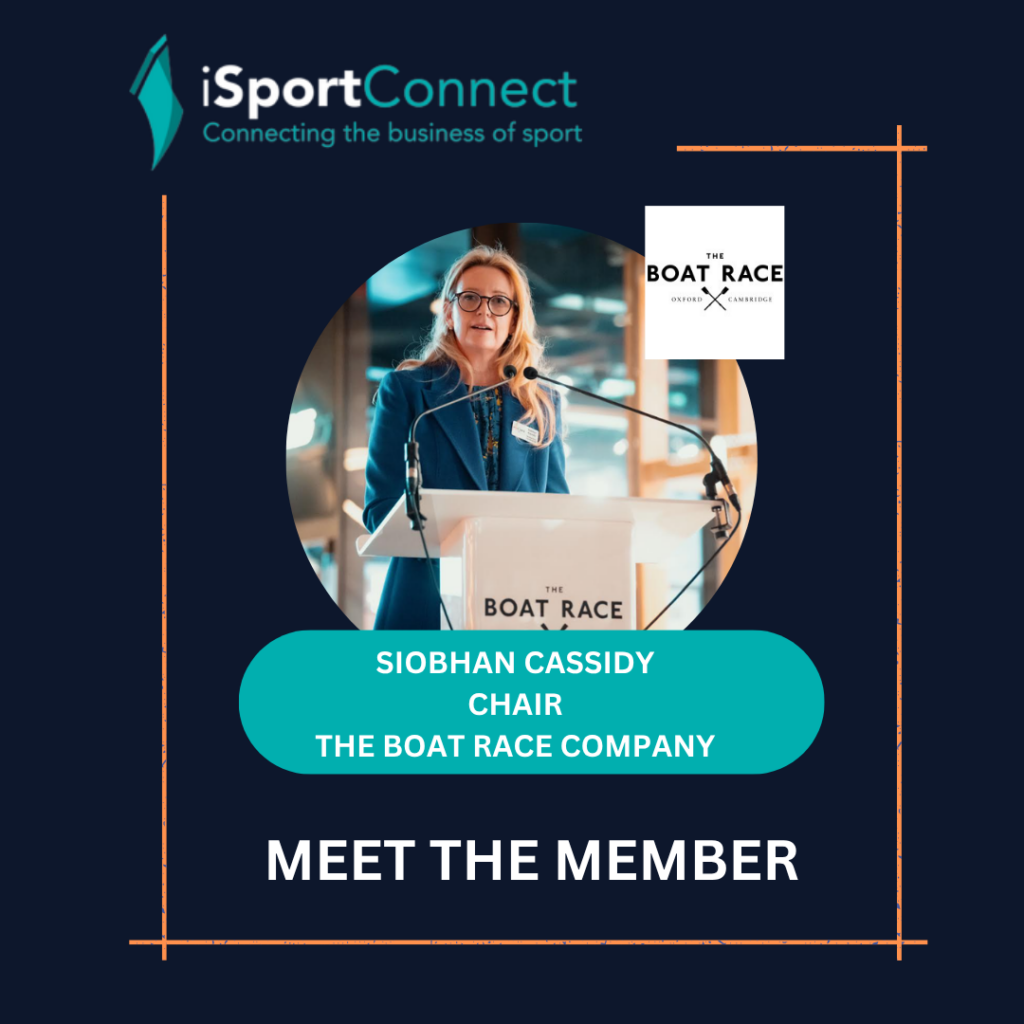
iSportConnect’s Taruka Srivastav speaks with Siobhan Cassidy, Chair of The Boat Race Company, about leading one of the most historic events in global sport. From her journey as a former international rower to shaping the commercial and strategic future of The Boat Race, Cassidy reflects on balancing tradition with innovation, advancing gender equality, and reimagining fan engagement in a rapidly evolving sports landscape.
Siobhan, you’ve been an athlete yourself and are now leading one of the most iconic sporting events. Tell us about your journey.
I was fortunate to grow up enjoying a wide range of sports, but what really drew me to rowing was watching the Boat Race on television in the 1970s. It looked dramatic, raw, and completely different from anything else. I didn’t even live near a river, but I remember thinking—if I wanted to do this, I’d have to go to Oxford or Cambridge.
That idea stayed with me. At 13, I saw a photo of a girls’ rowing team at a school I was visiting, and that changed everything—I didn’t even know you could row at that age. I moved schools, pursued rowing seriously, and later competed internationally at the U23 and student level, where I won a medal.
My experience in sport was shaped by incredible teammates, coaches, and mentors—not just in performance, but in learning life skills like resilience, teamwork, and leadership. I later rowed in the Boat Race in 1995 while studying in Cambridge.
What struck me then was the disparity in support between men’s and women’s rowing. That stayed with me. I eventually returned as a volunteer to help build better structures for women’s rowing—fundraising, coaching, and creating support systems. Over time, I took on leadership roles, joined the Boat Race Company board in 2018, and later became Chair.
From a business perspective, how has the Boat Race evolved commercially?
The Boat Race Company was created to organize and commercialize the event because it doesn’t receive direct funding from the universities. That surprises a lot of people.
It’s also a unique challenge—we’re not in a stadium. The race stretches over 4.25 miles of river with around 200,000 spectators attending for free. That’s part of its charm, but it also means we can’t rely on ticket revenue.
So partnerships are critical. What’s interesting is that our most successful partnerships—like with Channel 4 and Chanel—are not transactional. They’re built on shared values.
The Boat Race represents tradition, excellence, teamwork, and youth. Brands that align with those values tend to stay with us long-term. Chanel, for instance, connects deeply with the heritage and storytelling, while Channel 4 brings a fresh, engaging approach to broadcasting, helping us reach new and younger audiences.
We’ve also invested in storytelling through digital content like our Turning the Tide docuseries, which gives audiences insight into the athletes behind the race.
The Boat Race is deeply traditional—but how modern is it behind the scenes?
The event itself is traditional, but the sport and preparation are anything but.
The athletes train like elite professionals. They work with world-class coaches, sports psychologists, and use advanced tools like video analysis, lactate testing, and data tracking. Boats are designed using cutting-edge materials like carbon fiber, and performance is constantly analyzed for marginal gains.
What makes it even more impressive is that all of this is balanced with a full-time academic schedule. These are students—engineers, medics, researchers—training multiple times a day while studying.
So while the race looks historic, the preparation is highly modern and constantly evolving.
You’ve seen the evolution of women’s rowing closely. How do you reflect on that journey?
It’s something I feel incredibly proud of. When I raced, the women’s event wasn’t even held on the same course as the men’s—it was in Henley. There was a clear disparity in support.
But that’s changed significantly. The women’s Boat Race moved to the Tideway in 2015, and in 2020, the men’s and women’s clubs merged. That was a major step forward.
We’re also approaching the centenary of the women’s Boat Race in 2027, which is a huge milestone. It’s a testament to the women before us who kept pushing forward despite the barriers.
With changing audience behavior and shorter attention spans, do you see the format evolving?
The uniqueness of the Boat Race is exactly what makes it special. It’s longer than an Olympic race, it’s on a challenging river course, and it’s tied deeply to academic excellence. That identity won’t change.
However, how we present it can evolve. Our partnership with Channel 4 allows us to create more engaging formats—highlight shows, behind-the-scenes content, and storytelling that resonates with younger audiences.
We’re also seeing crossover with culture—fashion, art, storytelling—which opens the event to audiences who may not traditionally follow sport.
And I think young audiences can surprise us. When they’re genuinely interested in something, they’re willing to engage deeply. Our job is to create that connection.
What excites you most about the future of the Boat Race?
The balance between heritage and progress. We’re nearly 200 years into this event, and yet it continues to evolve—whether that’s in gender equality, storytelling, or global reach.
Most of all, it’s the athletes. Every year, a new group of young people brings fresh energy, ambition, and perspective. That’s what keeps the Boat Race alive and relevant.
The CHANEL J12 Boat Race 2026 takes place on Saturday 4 April and will be broadcast live on Channel 4 from 1:30pm BST