
Building MMA’s Future: FIMMA Leaders Outline Governance, Safety Reforms, and Olympic Pathway
December 4, 2025
In an exclusive conversation with iSportConnect, Taruka Srivastav spoke with Gordon Tang, President of the Asian MMA Federation (AMMA) and head of the newly formed Federation of International Mixed Martial Arts (FIMMA); Galastein Tan, AMMA Director General; and Lock Wai Han, Chair of AMMA’s Ethics Committee. Together, they discussed the purpose behind FIMMA’s creation, its roadmap toward IOC recognition and Olympic inclusion, governance reforms, athlete safety, and how the organization plans to unify the global MMA landscape.
What is the purpose behind forming a new international federation, FIMMA?
AMMA President Gordon Tang: MMA is a globally popular sport, yet it lacks unified international governance. Through FEMA—the Federation of International Mixed Martial Arts—we aim to unite the sport under cohesive global governance, establish athlete-centered development, ensure sustainable growth, and work collaboratively toward recognition by major multi-sport events, including the Olympic Games.
What concrete steps are you taking to gain IOC recognition and progress toward Olympic inclusion?
President: We are working hard to strengthen our structures and compliance. The timeline for Olympic inclusion will ultimately depend on the IOC and future Olympic hosts.
AMMA Director General Galastein Tan: Since 2022, we have actively worked with the Olympic Council of Asia, leading to MMA’s inclusion in major events such as the Asian Youth Games and the 2026 Asian Games and Asian Indoor & Martial Arts Games. We will continue engaging with the IOC and other continental bodies to secure wider recognition.
How will FIMMA interact with other existing MMA organizations such as GAMMA and IMMAF?
President: We currently collaborate with GAMMA and share a common goal of promoting MMA globally.
AMMA Chair of the Ethics Committee Lock Wai Han: In Asia, we already maintain non-exclusive membership: federations can be part of multiple organizations. We have ongoing conversations with all major bodies, particularly GAMMA, and intend to unify efforts toward Olympic recognition. We aim to present a united front to the IOC.
How will FIMMA avoid governance conflicts seen in other combat sports, such as boxing?
President: We prioritize regulatory compliance, especially with anti-doping bodies, and emphasize that MMA leadership is not driven by politics.
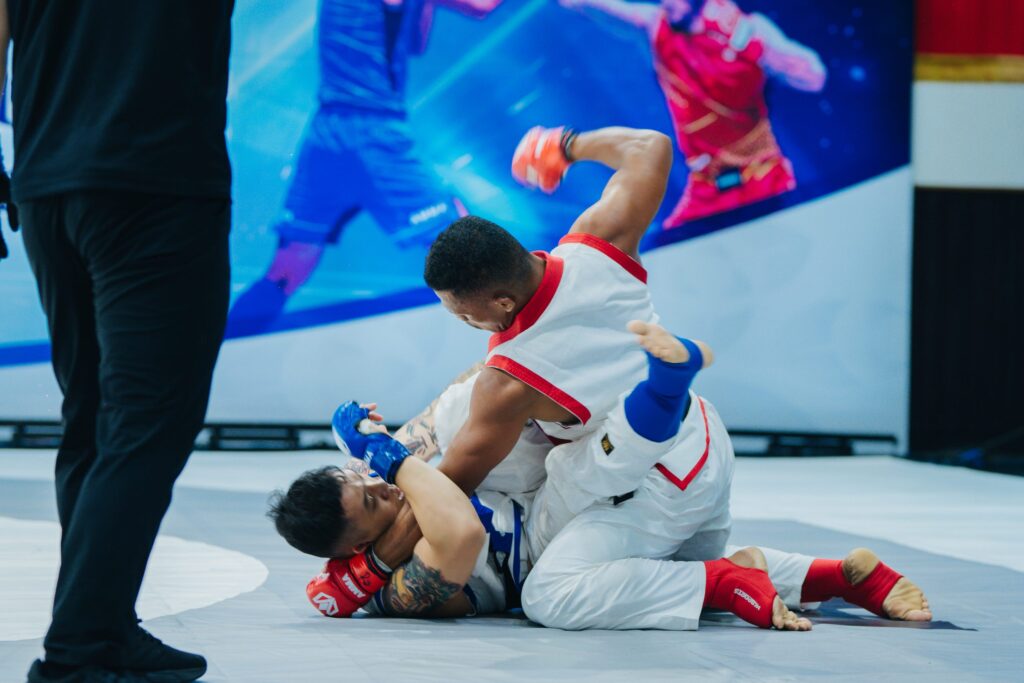
Lock: Governance and athlete safety are central. We follow WADA standards, have begun discussions about signatory status, and have revised rules to enhance safety—such as removing the cage and eliminating dangerous moves—while maintaining sporting quality.
How will the sport remain entertaining without elements like the cage?
Lock: Different regions market MMA differently. Removing the cage allows clearer visibility and reduces safety concerns, without diminishing technical excellence.
President: Our rules prohibit dangerous actions such as head strikes on grounded athletes. MMA’s core appeal remains—the integration of diverse martial arts—ensuring it stays exciting and competitive.
How will MMA adapt to the Olympic tournament format, which requires athletes to compete multiple times over a few days?
President: Olympic qualification will naturally narrow the pool of athletes. Competition scheduling will be designed to safeguard athlete health.
Galastein: In Asian MMA events, athletes fight only once per day across three days, with controlled brackets and medical oversight. If two fights are required in a day, proper rest intervals are guaranteed. Rules and scheduling are continually reviewed with medical and technical committees.
Does adding more safety rules create a “watered down” version of MMA?
Galastein: No. MMA’s essence—using the best techniques from multiple martial arts—remains intact. This approach actually highlights athletes’ technical skills and creates a more audience-friendly version suitable for Olympic inclusion.
How will FIMMA work with professional organizations such as the UFC or ONE Championship?
Lock: We operate in different parts of the MMA ecosystem. FEMA governs amateur athlete development, coaching, officiating, and safety. Professional organizations remain independent, but we collaborate with them to create pathways for top amateur talent to progress.
What about countries without a standalone MMA federation, such as France, where MMA falls under the boxing federation?
Galastein: Each country manages sports differently. Once MMA enters major multi-sport events, National Olympic Committees will determine whether MMA should have its own federation or fall under an existing one. FEMA will support whichever model is appropriate.
Lock: We have extensive experience helping national bodies gain recognition in Asia and will extend this support globally.
Have there been preliminary discussions with the IOC or major professional stakeholders like Dana White?
Galastein: Yes, conversations with relevant IOC entities have already begun, and progress has been positive. Details cannot yet be shared.
How will FIMMA grow grassroots participation, especially in countries where MMA training is expensive (e.g., India)?
Galastein: Getting MMA into major events motivates countries to form national federations, triggering government funding for development and athletes. This leads to a sustainable ecosystem where success inspires more participation.