
Beyond the Headlines: The Governance Cracks That Shaped Sport in 2025
December 11, 2025
In this Member Insights piece, David Alexander, the founder and MD of Calacus PR talks about the past year where the headlines didn’t always celebrate brilliance on the pitch, track or court, but exposed the chaos around it – reputational sagas that should never have been allowed to fester; integrity questions that grew louder with every evasive answer; doping stories that left organisations scrambling for cover.
If 2025 underlined anything, it’s this: crisis communications isn’t a dusty folder on a shared drive. It’s a core capability. The difference between acting with control and acting in a blind panic. The difference between getting your facts straight and getting your story wrong. Strong governance, clear values, transparency and an embedded code of ethics don’t just look good on a vision board. They reduce risk, create consistency and buy you time and credibility when things go wrong.
Too often, sport still reaches for the oldest playbook in the book – deny, deflect, get legal and hope it blows over. That instinct might feel protective in the short term, but it nearly always comes with a bigger bill later.
This year didn’t invent these problems, but it exposed, again, who was prepared, who wasn’t, and who still hasn’t learned that the damage usually isn’t the issue itself. It’s the response.
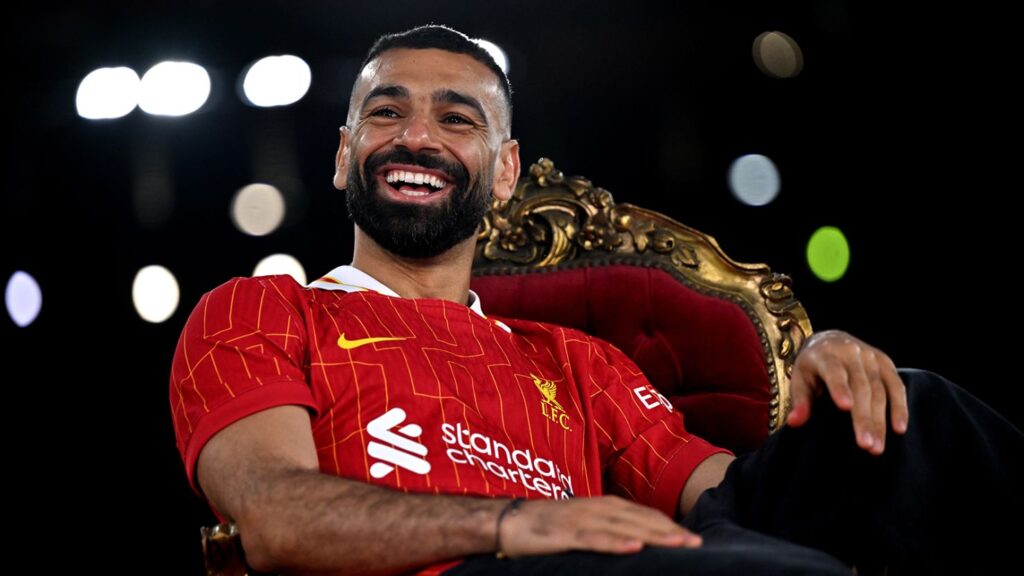
Mo Salah – when a mixed zone becomes a reputational war zone
Liverpool’s season was already tense when Mohamed Salah stopped in the post-match mixed zone after a 3–3 draw with Leeds United.
Last season’s Footballer of the Year suggested he’d been blamed, marginalised and disrespected after being dropped for the previous three matches as the champions struggled to defend their title.
He said: “I can’t believe … I’m sitting on the bench for 90 minutes. I have done so much for this club down the years and especially last season. It seems like the club has thrown me under the bus. That is how I am feeling. I think it is very clear that someone wanted me to get all of the blame.”
There is no “I” in team and the fact Salah usually speaks only when he wants to complain is a sign of a player for whom ego is a central tenet. When things are going well, that is a positive, when they’re not, we see a full-blown crisis such as that Liverpool find themselves dealing with.
Some pundits have suggested that Salah’s comments have tarnished his legacy and that may well prove to be the case.
What is vital now is for the club to have a united voice externally while dealing with the ramifications of Salah’s actions internally to ensure the drama doesn’t endure any longer than it has to.
The WNBA pay dispute – growth without alignment
Women’s basketball’s surge has been undeniable, but the 2025 pay dispute exposed what happens when commercial progress outpaces stakeholder alignment.
After the huge surge in interest prompted in no small part by superstar Caitlin Clark, players understandably framed the media-rights moment as proof of value and demanded a salary structure that rises with the business.
The optics for the NBA, in light of their own revenues, are not great and ignore the value of women’s sports fans as well as the growth of the game for young athletes who could now consider overseas competitions as a better way to make their living in such a short career.
According to MarketWatch, players receive only 9.3% of league revenue, including TV deals, tickets and merchandise sales, compared to 50% for men in the NBA.
But at that All-Star game, players warmed up in shirts reading: “Pay us what you owe us,” as chants of “Pay them!” echoed from fans throughout the Gainbridge Fieldhouse arena and the longer this goes on, the longer this appears as the lasting legacy of Engelbert’s reign.
As things stand, no agreement has been reached, with the CBA deadline continually extended.
Turkish referees – when integrity becomes negotiable
Turkey’s referee scandal landed as the nightmare scenario football never quite plans for – the public starts believing outcomes are negotiable. Once match officials are linked to betting behaviour and investigations widen, you don’t just have a legal problem; you have a trust collapse that hits broadcasters, sponsors and fans simultaneously.
A five-year investigation found that 371 of 571 match officials have accounts, with 152 of those actively gambling. It later transpired that more than a thousand players were also involved in the scandal including those from 14 of the top flight’s 18 teams.
Turkish Football Federation (TFF) president Ibrahim Haciosmanoglu said at a press conference this week he saw “a growing sense of panic” within Turkish football “as operations deepen”.
The Portuguese coach said he was alarmed by what he called “a system” in the domestic league that is deeply ingrained. “In terms of the feeling of something that is toxic, we feel [it], obviously, we feel,” Mourinho added. “After 25 years as a coach and 35 in football, 10 as an assistant, I’ve never seen anything like this. Everybody was saying the same thing, scandal, scandal. To win at any cost and to win in this way is the worst thing.”
Haciosmanoglu added: “The reputation of Turkish soccer is built on the sanctity of the effort on the field and the unwavering integrity of justice. Any act that betrays these values is not merely a violation of the rules, but a breach of trust.”
The communications problem is predictable. The only viable route is disciplined transparency: what we know, what we don’t, what we’re doing, by when. And crucially – independence. Any perception that football is “investigating itself” is rocket fuel for conspiracy.
The governance lesson is equally blunt. Betting relationships, education and monitoring need to be relentless – and backed by enforcement that is swift enough to deter.
Time will tell if the players, officials – and indeed the media – complicit in one of the biggest scandals football has ever faced are suitably punished, and whether Turkish football can recover.
La Vuelta – stakeholder chaos in a politicised arena
La Vuelta became a case study in what happens when a global event hosts multiple stakeholders with conflicting agendas and no aligned communications position.
Protests linked to the Israel–Premier Tech team moved from disruption to disorder, with regional politics, international diplomacy, policing and sporting operations colliding in real time.
Team owner Sylvan Adams, revealed that he had rejected a request from race organisers ASO to withdraw his team from the race or change its name, something which later happened anyway.
The Canadian-Israeli billionaire said: “There is no end to the boycotts. They asked us to quit the Vuelta, but we did not surrender to the terrorists. I told them that they were wrong and that we had the right to stay.”
Adams has previously said that the team is a form of “sports diplomacy….a worldwide advertising board to win hearts and minds to the Israeli cause.”
La Vuelta then had to be suspended in Bilbao, eight kilometres from the finish line, when angry mobs pushed against barriers and forced organisers to finish prematurely. The protests also had an impact in Galicia and on more than one stage in Asturias, where incidents caused Javi Romo (Movistar) to crash and abandon the race due to his injuries.
Spain’s Prime Minister, Pedro Sanchez, who has supported Israel’s exclusion from major cultural events, had appeared to encourage the protests midway through the event when he commented: “Our respect and recognition for the athletes and our admiration for the Spanish people who are mobilising for just causes like Palestine.”
Ultimately, the final stage of the grand tour and winners’ podium were suspended amid chaotic scenes as groups of pro-Palestine protesters swamped the finish line area and presentation podium in central Madrid.
The sad events underline the need for scenario planning, laid bare when politics is predictably adjacent to your event.
Where was the unified decision-making between sporting governance, organisers, racing teams and political leadership?
The reputational damage wasn’t just that the race was disrupted. The organisers appeared reactive, fragmented and unable to protect the competitive stage that sponsors and fans are paying for.
Premier Tech withdrew their sponsorship but the big question for organisers and cycling’s governance is a challenging one: how can the different stakeholders come together to prevent showcase events being ruined if these protests continue to go ahead?
The FIA – regulator credibility relies on democracy, not dictatorship
In motorsport, the regulator isn’t background infrastructure – it’s the credibility engine. The FIA’s turbulence, driven by senior resignations, public criticism and controversy around the election process, placed governance itself at the centre of the story. When insiders frame decisions as lacking due process, stakeholders ask the only question that matters: can we trust you to do the right things for the benefit of the sport?
In the spring, the FIA’s deputy president for sport, Robert Reid, announced his resignation citing what he called “a fundamental breakdown in governance standards” and “critical decisions being made without due process.
“Motorsport deserves leadership that is accountable, transparent and member-driven. I can no longer, in good faith, remain part of a system that does not reflect those values.”
FIA President, Mohammed Ben Sulayem, has also been accused of interfering in races, which were dismissed by the FIA’s own investigation, with the leading officer in charge of the review then sacked.
Mercedes driver George Russell said that across the paddock there was concern over governance. He commented: “Every time we hear some news from that side of the sport, it’s not really a big surprise. So it’s clearly a real shame to see, and somebody who’s very well respected within the sport and been there for so long, as we keep saying, it’s like, what’s next?”
The presidential elections this year ensure that no one other than the incumbent can run.
American Tim Mayer withdrew from the race when it became clear that the election rules would not allow him to compete fairly.
Mayer lamented: “There will only be one candidate, the incumbent. That’s not democracy. That’s the illusion of democracy. Throughout our FIA Forward campaign, we’ve spoken of fairness, reform, and integrity, of returning the FIA to its members.
“When elections are decided before ballots are even passed, that’s not democracy. That’s theatre. And when member clubs are left with no real choice, they become spectators, not participants.”
The FIA has responded to Mayer’s claims, stating: “The FIA presidential election is a structured and democratic process, to ensure fairness and integrity at every stage.”
This kind of crisis feeds on institutional tone. When the organisation responds defensively, it validates the critique and attracts wider scrutiny around the FIA’s governance.
The lesson for governance is the importance of consistent, transparent process that never raises questions about integrity or the agenda of leadership.
You cannot survive long when insiders publicly claim the process itself is broken.
Erriyon Knighton – anti-doping comms must be documentation-led
Athletics lives and dies on anti-doping credibility, and Erriyon Knighton’s case showed how quickly complexity becomes a confidence issue. With appeals, scientific debate and cross-agency tension, most audiences don’t follow nuance – they follow the implication. If the system feels inconsistent, the sport feels dirty.
Knighton tested positive for trenbolone – a banned substance used for muscle growth – in March 2024 and avoided a ban following an independent arbitrator’s ruling which allowed him to compete at the 2024 Paris Olympic Games.
World Athletics and WADA appealed against that decision earlier this year with the Court of Arbitration for Sport (CAS) ruling in their favour and Knighton suspended for the maximum four years.
Knighton’s case became public as tension between USADA and WADA increased over the way WADA and China handled the case involving 23 Chinese swimmers, who were cleared to keep competing despite testing positive for a banned heart medication. China won 12 swimming medals at the Paris Games, many of which involved swimmers from that case who were not sanctioned.
Knighton’s agents, Astra Partners, issued their own statement criticising the guilty verdict. They said: “There is no question that this appeal was motivated by WADA’s animus against USADA and the United States. We stand with our client Erriyon Knighton and believe he did not deliberately dope, but he is an athlete who has been found guilty of choosing the wrong restaurant to eat food. This case is not over.”
Needless to say, USADA needs to ensure that its own house is in order before criticising other nations and ensure that all testing results are watertight.
The governance lesson is that credibility isn’t built only by catching cheats. It is built by the perceived fairness of the system. If athletes believe the process is arbitrary or inconsistent, compliance culture suffers. If fans believe the sport is dirty, commercial value suffers. Both outcomes hurt.
Boxing and genetics – the ring caught in a culture war
Boxing spent 2025 navigating a combustible intersection: eligibility, sex testing, national law, safety and competitive fairness. When the World Boxing Championships introduced mandatory genetic testing and national federations pushed back, the sport fell into a culture war with athletes caught in the middle.
A year after Imane Khelif won Olympic gold in Paris despite doubts about her gender, the same problems arose when French female boxers were banned from competing at the World Boxing Championships in Liverpool after failing to take a genetic test.
The French Boxing Federation (FFBoxe) said the ruling was incompatible with French law.
“With, as a consequence, the exclusion of our athletes as well as other female boxers from foreign delegations who also found themselves trapped,” FFBoxe said in a statement. “This is a profound injustice. Our athletes are being punished for a bureaucratic failure and a policy that was communicated far too late.”
World Boxing hit back, explaining that it had made the tests mandatory to avoid more controversies such as that which occurred in Paris.
The then-President of World Boxing, Boris van der Vorst, said: “We recognise that the issues relating to eligibility in boxing are more pronounced in the women’s events which is why we have made the decision to implement the policy in the female category first. This was communicated to all of our member National Federations some time ago, to enable them to begin the process of testing. It is very disappointing for the boxers that some national federations have not been able to complete this process in time.”
Twelve fighters were barred from the Championships, with five French fighters joined by some from Nigeria, Fiji, the Dominican Republic and the Philippines.
World Boxing then admitted it would redouble its efforts to ensure the new tests are fully understood and explained.
Acting secretary general Mike McAtee struck a more conciliatory tone and said: “We need to see how we can perform better, not only on eligibility, but everything else. We’re an old sport in a very young body.”
Credit to McAtee for accepting the nuances and challenges the new rules provoke, and vowing to get better rather than dismissing concerns out of hand. That’s a positive approach and one which suggests World Boxing will get it right sooner rather than later.
Ben Proud and the Enhanced Games – values tested by incentives
The Enhanced Games concept – and Ben Proud’s willingness to associate with it – created an unusual crisis: a challenge to sport’s moral contract.
Proud’s argument was essentially economic. Elite athletes in many Olympic sports struggle to secure long-term financial stability.
But the optics were still stark – ‘enhancement’ framed as entertainment, with clean sport values pushed into the background.
The premise of the Enhanced Games is that doping should be seen as a demonstration of science rather than cheating.
When the concept was first announced, Travis Tygart, CEO of the US Anti-Doping Agency, described the Enhanced Games as ”farcical… likely illegal in many states” and “a dangerous clown show, not real sport”
Organisers confirmed that the first event would be held in spring of 2026 in Las Vegas, featuring sprinting, swimming and weightlifting, with prize money of up to $500,000 per event and a bonus of $1m for breaking world records.
They maintain that this is not about discrediting traditional sport, but as a parallel category to explore the boundaries of human potential while provoking a broader cultural conversation.
Team GB Olympian Proud, who is a 50m freestyle world champion and got silver at Paris 2024, announced he had agreed to join the competition in the autumn, citing the need to earn for the sake of his future.
“I’m 30 years old and retirement has been a topic of contention for quite a few years. In reality, us athletes in the Olympic programme don’t earn enough money to retire off the back of this and I am always seeking something that can see me through a bit longer.
“I think it opens up the potential avenue to excel in a very different way. I think realistically I’ve achieved everything I can, and now the Enhanced [Games] is giving me a new opportunity. I definitely don’t think that’s undermining a clean sport.”
In a statement on social media, Aquatics GB said it is “immensely disappointed”, while UK Sport said it was working with Aquatics GB “as a matter of urgency to determine Ben Proud’s suitability to receive public funds”.
Proud has shattered his reputation by agreeing to join the Enhanced Games, but deserves some credit for not hiding in the shadows when interrogated about his motives.
On this occasion, all the related governing bodies were consistent in their messaging, expressing disappointment and condemnation.
One could argue that this is a freak show with the ultra-wealthy willing to watch athletes risk their lives in controversial fashion.
It remains to be seen whether curiosity from sports fans results in any broadcasters agreeing to promote the events, even if they risk athlete health and safety, or whether this circus falls as quickly as it has risen.
The NWSL – safeguarding crises don’t end with statements
The NWSL’s restitution fund and reforms marked a shift from reactive comms to operational proof after years of misconduct allegations had already delivered the worst reputational verdict: institutions failed to protect players, then defaulted to self-protection when challenged.
Revelations emerged in 2022 which suggested that the league, its clubs and the U.S. Soccer Federation failed to protect players and allowed misconduct to run rampant throughout the league.
A report, which was jointly commissioned by the NWSL and the NWSL Players Association, stated: “Misconduct against players has occurred at the vast majority of NWSL clubs at various times from the earliest years of the league to the present,” referencing instances of inappropriate sexual remarks to players by staff in positions of power, blurred professional boundaries, and manipulation.”
Four coaches, including longtime NWSL coach Paul Riley, have been banned while some high ranking officials have been suspended and the Portland Thorns changed ownership as a result of the misconduct.
The NWSL issued a statement this summer committing it to providing funds for current and former players who were affected.
NWSL Commissioner Jessica Berman said: “This marks a critical step toward accountability and healing. We are deeply grateful to the brave individuals who shared their experiences and to the Attorneys General for their partnership. We stand committed to ensuring justice is delivered with care, respect, and urgency.”
The $5 million restitution fund will be administered by a former federal judge, while there will also be reforms aimed at preventing future abuse and channels for players to confidentially report abuse.
The big takeaway for any organisation is brutally simple: safeguarding can’t just be a policy. It has to be culture, process and enforcement – with consequences that bite.
England’s Lionesses and racism – campaigns vs consequences
The racist abuse of Jess Carter during Euro 2025 showed again that football’s anti-racism messaging is not cutting through.
After an under-par performance during Euro 2025, Carter received racist abuse from online trolls and decided to withdraw from social media.
She said: “From the start of the tournament I have experienced a lot of racial abuse. While I feel every fan is entitled to their opinion on performance and result, I don’t agree, or think, it’s OK to target someone’s appearance or race. As a result of this I will be taking a step back from social media and leaving it to a team to deal with.”
The England women’s team has also confirmed they will no longer make the anti-racism gesture of taking the knee before matches.
In a statement they said: “Until now, we have chosen to take the knee before matches. It is clear we and football need to find another way to tackle racism. We have agreed as a squad to remain standing before kick-off on Tuesday.”
Anti-racism charity Kick It Out offered their support, stating: “Social media companies have failed to prevent exposure to this toxicity, and football must continue to use its collective power to hold them to account. We have been working with the government and the regulator, but we know that more urgency is needed from everyone involved.”
Carter had the last laugh, appearing in the final as England beat Spain on penalties, but if previous tournaments are anything to go by, this won’t be the last time a player is racially abused by disgruntled fans.
The communications challenge for governing bodies is that condemnation is necessary but no longer sufficient – and without the support of the social media companies, they are fighting a losing battle.
Crossing the line
Across all ten crises, the pattern is consistent. Reputation isn’t what you say when something goes wrong. It’s what you do.
The smartest sports organisations will invest more in crisis readiness – governance that holds, processes that are transparent, and leadership that understands credibility is hard-won and easily lost.