Rowing Into the Future: Vincent Gaillard on World Rowing’s Digital Shift, Youth Appeal & Value-Driven Growth

In an exclusive conversation with iSportConnect’s Taruka Srivastav, World Rowing Executive Director Vincent Gaillard opens up about leading the federation through a transformation journey. With a legacy rooted in traditional sport and Olympic prestige, rowing is now embracing digital innovation, new disciplines like coastal and indoor rowing, and a stronger direct-to-consumer approach. Gaillard, whose career spans leadership roles at the NBA, Coca-Cola, and SportAccord, discusses growing youth engagement, evolving sponsorship models, and the federation’s unwavering commitment to gender equality and values-driven partnerships. As World Rowing adapts to the changing sports landscape, its sights are firmly set on sustainable, inclusive growth.

Vincent, let’s start with your background. How did you end up at World Rowing?

I come from a sports management background, having spent around 30 years in the industry. I started with a Master’s in Sports Management, then moved on to work at a sponsorship agency following an internship at Adidas International in Germany. I’ve worked for the NBA Europe and later for The Coca-Cola Company for 13 years, handling major sponsorships like the FIFA World Cups and Olympic Games, particularly Beijing 2008 and London 2012. After that, I became CEO at SportAccord (now GAISF), followed by a stint at European Professional Club Rugby (EPCR) in Lausanne. Three years ago, I joined World Rowing with a mandate to lead a transformation agenda for our sport, collaborating with our 159 member federations, global council, executive committee, and team based in Lausanne.

Rowing seems to be growing in popularity. Have you noticed an increase in interest from young people as well?

. Traditional rowing—what you see at the Olympics on a 2000-meter course—has varied growth. While it may be plateauing in mature markets like the UK and USA, it is growing fast in places like China, India, and Japan, for instance. Then we have coastal rowing (or beach sprints), a new and fast-growing discipline that will debut at the Youth Olympic Games in Dakar 2026 and the LA 2028 Olympics. It’s booming in regions with coastlines—like Oceania, parts of Africa, and the Caribbean, but also in traditional rowing countries like the USA or GB. Lastly, we have indoor rowing, or ‘connected rowing’, which is done on machines. It’s becoming more immersive and gamified, and we now have both in-person and virtual world championships for it. We expect it will be part of the first Olympic eSports Games in Saudi Arabia in 2027. So, yes, the sport is growing among youth, but the pace and format vary significantly.

How have sponsors responded to these various formats?

We have strong, long-standing partners like Concept2, who are instrumental for our indoor rowing efforts. They manufacture rowing machines and boat oars, amongst others. Then we have regional partners like Andalucía in Spain, which promotes itself as a top-tier rowing destination. Over the last couple of years, we haven’t aggressively pursued new sponsorships—our focus was on building the sport, particularly the new disciplines, and getting them onto major programs like the Olympics and eSports. Now that we have these assets and visibility, we’re in the process of securing a sponsorship agency and will be actively engaging brands soon.

You’ve worked with Coca-Cola, so you understand that today, sponsorships go beyond logos. What do you look for in brand partners now?

We’re looking for partners who align with our values: transparency, democracy, gender equality, diversity, and inclusion. These are deeply embedded in our structure and governance. We’re not looking for quick ROI-type partnerships,. We want brands that are in it for the long term—who believe in growing the sport and aligning with our ethos rather than just getting brand exposure.

You mentioned gender equality. Are there structured initiatives at World Rowing to promote it further?

A: Absolutely. We have full gender parity across our executive bodies, commissions, and even at the Olympic level with a 50-50 athlete quota. In some internal commissions, women actually outnumber men. We’re also implementing mixed-gender events like the mixed eight (four men and four women), which will be featured at upcoming World Championships. Gender equality is not a buzzword for us—it’s reality.

In today’s fast-paced, social media-driven world, how are you positioning rowing from a marketing perspective? Are there any specific platforms or strategies you prioritize?

Like most organizations, we’re investing in growing our digital and social media footprint because traditional broadcast reach is declining. Social media is an essential tool for visibility, storytelling, and fan engagement—especially with formats like coastal and indoor rowing that resonate with younger, digital-native audiences. We focus on what clicks and adapt our strategy based on engagement metrics. We’re also conscious of balancing innovation with the sport’s core identity and safety needs.

You’ve been in an executive role for quite a long time. What are the key challenges you face daily running such a significant organization, and how do you approach and overcome them?

Many sports federations, including ours to an extent, still operate in a traditional, pyramidal, business-to-business (B2B) model. We regulate, legislate, and organize competitions—these are fundamental and must continue. However, the biggest challenge today is evolving into a more direct-to-consumer (D2C) organization.

We can no longer rely solely on our 159 member federations to connect with fans globally. We must build direct relationships—digitally, socially, emotionally. This shift requires a transformation in our DNA. It’s not just a mindset shift; it’s a financial and operational challenge.

Another major challenge is funding. We are very dependent on Olympic Games revenue. But with traditional revenue sources like broadcast rights declining due to changing viewing habits, we must diversify. That means tapping into new platforms, new audiences—especially younger generations who consume sport differently. It’s a paradigm shift for federations like ours, many of which are over a century old.

What’s one piece of advice you’d give to the broader sporting ecosystem today—something that’s either being done well or something you think needs to be reconsidered?

That really depends on who we’re talking about—international federations or entities like the NBA. But if we narrow it down to sponsorship trends, one thing I truly value is long-term, sustainable partnerships.

Short-term deals can offer immediate returns, but they’re rarely sustainable. I’m wary of “short-termism”—quick wins that don’t contribute to long-term growth. A sponsorship should be about genuine integration, bringing the partner “under the tent,” not just slapping a logo on a backdrop.

On the flip side, there are clear categories that I personally and professionally do not support—from a human rights or sustainability standpoint. Tobacco is an obvious one, but I also have concerns around performance-enhancing products that might be legal yet ethically questionable, or the unregulated betting industry, which poses a threat to sport integrity. Regulated betting is another matter—it can work when controlled responsibly.

Before we wrap up, is there anything else you’d like to highlight about your ongoing work or the federation’s future vision?

Yes, one important point. We’re in the midst of a 15-year transformation strategy to elevate the image, reach, and revenue of rowing. We began this journey three years ago and it’s all about making rowing more relevant—whether it’s for elite athletes, recreational users, or someone who wants to stay fit for 20 minutes a day on a rowing machine.

We are exploring how rowing shows up across digital platforms, how people connect with the sport in gyms or at home, and how we remain top-of-mind in this evolving fitness landscape. To do this, we acknowledge that we cannot succeed alone. We need partners—commercial or philanthropic—who share our values and are willing to invest time, expertise, and resources. Collaboration is essential to drive this transformation forward.

Microsoft Becomes Official AI and Cloud Partner of Premier League in Landmark Deal

The Premier League and Microsoft Corp. on Tuesday announced a five-year strategic partnership to transform how 1.8 billion fans in 189 countries engage with the world’s most-watched football league. As part of the collaboration, Microsoft will become the official cloud and AI partner for the Premier League’s digital platforms, modernizing the League’s digital infrastructure, broadcast match analysis and organizational operations.

At the heart of the partnership are the Premier League’s new fan-facing digital platforms, which leverage Microsoft’s cloud and AI technologies to usher in a new era of intelligent and intuitive fan experiences.

From today, fans around the world can learn more about the Premier League clubs, players and matches of their choice through a new digital Premier League Companion powered by Copilot. This highly personalized experience leverages Azure OpenAI to pull information from over 30 seasons of stats, 300,000 articles and 9,000 videos, unlocking a whole new world of facts and figures for fans about the clubs and players that matter to them most.

The Premier League Companion is available on the new official Premier League mobile app and web platforms and will be enhanced throughout the upcoming Premier League season. Additional functionality is set to include open-text questions and answers in fans’ native languages through text and audio translation. Later in the season, Microsoft AI will also be included within the app and website’s enhanced Fantasy Premier League experience, giving every fan their own personal assistant manager to help them steer their fantasy squad to victory.

The Premier League Companion gives fans deeper, more personalized and interactive access to the players, teams and the game they love.
The partnership marks one of the most significant technology transformations in the League’s history, anchored around four key areas: fan engagement, match insights and analysis, cloud transformation, and organizational productivity. Together, Microsoft and the Premier League aim to build one of global sport’s most advanced and secure media, data and AI platforms.

Integrating Microsoft Azure AI Foundry services, including Azure OpenAI in Foundry Models, will further enhance the live match experience with real-time data overlays and post-match analysis. From archive innovation to in-broadcast insights, fans will gain deeper, more interactive access to the game they love.

Richard Masters, chief executive of the Premier League, said: “We are delighted to welcome Microsoft as a partner of the Premier League. This partnership will help us engage with fans in new ways — from personalized content to real-time match insights. We look forward to working together over the next five yearsto deliver more innovative experiences to all Premier League supporters around the world.”

“We are pleased to partner with the Premier League to bring innovative and interactive experiences to football fans around the world,” said Judson Althoff, executive vice president and chief commercial officer at Microsoft. “By leveraging our secure cloud and AI technologies — including Azure AI Foundry Services with Azure OpenAI, Microsoft 365 Copilot, and Dynamics 365 — we will transform how football is experienced, delivered and managed on and off the field.”

EuroLeague Unveils Bold New Identity as It Enters a Transformative Era of Global Growth

Euroleague Basketball has announced the beginning of a bold new era, unveiling a new, clean identity for its premier competition: the EuroLeague. This strategic evolution marks the end of the longstanding naming rights partnership with Turkish Airlines, which began in 2010, as the League accelerates toward a future of enhanced visibility, innovation, and global engagement.

After 25 years of continuous development, the EuroLeague now enters a transformative phase of accelerated growth. This next chapter will be defined by an expanded roster of elite clubs, deeper engagement in emerging markets, and the launch of innovative partnerships designed to elevate the sport’s profile on a global scale.

Euroleague Basketball extends its deepest gratitude to Turkish Airlines for 15 years of unwavering support. The collaboration has been one of the most successful and emblematic partnerships in global sports, setting a high standard for synergy between commercial sponsors and sports properties.

“Today marks a significant milestone in the evolution of our League. As we unify under the EuroLeague name, we are not just rebranding, we are redefining our ambitions. Our gratitude to Turkish Airlines is immense; their support helped shape the modern EuroLeague. Now, with a new strategic vision and an exciting roadmap ahead, we are poised to grow our global footprint, deepen fan engagement, and deliver unmatched value to our clubs, partners, and supporters.” stated Paulius Motiejunas, Euroleague Basketball CEO.

This rebranding initiative and forward-focused strategy reflects Euroleague Basketball’s commitment to innovation, excellence, and growth. The new EuroLeague era begins now—with bigger aspirations and a clear vision to continue to shape the future of European basketball.

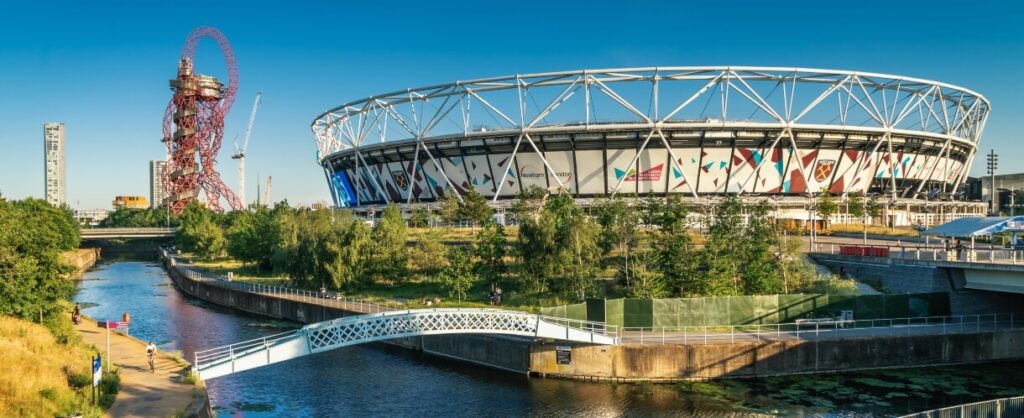
West Ham United and Boyle Sports announce landmark multi-year principal partnership

West Ham United has announced a multi-year partnership with BOYLE Sports, Ireland’s largest independent bookmaker. To mark the beginning of the partnership, BOYLE Sports will become West Ham United’s front-of-shirt sponsor for the 2025/26 season.

The announcement comes as BOYLE Sports commits to a broad package of investment totalling over £100 million over the next three years in the UK and includes a fresh new look and brand identity. As the Premier League club’s official Betting Partner, the deal signals the brand’s intent to become a major force in the UK market.

Nathan Thompson, Executive Director at West Ham United, said: “BOYLE Sports energy and ambition for growth makes them a natural fit as a partner for West Ham United and we are proud to be playing a pivotal role in their relaunch into the UK market. We are excited to work together with BOYLE Sports to deliver on our shared commitment to the growth of our football club and West Ham United’s UK and international supporter base.

“West Ham United are one of the Premier League’s most storied and well-supported clubs, with a rich heritage, a world-class home in the London Stadium and a global fanbase that spans generations. This partnership is another significant milestone in our preparations for the new season, which will include the Club’s highly anticipated return to the USA, as we take on our Premier League rivals in the Summer Series later this month, allowing us to connect with our ever-growing fanbase in America and beyond.”

Commenting on the partnership, BOYLE Sports CCO Troy Cox, added: “West Ham is one of the most iconic clubs in the Premier League and our partnership marks a powerful alignment between two proud, ambitious brands. We both have deep historic roots and a commitment to our communities to succeed at the highest level, making them a natural partner for us. At BOYLE Sports, we’re investing significantly in our UK growth – across retail, tech, product and partnerships – and working with West Ham is a central pillar of our approach.

“Football is at the heart of many of our customers’ lives and this collaboration allows us to bring them closer to the action, fusing excitement with a deep commitment to responsible gambling. Whether you’re betting in-store, online or following the game from home, we’re committed to delivering a sharper, more rewarding experience every time. We’re thrilled to be partnering with West Ham United and can’t wait to see what we achieve together.”

To celebrate the partnership, BOYLE Sports will work with West Ham United on exciting new content throughout the season which appear across the Club’s global digital channels. Eagle-eyed supporters will be able to spot branded London taxis driving around the capital and appearing at matches. They will also form the basis of exciting new content series ‘The Knowledge’, bringing fans closer to their heroes and empowering them with added insight in line with BOYLE Sports mantra of ‘Back Yourself’.

Life After Betting Sponsorship: Are You Ready?

With the ban on betting sponsorship in English football set to kick in from the 2026/27 season, Premier League clubs face a potential 60% drop in shirt sponsorship income (City A.M.). Other sports (and markets) are following suit, moving toward stricter standards and self-regulation of gambling deals.

This shift has created a serious revenue challenge—and a strategic crossroads—for commercial, marketing, and digital directors across football, rugby, cricket and other major sports and events across the UK and beyond.

What Will Change?

  • Commercial Directors: Shifting from selling a static, exposure-based proposition to an outcome-driven sponsorship model.

  • Marketing Directors: Building an engaged digital fanbase beyond the stadium and attracting socially responsible B2C brands through richer narratives.

  • Digital Directors: Leading the charge by making fan data and digital infrastructure a core sponsorship asset.

The iSportConnect Directors’ Brunch Series

Designed for senior leaders, these invitation-only, Chatham House Rule roundtables bring together just 5–6 peers at a time in central London. Hosted by iSportConnect’s Content Director Jay Stuart, each session delivers a focused, off-the-record space to tackle one big question:

How do we replace betting income and attract brands that expect digital performance and purpose?

Consumer brands are investing in first-party data, digital engagement, and performance ROI. The winners will be those who adapt—fast.

The first event in the series will take place on July 17th at 9:30-11:30am in our Central London roundtable venue.

To join on July 17th, or register your interest to join future editions, contact Ray.James@isportconnect.com

European Commission Approves Liberty Media’s Acquisition of MotoGP

Liberty Media Corporation has received unconditional approval from the European Commission to complete its acquisition of MotoGP rights holder Dorna Sports. The deal is now expected to close no later than July 3, 2025, opening the door to a new era for the sport.

MotoGP is already evolving to unlock the full potential of the most exciting sport on Earth, enjoying record crowds, new venues, and growing audiences. Liberty Media will now leverage its expertise to further increase MotoGP’s fanbase and grow the sport globally and commercially.

Carmelo Ezpeleta, CEO of Dorna since 1998, will continue to run MotoGP along with his management team.

“Today’s approval from the European Commission marks the final condition to closing Liberty’s acquisition of MotoGP. We are thrilled to officially commence Liberty’s partnership with Carmelo and his excellent management team,” said Derek Chang, Liberty Media President and CEO. “MotoGP is a highly attractive premium sports asset with incredible racing, a passionate fanbase and a strong cash flow profile. We believe the sport and brand have significant growth potential, which we will look to realize through deepening the connection with the core fan base and expanding to a wider global audience.”

“We are very happy that the European Commission has approved the transaction. This is an important milestone confirming the even brighter future that lies ahead for MotoGP,” said Carmelo Ezpeleta, CEO of MotoGP rights holder Dorna Sports. “MotoGP is one of the most thrilling sports on Earth, and we look forward to accelerating the sport’s growth and expanding its reach to even more fans around the world. Liberty is the best possible partner for our sport and the entire MotoGP community, and we are excited to create even greater value for our fans, commercial partners and everyone competing.”

Liberty Media will acquire 84% of MotoGP rights holder Dorna Sports with MotoGP management retaining 16% of the business.

Liberty Media Corporation operates and owns interests in media, sports and entertainment businesses, including its subsidiaries Formula 1 and Quint, its interest in Live Nation, and other minority investments.

The Olympic Reformer: How Thomas Bach Steered the Games Through Global Turmoil

THE OLYMPIC REFORMER & RINGS OF CHANGE IN A DIVIDED WORLD  – Olympic advisor, Michael Pirrie, unpacks the tumultuous era of IOC president Thomas Bach, whose term in the top office of world sport ended earlier this week.

Thomas Bach’s recent visit to Brisbane, host city for the 2032 Olympic Games, was more than a routine inspection. As the outgoing IOC leader, the stopover symbolised the closing arc of a presidency defined by reform, resilience, and renewal. 

Joined by long-time ally John Coates, a former IOC senior vice president and a central figure in Australia’s Olympic movement, Bach’s Brisbane inspection was a full-circle moment, the bookend to a tumultuous term  marked by reform, disruption and reinvention  — and testament to a providential partnership and pivotal presidency that reshaped and modernised the Olympic movement.

This was a presidential journey that began in quiet confidence. On the eve of Bach’s election in Buenos Aires he dined discreetly with his wife, the late Australian former IOC vice president Kevan Gosper, former London 2012 Olympic Games leader and current World Athletics President Sebastian Coe, and Coates  — a calming moment before a defining vote.   

What followed was a presidency shaped by urgency, complexity, and resilience, with Bach likely to be judged as one of the most consequential leaders of the modern Olympic era.

IOC presidencies ultimately revolve around the Games that frame the eras, and Bach’s Olympic odyssey from Sochi to sanctions, Rio to reform, danger in Tokyo, peace in Pyeongchang and war in Paris was extraordinary in its scale and dimension.   

Yet amid the turmoil, Bach pursued an ambitious vision of reform and change that he believed was essential for the Olympic Movement to survive and thrive in the deteriorating global conditions.

Bach’s Agenda 2020 and Agenda 2020+5 manifestos were more than a set of policy positions – these were  programmes for a generational shift and realignment of the Olympic organisation and its evolving position in global affairs and sport.

These were also bold declarations about sport’s changing role in society beyond stadium entertainment, pointing to a new Olympic era in a new world.

Bach implemented broad brush reform that spanned the diverse Olympic canvas – from big picture international diplomacy and local initiatives on the ground and online to combat violence and cyber abuse in sport to the warm embrace of refugee athletes.

The Olympic focus on the world’s displaced communities was a recognition of sport’s values under Bach and acknowledged at Bach’s recent meeting with the new Pope – and like Leo XIV’s papal predecessors, Bach travelled widely, meeting world leaders and preaching the virtues of sport in a divided world. 

The Olympic movement’s global reach has grown significantly, with an expanding network of partnerships and collaborations with influential global institutions.

Bach, a world leader without a nation, brought the Olympic movement closer to the United Nations, G-7 and G-20 nations and other global institutions like the World Health Organisation.

RINGS OF CHANGE 

While this has given the IOC an expanded presence in global affairs, Bach has carefully reformed the Olympic Games flagship, the paramount source of the movement’s influence and impact.

Bach’s presidency involved the urgent repair of Olympic processes that threatened the movement’s sprawling multi-billion-dollar business operations that support major continental sporting events, international federations, national Olympic committees, and athletes, among other bodies, including organising committees for the Games, the life blood of the movement

The IOC distributes approximately $4.7 million per day to support athletes, sports organisations and the worldwide Olympic Movement.

Under Bach’s leadership, and with Coates as a key strategic advisor and co-architect, the IOC introduced a series of turning point improvements to the Games model – from a new host city selection process to Games focused on cost containment, youth, long term community impacts, and sustainability benchmarks  – all intended to help meet demands and expectations in a changing world.

The reforms, which centre largely around avoiding unnecessary new construction, have pushed budgets downwardmaking the Games more attractive and feasible to host,  halting a sharp decline of interest in staging the Games. 

If the future of the Olympic movement depends on a pool of quality cities willing to host the world’s biggest event, these reforms were the most fundamental of the volatile Bach era. 

Turbulence seemed an omnipresent, threatening the Olympic establishment and other global institutions.

OLYMPIC OBSTACLES COURSE

International headwinds gusted at gale force, driven by economic hardship, political upheaval, health crisis, expanding military conflict and global uncertainty. 

Bach’s time at the helm required constant adaptation, with Olympic planning reimagined in the face of enormous uncertainty and adversity — from pandemics and political instability to mounting economic and environmental pressures and widening conflict on the Olympic home continent of Europe and in the Middle East more recently.

Musical arrangements accompanying performances at the Pyeongchang 2018 Winter Games – on the nuclear missile armed Korean Peninsula – entitled “Ring of Death,” “Secret Spies” and “Oblivion,” provided a surreal soundtrack to the Bach presidency and reflected the rising geopolitical tensions and risk in sport’s changing international environment.

As well as military wars, there were culture wars, gender wars, sex chromosome doping fears, and ideological battles in an era of rapid social, cultural, and technological change that transcended traditional boundaries of the Court of Arbitration for Sport.

“To avoid the loss of fair opportunity, males must not compete in the female categories,” and human rights positions “must continue to be consistent with science and fact,” said a specialist United Nations report into the women’s boxing gender storm at the Paris Games. 

Bach, an Olympic fencer with a passion for football in his youth, was an adept diplomat, dressed in a business suit that covered a sports track suit as he balanced sports and international tensions

Bach tried to lead from the middle, searching for neutral political ground: keeping the worldwide Olympic movement from fragmenting across a geopolitically divided decade was his greatest challenge and triumph.

OLYMPIC FLASHPOINT

The Olympic movement was inevitably drawn into the orbits of superpower conflicts and agendas that encircled the Games cities of Bach’s presidency.

 Russia was the Olympic wrecking ball, inflicting damage across the entire sporting decade, from its  covert doping operations at Sochi in 2014 to cyberattacks that threatened vital Games computer sports data and information in Paris.     

China’s widely condemned human rights record prompted a US-Government led diplomatic boycott of the Beijing 2022 Games, which served as a political backdrop to Russia’s full-scale invasion of Ukraine that followed the Games.   

The invasion also followed the Kremlin’s imprisonment of US Olympic gold medal basketballer, Brittney Griner, who was kidnapped as political hostage on the eve of Russia’s war

Putin’s refusal to stop the slaughter of human life in Ukraine was an Olympic turning point and took sport to a new flashpoint.

With new graveyards and cemeteries constantly filling, the purpose and relevance of neutrality wasstretched to breaking point. The international community could not remain neutral nor impartial to the horrors, and more than 30 nations called for athletes from Russian sport to be banned from the Paris Games.   

Bach’s presidency reflected the anxious times, marked by crisis, reform and search for meaning, inclusion, and safety in a disrupted world.  

The moral appeal of the Olympic values provided a powerful counterpoint and strengthened emotional ties to the Games, while uplifting, record breaking performances by athletes maintained the Olympic aura.

The safe delivery of the pandemic hit Tokyo Games (and billions in Games revenues), overseen by Coates as IOC Coordination Commission chair, was a defining point – a global hallmark of hope, symbolizing the unifying power of sport in the face of doomsday virus scenarios.

In an editorial of concern before the Games, the prestigious New England Journal of Medicine stated: “…the Olympic Games are one of the few events that could connect us at a time of global disconnect…” 

IOC  ON HIGH ALERT 

The IOC executive office in Lausanne, led by talented Executive Director, Christophe Dubi, played a key role  navigating the Olympic obstacles course, and was on constant high alert attempting to anticipate and respond to the changing global conditions. 

Not all key figures were located at Olympic HQ in Lausanne. Former WADA leader, the senior IOC member and Olympic Order recipient, Sir Craig Reedie, and antidoping hawks, Dick Pound and Richard Mc Laren, revealed a vast doping conspiracy stretching from deep inside Kremlin controlled laboratories into almost every high-level sporting program and system in Russia – a system described by Coates as “rotten to the core.”

Russia’s state sanctioned doping operation was the biggest scandal to engulf sport and led to pioneering changes to better restrict, monitor and detect athlete doping. 

Reedie’s WADA reforms were paramount to stabilizing confidence in elite sports governance and competition, and among the most important of the Bach era, even if more recent doping controversies remain.

The Unified Korean women’s ice hockey team in Pyeongchang and IOC Refugee Olympic teams were iconic moments in world sport and unique to the Games under Bach.

The reality of the teams pointed to the Olympic movement’s evolving peace mission and pointed to where Bach was taking the movement, aligning sport with wider global agendas.

NEW OLYMPICS FOR A NEW WORLD 

Bach recognized and sought to respond to the changing global mood of distrust of major international institutions in uncertain times, and that to remain influential the Olympic movement must be relevant beyond sport. 

London’s pioneering International Inspiration sports-based programs of education and opportunity for disadvantaged young people were broadened and adapted to help address further global concerns ranging from climate change, human rights and youth engagement to development and equality.

This has strengthened the Olympic brand and its position globally.   

The 128-year-old gender gap at the Games was closed in Paris where women made up 50 per cent of athletes for the first time, making the Games the largest gender equal sporting event in the world. 

Conclusion

While the Samaranch presidency delivered extraordinary global expansion and Rogge’s reign was built on caution and consolidation following the Salt Lake City crisis, Bach’s leadership has centred on urgent reform and crisis management through constant change in response to dire global situations and vulnerable Olympic systems and processes that risked the movement.

If the Olympic movement was listed on a global stock market, shares would have moved and traded rapidly during the Bach era, plunging and rising sharply as conditions for international sport fluctuated wildly before settling on a bullish high in Paris.   

The key performance indicators for the Games at the end of Bach’s term remain strong, despite the often daunting circumstances, and the Olympic Movement seems more self-assured and settled in its broad strategic vision, direction and role in an unstable world. 

The Olympic outlook has changed and appears more youthful and more relevant and resilient in a fragile world, gaining healthy revenue growth under Bach’s tenure.

The movement is more connected too – Games global media engagement has increased significantly, with the pivotal transition from broadcast to younger digital and social media audiences gaining momentum.

If Tokyo 2020 and Paris 2024 will be remembered for how well Bach’s teams negotiated crisis, Brisbane 2032 may test whether the ambitious reforms of the Bach term can be fully realised.

As such, the final chapter of Bach’s presidency is still being written, and the transition earlier this week from Bach to new IOC president, Kirsty Coventry, the first woman to lead sport’s most influential governing body, was more than ceremonial – this was a handover of both vision and office. 

With John Coates holding an important Brisbane Games oversight position, Bach’s place in Olympic history has a true symmetry – with the delivery of the 2032 Games, based on key reforms of the Bach-Coates era, now resting in the hands of Bach’s loyal lieutenant and his history making presidential successor.

 Michael Pirrie led global executive communications for the London 2012 Olympic Games, and is one of  a small number of international advisors to have worked on two successful Olympic Games bid campaigns.  

Hugh Jackman and Ryan Reynolds announced as co-owners of Australian SailGP team

Three-time SailGP champion Australia has unveiled a new identity and two new co-owners – Hugh Jackman and Ryan Reynolds – who join driver and CEO Tom Slingsby in leading the freshly rebranded BONDS Flying Roos SailGP Team. Under its new ownership BONDS underwear will now be keeping the “down under” region of these aquatic Aussie athletes race-ready in its famously comfy undies.

New co-owners Hugh Jackman and Ryan Reynolds said: “We’re incredibly excited to set sail together in this new adventure. Hugh brings a deep love for and pride in his home country, as well as being an avid fan of sailing. He will also be bringing his overly clingy emotional support human along for the ride. Apologies in advance to Australia. No comment on whether we’re writing this in our BONDS. No further questions.”


Led by Olympic gold medallist Slingsby, Australia has won three championships in four seasons, and now embarks on a new chapter aimed at super-charging fan engagement beyond the dock.

Tom Slingsby, driver, CEO & co-owner of the BONDS Flying Roos added:“This is an incredible milestone for us and for our sport, having global icons Hugh Jackman and Ryan Reynolds come on board as co-owners of our team.

“They bring unmatched star power, a love for storytelling, and a sharp sense of humour that fits perfectly with our team. With BONDS joining as our Title Partner and the launch of the BONDS Flying Roos, we’re building something distinctly Australian; a team driven by spirit, resilience, and national pride.”

2025 Season // Bonds Flying Roos SailGP Team Boat Launch in New York
Andy Thompson, SailGP Managing Director said: “Today marks a landmark moment not just for the Australia SailGP Team, but for the trajectory of SailGP globally. We’re thrilled to officially welcome Hugh Jackman and Ryan Reynolds as co-owners of the newly-branded BONDS Flying Roos, bringing with them an extraordinary combination of global reach, vision, commercial nous and no doubt plenty of fun along the way too.”

The BONDS multi-year partnership marks the first time the Australian SailGP Team has had a Title Partner. As both Official Title Partner and Official Underwear Partner, BONDS brings more than a century of Aussie heritage – and signature comfort – to the BONDS Flying Roos.


“BONDS is famous for its signature Aussie spirit and it’s no secret that Aussies love sport, being on the water, and just a hint of danger. Enter SailGP, the next exciting chapter in our journey to take BONDS to the world,” said Tanya Deans, President BONDS Australia.

“We’re thrilled to join forces with such an iconic duo and an adrenaline-fueled sport ready for its moment in the spotlight. And how do you say no to Hugh Jackman? He’s Australian royalty! As we set sail on this new adventure, the BONDS Flying Roos have one less thing to worry about – we’ve got their backs (and bums) covered”, Deans added.


Teaming up with the Flying Roos marks a bold new chapter for BONDS as it rides a wave of global growth and cultural momentum. Hot on the heels of its U.S. launch with ambassador Robert Irwin, this move cements BONDS as a brand that blends performance with personality. From high-speed maneuvers to high-stretch waistbands, Aussie cool meets world-class competition, with cheeky, unstoppable energy and undeniable comfort at the core.

The BONDS Flying Roos SailGP Team will make their official debut under their new name and ownership at the Mubadala New York Sail Grand Prix from June 7-8. The Australian crew aims to defend their leading position on the leaderboard while striving for a memorable victory to celebrate their new co-owners and partners.

Volleyball World partners Mailman to accelerate social media growth in China

Volleyball World has partnered with leading Asia-based sports digital agency Mailman, an IMG company, to accelerate its social media growth in China. The collaboration will leverage Mailman’s deep digital expertise and local market knowledge to connect with the country’s rapidly expanding volleyball fanbase.

Through localised storytelling, influencer collaborations and platform-specific strategies, the partnership will deliver tailored content and authentic fan engagement. Together, the two organisations aim to drive long-term growth and foster community development within China’s unique digital ecosystem.

Stephanie Giardina, Chief Revenue Officer, Volleyball World, commented: “China is a key growth market for volleyball with a passionate and growing fanbase. By partnering with Mailman, we’re taking a key step toward building a stronger presence in the region. Their local expertise will help us create more relevant, engaging content and foster deeper connections with fans.

Dominic Lytwyn, VP, Digital at Mailman, an IMG company: “Volleyball has a strong and growing following in China, and this partnership with Volleyball World allows us to engage fans in innovative ways. By combining our local expertise with Volleyball World’s global platform, we’ll create tailored content and experiences that meet fans where they are. This collaboration is about fostering genuine connections and supporting the sport’s long-term growth in the region.”

The move is part of Volleyball World’s broader strategy to create an integrated ecosystem and connect all volleyball stakeholders globally. It reinforces a commitment to local relevance while unlocking new commercial opportunities in Asia.

From Match to Moment: Table Tennis England Scores 45% More Engagement with AI-Driven Highlights

In an era where digital consumption patterns and fan expectations are evolving at unprecedented speed, Table Tennis England partnered with Spectatr.ai to transform its video content strategy.

The team sought a more intelligent, scalable approach to producing and distributing high-impact content. Spectatr.ai’s AI-powered system enabled fast, high-volume video production and made cross-platform delivery easier than ever. The result: over 250 hours saved, a 45% uplift in engagement, a 105% surge in total views and a scalable content model that deepened fan connection without straining the team.

Goal and Objective

Table Tennis England set out to modernise its content strategy to align with the consumption habits of today’s digital-first audience. With short-form video dominating attention spans and engagement metrics, the goal was to deliver timely, high-quality match highlights tailored for platforms like Instagram, YouTube Shorts, and TikTok.

Key objectives included:

1. Accelerating content turnaround from live matches to published highlights.

2. Automating manual editing workflows to prioritise creative storytelling.

3. Expanding digital reach among younger and mobile-native audiences.

4. Delivering platform-specific formats across key social media channels. 

5. Establishing a scalable system to grow output without growing workload.

This was not solely about operational efficiency, it was a strategic shift, to position content as a core engine of fan engagement and digital growth.

Overview

Table Tennis England is the national governing body for the sport in England. As table tennis gained digital momentum in the region, the organisation set out to elevate how matches were showcased online, translating fast-paced matches into bite-sized, platform-ready content.

But with a small team and a growing calendar of events, manually editing footage and producing highlights became increasingly difficult. Traditional workflows couldn’t keep pace with the shift toward real-time, short-form video making it clear that a more scalable, time-efficient solution was essential.

Problem Statement

With a strong digital vision and a passionate internal team, Table Tennis England had already laid the foundation for engaging match coverage. But as expectations grew and workflows became more complex, scaling timely video output became increasingly difficult.

1. Unstructured video archives made it difficult to find or repurpose key moments. Editors had to sift through long-form footage with no tagging, which slowed output and limited reuse.

2. Manual editing workflows were resource-intensive and unsustainable during peak event periods.

These constraints led to delayed content, missed moments, and reduced visibility across platforms, holding back the digital growth they were aiming for.

Spectatr.ai Solution

Spectatr.ai worked across the entire content lifecycle to bring clarity, automation, and speed to Table Tennis England’s digital workflow.

1. Transformed raw footage into a fully indexed, searchable media library using AI-generated metadata (e.g., player names, shot types, rally lengths, match stages).

2. Detected key moments in real time smashes, long rallies, match points via AI-powered visual and audio signals.

3. Auto-generated short-form highlight clips, reducing reliance on manual editing and post-production.

4. Delivered content via a unified dashboard, enabling fast review, curation, and publishing.

5. Enabled thematic storytelling, allowing the team to create player journeys, best-of compilations, or day-by-day highlights with minimal effort.

6. Supported platform-ready content, increasing the upload schedule from ~1 to ~10 videos per month without additional editing workload.

This transformed a fragmented, time-consuming process into a streamlined pipeline tailored to the demands of real-time sports content and digital-first audiences.

Results

Within three months, measurable gains were observed across multiple digital performance indicators:

1. 250+ hours saved in post-production.

2. 3× increase in uploads, moving from 5 to 15 videos.

3. +65 % growth in views per video.

4. +105% surge in total views, rising from 4K to 45K across short-form and highlight content.

5. Significantly improved engagement across Reels and Shorts, driven by timely, platform-optimised delivery.

6. Established a reusable content archive, supporting faster turnaround.

Strategic Impact

Spectatr.ai enabled the team to shift from editing to storytelling bringing clarity to archival assets, agility to workflows, and consistency to content output. With a robust and scalable system in place, Table Tennis England is now well-positioned to deepen fan engagement through personalised narratives, athlete storytelling, and ongoing digital innovation in upcoming seasons.

To know more, reach out to Spectatr.ai. 

Email: contact@spectatr.ai
Website: www.spectatr.ai